Tag: hobby homestead

  • The Nikki Special: Big-Batch Kielbasa Rice Dinner (Dump-and-Go)

    The Nikki Special: Big-Batch Kielbasa Rice Dinner (Dump-and-Go)

    Some recipes come from cookbooks… some come from Grandma… and some come from a coworker named Nikki who casually hands you a recipe one day and changes your entire dinnertime routine forever.

    This dish—which we lovingly call The Nikki Special—has gone through many tweaks and adjustments over the years. At this point, it’s very much my version… but the name sticks because it makes me smile every time.

    And fair warning: this makes a BIG batch.
    Like, “feed the whole family for dinner AND have lunches for the rest of the week” big.
    It’s hearty, flavorful, comforting, and ridiculously easy to customize.

    Let’s dive in!


    Ingredients

    • 2 boxes Rice-A-Roni or 2 cups uncooked white rice
    • 1 whole onion, chopped
    • 3 bell peppers, chopped
    • 2 pint jars of homemade chicken broth
      (About 4 cups — you can do half broth, half water if needed)
    • 1 kielbasa sausage, sliced into bite-sized pieces
    • 1 can corn, drained
    • A handful of cheese, your choice (cheddar, Colby Jack, etc.)

    Optional add-ins:

    • Garlic (fresh or powdered)
    • Green onions
    • Peas
    • Mushrooms
    • Anything you’d throw in a stir fry

    🍳 How to Make the Nikki Special

    1. Cook your rice

    If you’re using Rice-A-Roni, follow the instructions on the box—just swap the water for broth for extra flavor.

    If you’re using white rice, you’ll want to season it yourself since it doesn’t come with a flavor packet. Add:

    • Salt
    • Pepper
    • Garlic powder
    • Onion powder
    • Or your favorite all-purpose seasoning blend

    This step ensures the rice is flavorful and not bland once everything comes together.

    2. Add your veggies while the rice cooks

    Throw the chopped onion and bell peppers right into the pot while the rice cooks.
    No extra pan, no extra dishes—my kind of cooking.
    They soften perfectly and add tons of flavor.

    3. Add the kielbasa

    Once the rice is done, stir in the sliced kielbasa.
    It warms through quickly and gives the dish a hearty, smoky bite.

    4. Add the corn + cheese

    Stir in:

    • 1 can of corn
    • A handful of shredded cheese

    Mix until the cheese melts and everything is combined.

    5. Taste & tweak

    Now channel your inner Ratatouille.
    Smell it. Stir it. Taste it. Adjust seasonings.
    Add more cheese, garlic, veggies—whatever makes your heart happy.

    And viola! Dinner is served.


    🍽️ Why My Family Loves This Recipe

    • Makes a HUGE batch
    • Reheats beautifully
    • Has everything in one pot (rice, veggies, protein, cheese!)
    • Easy to customize
    • Comfort food at its finest

    It’s one of those meals that somehow turns out great every single time—even when you wing it( which is essentially every meal in my household). Let me know if you try this one, and what you thought!

  • The Best Homestead Tools You 10 Homestead Tools You Didn’t Know You Needed (But Totally Do)

    The Best Homestead Tools You 10 Homestead Tools You Didn’t Know You Needed (But Totally Do)

    Homesteading is one of those magical lifestyles that can make you feel like a pioneer, a farmer, and a DIY expert all at once. But let’s be honest — it’s also a great excuse to collect tools. And not just a few tools… a lot of tools.

    From soil meters to log splitters, some of these gadgets you might not even know exist until you stumble across them — and suddenly, your homestead feels incomplete without them. Each one promises to make chores faster, projects smoother, and life just a little bit easier.

    Here’s the truth: you probably don’t need every tool on the market, but the right ones can completely change the way you work. Whether you’re building fences, tending chickens, or perfecting your garden, these are the tools that make everyday homesteading more efficient, more rewarding, and — let’s be honest — a whole lot more fun.

    1. The Mighty Post Hole Digger (Because Shovels Are for Amateurs)

    If you’re setting up a fence (or anything that needs solid, straight posts), you’ll quickly learn that a regular shovel just won’t cut it. Enter the post hole digger — the unsung hero of every sturdy homestead project. This tool makes quick work of deep, narrow holes, giving you cleaner edges and better depth control than a shovel ever could.

    It slices through soil like a champ and saves your back from a whole lot of unnecessary bending and scooping. Once you’ve used one, you’ll wonder how you ever managed without it. Trust me — this is one of those “why didn’t I buy this sooner?” tools every homesteader needs in their arsenal.

    2. The Weed Torch (Fire and Gardening—What Could Go Wrong?)

    It always feels like the weeds grow faster than anything you actually planted. That’s where a weed torch comes in — basically a flamethrower for your garden (and yes, it’s as fun as it sounds). This handy tool lets you clear weeds without chemicals, leaving your soil clean and ready for planting.

    The trick is using it safely and strategically. A quick pass of heat causes the weeds to wilt and die, but you don’t need to light them up like a campfire — a little flame goes a long way. Keep a hose or water source nearby, work on calm, dry days, and always steer clear of your plants and mulch.

    Once you try it, you’ll understand why it’s become a homesteader favorite. It’s fast, effective, and—let’s be honest—just a little bit satisfying to watch those stubborn weeds finally surrender. (Also a necessity when singeing birds during butchering.)

    3. The Multi-Tool Scythe (For When You Want to Feel Like a Medieval Farmer)

    You could use a mower or string trimmer, but where’s the charm in that? The scythe is an old-school tool that proves simple, well-made equipment can still outshine the fancy stuff. It’s quiet, eco-friendly, and surprisingly efficient once you get the hang of the rhythm.

    A sharp, properly fitted scythe slices through tall grass, weeds, and even small brush with ease — no gas, no cords, no noise. It’s also a full-body workout (you’ll feel it in your core and shoulders after just a few passes).

    Sure, it might make you look like you stepped out of a medieval movie, but that’s half the fun. There’s something deeply satisfying about working with a tool that connects you to generations of homesteaders who swung a blade before you — no electricity required.

    4. The Chicken Plucker (Because Feathers Are the Worst)

    Feathers everywhere, slippery hands, endless patience required… it’s a whole ordeal. That’s why every serious homesteader eventually invests in a chicken plucker — a machine that spins the bird and removes feathers in seconds. Think of it like a washing machine for poultry, only far less messy than doing it by hand.

    This tool can save you hours of work, especially if you process multiple birds at once. It gives a cleaner finish, reduces fatigue, and makes the whole butchering process much more manageable (and, honestly, a little more enjoyable).

    Just remember — it’s not exactly a dainty tool. A plucker can be loud and a bit bulky, so plan for a dedicated space in your barn or processing area. Trust me, though — once you’ve used one, you’ll never go back to hand-plucking again. 🪶

    5. The Log Splitter (For When You’re Not Really Feeling the Axe Life)

    This machine turns what used to be an all-day, back-breaking job into something you can actually enjoy. It splits logs cleanly, quickly, and with way less effort — which means more time for the fun parts of homesteading (or, let’s be honest, a second cup of coffee).

    I’ve tried chopping wood by hand, and let’s just say… I’d throw my back out before I made it through a single tree. The log splitter saves both time and my spine. It’s also perfect for splitting smaller pieces for kindling, prepping firewood for neighbors, or stocking up before the cold weather hits.

    Whether you use a manual, electric, or gas-powered splitter, this tool is one of those “work smarter, not harder” upgrades you’ll never regret

    6. The Electric Fencing Tester (For the Safety of Your Livestock…and You)

    This small but mighty gadget tells you whether your fence is properly charged — and trust me, it’s worth its weight in gold when it comes to keeping curious goats from going on “neighborhood adventures.” A quick test can save you hours of chasing, fixing, and apologizing to your neighbors later.

    An electric fencing tester measures the voltage running through your line so you can catch weak spots or grounding issues before they cause trouble. They’re simple to use, inexpensive, and essential for anyone running electric fencing on a homestead.

    Yes, it looks like a tiny toy, but don’t underestimate it — this little tool is your first line of defense against escape artists with hooves. Keep it handy, check your fence regularly, and rest easy knowing your animals are safely where they belong.

    7. The Soil pH Meter (Because Plants Don’t Like Surprises)

    A soil pH meter is a simple, affordable tool that helps you figure out whether your soil is too acidic or too alkaline — both of which can seriously affect how your plants grow. It’s one of those small gadgets that can make a big difference in your garden’s success.

    Sure, there are other ways to test your soil pH — like sending samples to your local extension office or the old school vinegar vs baking soda method. But honestly? The meter is quicker, cleaner, and way more fun to use. (And let’s be real — who doesn’t like a good gadget that makes you feel like a garden scientist for a few minutes?)

    Just stick the probe in, check the reading, and adjust your soil as needed. You’ll save yourself a ton of guessing — and maybe finally figure out why those tomatoes have been giving you attitude.

    Final Thoughts

    The truth is, homesteading tools are a lot like potato chips — you can’t stop at just one. Once you realize how much easier the right tool makes your chores, you’ll start building a collection of gadgets and gizmos that all feel essential.

    But here’s the thing — it’s not about having every shiny new tool. It’s about finding the ones that make your work more efficient, your body less sore, and your days a little smoother. Every homestead is different, and so is every toolkit.

    Homesteading is built on resourcefulness — using what you have, learning what works for you, and adapting as you grow. So go ahead, embrace your favorite tools, your not-so-pretty-but-practical gear, and the beautiful chaos that comes with it all. Because at the end of the day, it’s not about the tools themselves — it’s about the life you’re building with them.

  • What I Wish I Knew Before Buying My First Homestead Animals

    What I Wish I Knew Before Buying My First Homestead Animals


    Starting a homestead often comes with dreams of fresh eggs, goat milk, or maybe even raising your own meat. But here’s the truth—buying animals too soon (or without the right preparation) can turn that dream into stress fast.
    When I bought my first animals, I thought I was ready. What I didn’t realize was how much work, money, and planning it really takes. So today, I want to share the biggest lessons I wish I knew before buying my first animals—so you can avoid the mistakes I made.

    Animals Cost More Than You Think

    It’s so easy to get swept up in the excitement of bringing home new animals — a $5 chick, a “free” goat from a neighbor, or a couple of ducks from the feed store. But here’s the truth: the purchase price is just the beginning of what you’ll spend.

    Feed & supplements:
    Even small animals eat more than you’d expect. A laying hen, for example, goes through roughly ¼ pound of feed per day. Multiply that by a dozen hens, and suddenly you’re buying 50-pound bags. Add in grit, oyster shell, minerals, and the occasional treat or supplement, and those “cheap chickens” start to add up fast.

    Housing & bedding:
    Animals need safe, weatherproof shelter — and that means coops, barns, or hutches that are not only built but also maintained. Repairs, predator-proofing, and fresh bedding like straw or shavings are ongoing expenses. Even the best-built coop needs regular upkeep to stay clean and dry.

    Health care:
    Whether you handle it yourself or call in a vet, animal health care isn’t optional. Vaccines, dewormers, hoof trims, and the occasional emergency visit can hit your wallet when you least expect it. And trust me — it’s never at a convenient time.

    💡 Tip: Before bringing any new animal home, set aside 3–6 months of feed, bedding, and health care costs in your budget. That cushion gives you peace of mind and keeps your homestead running smoothly when unexpected expenses pop up — because they will.

    Homestead Animals Are a Full-Time Commitment

    Animals don’t take days off — and once they’re part of your homestead, neither do you (at least not completely). They don’t care if you’re tired, working late, or dreaming of a weekend getaway. They depend on you for food, water, safety, and care every single day — rain, shine, or snow.

    Daily care:
    Feeding, watering, and cleaning pens or coops quickly become part of your daily rhythm. Chickens still need food and unfrozen water in the snow. Goats still expect breakfast and a secure fence after a windstorm. Cows still need milking — even on holidays or when you’d rather sleep in.

    No “pause” button:
    It’s one of the biggest adjustments for new homesteaders. You can’t simply skip a morning or leave town without a plan. Animals notice when routines are broken — and their health and safety depend on consistency.

    💡 Tip:
    Before bringing animals home, line up a reliable backup plan for the days you can’t be there. Neighbors, friends, or local farm sitters can be absolute lifesavers. It’s worth building those relationships early — because even the most dedicated homesteader needs a break sometimes.

    Build First, Buy Later

    One of the biggest lessons I learned the hard way was this: don’t bring animals home before you’re fully ready for them. I know how tempting it is — you see those adorable baby goats or chicks at the feed store and think, “I’ll finish the pen this weekend.” But animals don’t wait patiently while you finish your to-do list.

    Proper housing matters:
    Chickens need secure, predator-proof coops that lock up tight at night. A single weak spot is an open invitation to raccoons or foxes.

    Goats are escape artists:
    Whatever fencing you think will work — double it. Goats love to climb, lean, and test boundaries (literally). Even a small gap can turn into an impromptu jailbreak.

    Rabbits need protection too:
    Their hutches should have shade in summer, shelter from wind and rain, and wire bottoms sturdy enough to keep out predators.

    💡 Tip:
    Finish the fencing, build the coop, and test everything before you bring your animals home. It might take more time upfront, but it’ll save you endless stress, late-night chases, and potential injuries later. Your animals deserve a safe start — and you deserve peace of mind.

    Not All Breeds Are Created Equal

    It’s easy to fall in love with cute animals online — those floppy-eared goats on Instagram or the fluffy chickens at the feed store. But not every breed is right for every homestead. The animals that fit your goals, climate, and lifestyle will serve you much better than the ones that just look adorable.

    Chickens:
    Before buying, ask yourself — are you after eggs, meat, or both? Laying breeds like Leghorns or Australorps are great for daily eggs, while Cornish Cross are raised for meat. Dual-purpose breeds like Orpingtons or Plymouth Rocks can give you a bit of both but require more feed and patience.

    Goats:
    Goats come with very different skill sets. Dairy breeds like Nubians or Alpines give rich milk for cheese and soap making. Meat breeds like Boers are bulkier and better for freezer camp. There are even smaller breeds like Nigerian Dwarfs(that’s what I have) that make great family milk goats for small spaces.

    Cows:
    A Jersey cow might be perfect for a small homestead if you want rich, creamy milk — but an Angus steer is bred for beef, not daily milking. Each type has different space, feed, and care requirements.

    💡 Tip:
    Choose animals that match your homestead goals, not just your heart. The right breed will make your life easier, your projects more successful, and your animals happier in the long run. Take time to research before buying — your future self (and your feed bill) will thank you.

    Start Small & Grow Slowly

    One of the quickest ways to burn out on the homestead is by diving in too deep, too fast. When you’re just starting out, everything sounds exciting — chickens, goats, cows, rabbits, ducks! But each new species adds a layer of chores, learning, and expenses.

    Start simple:
    Begin with one type of animal and learn their needs inside and out. Master chickens before adding goats. Get comfortable with goats before moving up to cows. Each step builds your confidence and teaches valuable lessons about feed, fencing, and daily routines.

    Grow at your own pace:
    Homesteading isn’t a race — it’s a lifestyle. Expanding slowly allows you to enjoy the process instead of constantly playing catch-up. When you build solid systems first, adding new animals later feels natural instead of chaotic.

    💡 Tip:
    Think of your homestead like a garden — plant a few things, see what thrives, then add more next season. With patience and planning, you’ll grow something that truly lasts.

    Final Thoughts

    Bringing home your first animals is thrilling — there’s nothing quite like hearing that first morning cluck or watching a goat hop through the pasture. But it’s also a big commitment. If I could go back, I’d slow down, prepare more, and start smaller.

    Homesteading is about creating a life that’s sustainable, not stressful. The slower you go, the stronger your foundation will be. Take your time, do your research, and give yourself grace to learn as you grow.

    🐓 Your turn:
    What’s the first animal you dream of bringing to your homestead — and why? Share in the comments below! I love hearing everyone’s stories and seeing how each homestead journey begins.

  • Creamy Buffalo Chicken Crack Dip with Canned Chicken

    Creamy Buffalo Chicken Crack Dip with Canned Chicken

    If you’re looking for the perfect dip to take to a party, potluck, family gathering—or honestly just to enjoy on the couch while watching a movie—this Homemade Chicken Crack Dip is it.

    It’s creamy, spicy (but not too spicy), cheesy, and unbelievably easy to whip together. This is one of those dips that disappears FAST. Like… blink and it’s gone.

    I’ve been making this for years using my own canned chicken, but store-bought canned chicken works perfectly too. The real magic is in the creamy base and the buffalo sauce that brings everything to life.


    Why I Love This Chicken Crack Dip

    • Dump-and-go style
    • Perfect for using your home-canned chicken
    • Easy to adjust spice level
    • Always a crowd-pleaser
    • Amazing with chips, crackers, veggies, or bell peppers (my favorite!)
    • No fancy skill required—just mix, bake, and enjoy

    🥣 Ingredients

    • 1 pint jar of home-canned chicken
      or 2 standard cans of store-bought chicken (drained)
    • 16 oz cream cheese, softened
    • 16 oz sour cream
    • 1 large handful shredded cheese (cheddar, Colby Jack, or your favorite)
    • Frank’s Buffalo Hot Sauce
      About ¼ cup for mild/medium,
      ½ cup or more for spicy!
      (Or, as I do: “measure with your heart” depending on the occasion.)

    Optional toppings:

    • Extra shredded cheese
    • Sliced green onions
    • Bacon Bits

    🧡 How to Soften Your Cream Cheese

    Cream cheese MUST be softened or it won’t blend smoothly.

    • Leave it on the counter for 1–2 hours OR
    • Microwave for 10–15 seconds at a time until soft (not melted)

    🍗 How to Make Chicken Crack Dip

    1. Mix the base

    Add softened cream cheese and sour cream to your mixer bowl.
    I use my KitchenAid for this because my arms get tired, and cream cheese sometimes fights back. 😂
    Blend until completely smooth—no clumps.

    2. Add the chicken, cheese & hot sauce

    Mix in:

    • Your canned chicken
    • A handful of shredded cheese
    • Frank’s Buffalo Hot Sauce

    Start with ¼ cup of hot sauce if you’re unsure. You can always add more!
    At home I add way more because that’s how my daughter likes it.

    Mix again until everything is fully combined. Mixy mixy!

    3. Bake

    Spread your dip into a casserole dish.
    Bake at 400°F for 15 minutes or until it’s hot and bubbly around the edges.

    (Yes, 400° for 15 minutes is perfect!)


    🥨 How to Serve

    This dip is amazing with:

    • Tortilla chips
    • Crackers
    • Pita chips
    • Celery sticks
    • Bell pepper slices (my personal favorite!)

    Honestly… it’s one of those dips that tastes good with anything


    If you try this recipe, let me know what you think!
    I can almost guarantee there won’t be leftovers.

  • 5 Homestead Kitchen Hacks That Save Time, Money, and Sanity

    5 Homestead Kitchen Hacks That Save Time, Money, and Sanity

    Homesteading means a lot of home-cooked meals, but let’s be honest — the kitchen can feel like a full-time job all by itself. Between canning, baking, feeding animals, and trying to keep the counters visible, it’s easy to feel like you’re always cooking or cleaning.

    That’s why I’ve learned a few simple hacks that save me hours every single week — without cutting corners on real, nourishing food. These are the tricks I use in my own kitchen to stay organized, save money, and make cooking from scratch a little more manageable.

    1. Save Your Soup & Bone Scraps for a Weekend Cook-Down

    Don’t toss those veggie ends, onion skins, or chicken bones — they’re gold! I keep a freezer bag labeled “Soup Scraps” and add odds and ends all week long. When the bag’s full, I do a weekend broth cook-down using bones from roasted chicken, pork, or beef.

    Homemade broth is full of collagen, protein, and extra nutrition — plus it adds rich flavor to soups, stews, and sauces. I even use it in place of water when cooking rice, beans, or pasta.

    Once it’s done, I pressure can the broth so I always have jars ready to go on the shelf. It’s one of those behind-the-scenes homestead habits that makes every meal taste better.

    2. Batch Use the Oven (and Time It Right)

    If you’re going to fire up the oven, make it count! I try to bake or roast multiple things at once — like bread, casseroles, and veggies — to save energy and time.

    In the summer, do your baking first thing in the morning before the house heats up. In the winter, let the oven warmth double as a cozy space heater for the kitchen.

    Little tweaks like this stretch your resources and make cooking feel more intentional — not like an endless to-do list.

    3. Pre-Make Your Mixes

    Think of this as your homemade version of those boxed baking mixes — but healthier and cheaper. On slower days, I mix up jars or baggies of:

    • Pancake mix
    • Biscuit mix
    • Cornbread or muffin mix

    When you’re ready to cook, just add the wet ingredients. You can even write the directions right on the jar with a dry-erase marker.

    Buy in bulk to save money — I grab 25–50 lb bags of flour or oats and re-seal them into gallon-size freezer bags. It’s cheaper per pound and makes it easy to grab just what I need without hauling a huge bag every time.

    4. Clean as You Cook

    It sounds obvious, but it’s a game-changer. Keep a sink of soapy water ready while you cook and wash dishes as you go. Wipe counters between steps. Stack cutting boards neatly instead of letting them pile up.

    When dinner’s done, you’ll only have a few things left to rinse — not a mountain of dishes staring at you. Your future self will thank you!

    5. Repurpose or Reuse Leftovers

    Before you toss it, ask: can this become lunch tomorrow? Leftover roasted veggies can become an omelet. Extra rice turns into fried rice. A bit of beef roast can fill tacos or burritos.

    And if something truly isn’t edible anymore — your animals will happily take care of it. Pigs, chickens, and even compost piles appreciate those odds and ends, so nothing goes to waste.

    Final Thoughts

    Homesteading doesn’t have to mean spending all day in the kitchen. With a few smart habits — like saving your scraps, batching your baking, and cleaning as you go — you can reclaim your time and make meals that feel homegrown and hearty.

    Remember: cooking from scratch should feel rewarding, not exhausting. A little prep goes a long way toward a calm, happy, well-fed homestead.

  • Homestead Meal Planning: 5 Easy Meal Prep Hacks for Busy Families

    Homestead Meal Planning: 5 Easy Meal Prep Hacks for Busy Families

    5 Practical Tips I Use Every Week to Save Time, Reduce Waste, and Keep Our Homestead Kitchen Running Smoothly

    Homesteading means a lot of things — feeding animals, tending gardens, canning food, and tackling endless projects. But one chore that never ends? Cooking.
    If you’re anything like me, dinner often sneaks up right when the animals are loudest and the kids are hungriest. That’s why I’ve learned to rely on simple meal prep habits that help me cook from scratch without losing my mind.

    Here are 5 meal prep hacks I use every single week to keep our homestead meals wholesome, quick, and budget-friendly.

    1. Batch Cook Your Proteins

    If you only do one thing from this list, do this.
    On Sundays (or whatever day you can), cook all your main proteins at once. Ground beef, shredded chicken, or even a few pounds of pork roast — it all saves time later.

    Then you can mix and match throughout the week:

    • Ground beef: tacos, spaghetti, or a cheeseburger casserole.
    • Chicken: chicken salad sandwiches, soups, stir-fry, or wraps.
    • Pork: pulled-pork sliders, burrito bowls, or breakfast hash.

    Tip: Keep the seasonings neutral when batch cooking. You can always add flavor later depending on what meal you’re making.

    2. Chop and Prep Your Veggies in Advance

    A big reason home cooking feels hard is all the chopping. Save yourself from the midweek scramble by pre-cutting veggies right after your grocery or garden haul.

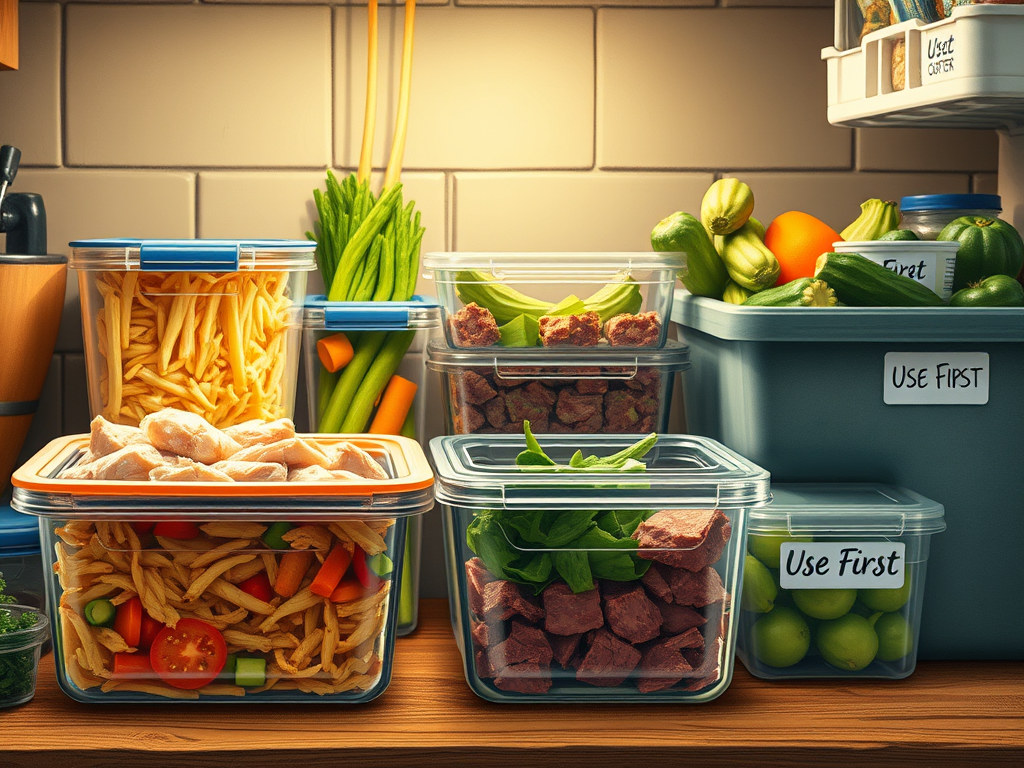
    • Slice onions, peppers, and carrots and store them in clear containers.
    • Wash and dry lettuce or spinach so salads come together in seconds.
    • Freeze excess garden veggies in labeled bags for quick soups or casseroles.

    Having ready-to-go ingredients makes grab-and-go cooking a breeze — and helps you use what you grow before it spoils.

    3. Keep a “Use First” Bin in Your Fridge

    We’ve all done the fridge shuffle — moving jars and containers around until you find something that’s gone bad. To avoid that, I use a simple system:

    • A small bin(or shelf) labeled “Use First.”
    • Anything close to expiring or leftover goes in there.
    • Everyone in the family knows to check it first before grabbing something new.

    Pair this with masking tape and a Sharpie to label containers and jars with the date and contents. It’s cheap, fast, and prevents waste — plus, you’ll always know what’s next in line before it turns into a science experiment.

    4. Embrace “Base Ingredients” for Mix-and-Match Meals

    Instead of cooking full recipes every night, I prep a few base ingredients I can reuse in multiple ways:

    • Cooked rice, quinoa, or potatoes
    • Roasted veggies
    • Beans or lentils

    Then I just combine them with whatever protein or sauce we have on hand. For example:

    • Rice + shredded chicken + veggies = easy stir fry
    • Potatoes + ground beef + cheese = hearty skillet dinner
    • Beans + pork + tomatoes = quick chili

    It’s like building blocks for dinner — you can create endless combinations without starting from scratch.

    5. Make Your Pantry Work for You

    Your pantry is your best friend during busy weeks. Keep it stocked with home-canned goods, dried herbs, and staples that help stretch fresh ingredients.

    Some of my must-haves:

    • Home-canned broth or tomatoes for instant soups
    • Dried herbs and spice blends
    • Flour, oats, and baking basics
    • Rice, pasta, and beans for filling sides

    A well-organized pantry makes it easy to see what you have, plan around it, and avoid those “nothing to cook” moments.

    Final Thoughts

    Meal prepping on the homestead doesn’t have to be complicated. It’s about setting yourself up for success — cooking smart once so you can eat well all week.

    With a little organization (and a roll of masking tape), you can spend less time stressing about dinner and more time enjoying the fruits of your labor — literally.

  • “I Can’t Do It All” to “I’ll Do It My Way”: Finding Freedom in Everyday Homesteading

    Homesteading has a way of making us feel like we have to do everything all at once. You scroll through Pinterest or Instagram and see the perfect bread loaves, the spotless garden rows, the DIY farmhouse kitchen, and you think—“I can’t do it all.” And honestly? You’re right.

    But here’s the secret: you don’t have to.

    Homesteading isn’t about perfection or doing everything in one season. It’s about creating a lifestyle that works for you, in your space, on your budget, with your schedule. When you shift your mindset from “I can’t do it all” to “I’ll do it my way,” homesteading suddenly becomes doable, sustainable, and—most importantly—enjoyable.

    Perfection Isn’t the Goal—Progress Is

    There’s a lot of pressure in the homesteading world to make everything picture-perfect. But let’s be real: your goats are going to break a fence, your garden will get weedy, and that sourdough starter might flop. That doesn’t mean you’re failing—it means you’re learning.

    Progress happens in the small steps: planting one raised bed this year instead of an entire acre, raising two chickens before you invest in a full flock, or canning just a few jars instead of a pantry wall. These little wins build your skills and your confidence.

    Pinterest-Worthy vs. Real Life

    Pinterest and Instagram can be inspiring, but they can also be discouraging. Behind every “perfect” homestead photo is a mess you don’t see—the dishes piled up in the sink, the weeds just out of the camera frame, the failed projects tucked away in the shed.

    Real life homesteading is messy. It’s mud on the boots, crooked fences, and bread that doesn’t always rise. And that’s okay. What matters isn’t how it looks online—it’s how it feels to you.

    Doable and Workable Beats Perfect

    A homestead that works for your family doesn’t have to look like anyone else’s. Maybe your animals are in smaller pens than someone else’s. Maybe your garden is containers on the deck instead of rows in a field. Maybe your bread comes from a bread machine instead of a handmade sourdough.

    That doesn’t make it less valuable—it makes it workable. And a homestead that actually fits into your life will always beat one that leaves you burned out chasing perfection.

    Not Everything Works for Everyone—and That’s Perfectly Okay

    Some people thrive on dairy goats, others realize they hate milking and switch to chickens. Some people love pressure canning, others prefer freezing their harvest. What works beautifully for one homesteader might not fit your lifestyle at all.

    Instead of seeing that as failure, see it as freedom. You don’t have to copy anyone else’s version of homesteading. You get to create your own.

    Shifting the Mindset

    The most freeing mindset shift you can make is this:

    • From: “I can’t do it all.”
    • To: “I’ll do it my way.”

    That simple reframe takes the pressure off. It gives you permission to try, to fail, to adjust, and to find what actually works for your life. And that’s what true homesteading is about—building a lifestyle that sustains you, not one that drains you.

    Final Thoughts

    Your homestead doesn’t have to be perfect to be worth it. It doesn’t have to be Pinterest-worthy to be valuable. It just has to be yours—messy, doable, workable, and real.

    So, the next time you find yourself saying, “I can’t do it all,” remind yourself: you don’t have to. You only have to do it your way.

  • 15 Frugal Homesteading Hacks That Will Save You Hundreds Every Year

    15 Frugal Homesteading Hacks That Will Save You Hundreds Every Year

    When you’re running a homestead, every penny counts. Between feed, supplies, and maintenance, costs can creep up fast. That’s why learning frugal homesteading hacks can make all the difference. With a little creativity, resourcefulness, and a willingness to barter, you can stretch your budget without sacrificing quality or productivity.

    Here are 15 practical frugal homesteading hacks that can save you hundreds of dollars each year.

    1. Repurpose Old Feed Bags

    If you’re raising animals, chances are you go through a lot of feed—and end up with a stack of empty feed bags. Instead of sending them to the landfill, give them a second life. Most modern feed bags are made from woven polypropylene, which is durable, water-resistant, and surprisingly versatile.

    You can cut them open and lay them flat to use as:

    • Weed barriers in the garden. Simply place them under mulch or soil in pathways to block sunlight and keep weeds from sprouting.
    • Protective tarps for covering firewood, hay, or equipment during wet weather.
    • Ground covers when working on muddy areas to keep boots clean and prevent erosion.

    If you’re crafty, you can also sew feed bags into:

    • Tote bags for groceries, farmers’ market hauls, or carrying tools around the homestead.
    • Storage bags for organizing seasonal gear, blankets, or livestock supplies.
    • Harvest bags for carrying produce from the garden without worrying about dirt or moisture damaging the container.

    Some homesteaders even get creative and turn them into aprons, wall organizers, or chicken coop curtains. With a quick rinse and a little imagination, your pile of “trash” becomes a stash of ready-to-use, free materials—saving you money and reducing waste in the process.

    2. Barter Skills Instead of Spending Cash

    One of the oldest and most valuable tools in a homesteader’s money-saving arsenal is the art of bartering. Instead of pulling out your wallet every time you need something done, think about what you can offer in exchange.

    Have an overabundance of eggs in spring? Trade them with a neighbor for fresh honey or homemade bread. Got a bumper crop of tomatoes or zucchini? Swap with someone who raises meat rabbits or has extra firewood. Even baked goods, canned jams, and herbal remedies can be valuable currency in a barter-friendly community.

    Bartering isn’t just about goods—it’s also about skills. If you’re handy with carpentry, you could repair a friend’s chicken coop in exchange for them helping you install a water line to your barn. Maybe you have knowledge in animal care and can check in on someone’s livestock while they’re on vacation, and in return, they’ll help you with fencing or tractor repairs.

    The beauty of bartering is that it:

    • Keeps cash in your pocket while still meeting your needs.
    • Strengthens community ties, since you’re building a network of mutual support.
    • Reduces waste, because you’re making use of extra goods or spare time rather than letting them go unused.

    The more you practice bartering, the more you’ll discover its hidden benefits. You’ll not only save money but also feel more connected to the people around you—something money simply can’t buy.

    3. Save Seeds from Your Garden

    Buying seed packets every spring can really add up—but the good news is, you don’t have to. By learning the simple skill of seed saving, you can create a self-sustaining cycle in your garden and cut this recurring cost entirely.

    Start by selecting your healthiest, most productive plants—the ones that thrived in your soil, resisted pests, and produced well in your specific climate. Saving seeds from these plants means you’ll grow a stronger, more resilient garden year after year because you’re naturally selecting varieties that adapt to your unique growing conditions.

    For example:

    • Tomatoes: Let a few fruits fully ripen on the vine, scoop out the seeds, ferment them in a jar of water for a few days, rinse, and dry them for storage.
    • Beans and peas: Allow pods to dry on the plant until they rattle, then shell and store in an airtight container.
    • Herbs like basil or dill: Let them flower and go to seed, then shake the dry seed heads over a paper bag to collect them.

    Not only does this save you money, but it also helps preserve heirloom varieties and maintain your own personal seed bank for years to come. Plus, there’s something deeply satisfying about planting seeds you grew, harvested, and saved with your own hands—it’s the ultimate full-circle homesteading moment.

    4. Make Your Own Cleaning Products

    Store-bought cleaning supplies may look convenient, but they can quietly eat away at your homestead budget—not to mention introduce unnecessary chemicals into your home. By making your own cleaners from simple, pantry-friendly ingredients like vinegar, baking soda, and essential oils, you can cut your cleaning costs down to just pennies per batch while keeping your home safe for family, pets, and livestock.

    Here are a few easy recipes to get started:

    • All-Purpose Cleaner: Mix 1 part white vinegar with 1 part water in a spray bottle. Add 10–15 drops of lemon or lavender essential oil for scent. Perfect for counters, windows, and sinks.
    • Scrubbing Paste: Combine baking soda with just enough water to make a paste. Use it to tackle tough stains on stovetops, sinks, and tile grout.
    • Homemade Disinfectant: Mix 2 cups water, 1 tablespoon liquid castile soap, and 10 drops of tea tree oil for a gentle but effective germ-fighting spray.

    The beauty of homemade cleaners is that you control the ingredients—meaning no mystery fragrances, no harsh chemicals, and no pricey plastic bottles to throw away. Many homesteaders even take it a step further by reusing spray bottles, storing baking soda in glass jars, and infusing vinegar with citrus peels or herbs for a pleasant, natural aroma.

    Making your own cleaning products not only keeps more cash in your pocket but also supports a more sustainable, self-reliant lifestyle—two big wins in the frugal homesteading playbook.

    5. Compost Everything You Can

    Composting is one of the simplest and most cost-effective ways to boost your homestead’s productivity while keeping waste out of the landfill. By turning kitchen scraps, yard clippings, garden waste, and even animal bedding into nutrient-rich compost, you can drastically cut down—or even eliminate—your need for store-bought fertilizers.

    Nearly anything organic can go into your compost pile, including:

    • Vegetable and fruit peels
    • Coffee grounds and tea leaves
    • Eggshells
    • Grass clippings and leaves
    • Straw or hay bedding from chicken coops or rabbit hutches
    • Shredded paper or cardboard (avoid glossy or colored paper)

    Not only does composting save money on soil amendments, but it also creates healthier, more productive gardens. The finished compost improves soil structure, increases water retention, and feeds your plants with a slow-release blend of nutrients perfectly balanced by nature.

    If you don’t have much space, you can still compost in smaller setups like tumbler bins, worm bins (vermicomposting), or even a discreet corner of your yard. For homesteaders with livestock, adding used bedding into your compost not only recycles the material but also speeds up decomposition due to the nitrogen-rich manure.

    In short, composting turns what you might have thrown away into black gold for your garden—a true frugal homesteading win.

    You can download my free composting cheat sheet here.

    6. Build Instead of Buy

    One of the biggest money-saving skills you can develop on your homestead is learning to build things yourself. From chicken coops and rabbit hutches to raised garden beds, trellises, and storage shelves, DIY projects can save you hundreds—sometimes thousands—of dollars compared to store-bought versions.

    Instead of heading straight to the hardware store, look for reclaimed materials first. Old pallets, salvaged fencing, scrap lumber, and used hardware can often be found for free or cheap from:

    • Local construction sites (ask permission before taking anything)
    • Craigslist or Facebook Marketplace’s “free” section
    • Friends or neighbors tearing down old sheds, barns, or fences
    • Habitat for Humanity ReStores

    Not only will building your own structures keep your homestead budget in check, but it also allows you to customize the design to fit your exact needs. For example:

    • A chicken coop with extra ventilation for hot climates
    • Raised beds built tall enough to reduce bending and strain
    • Shelves designed to fit your specific canning jar sizes

    And the satisfaction? Priceless. Every time you gather eggs from a coop you built with your own hands, or harvest tomatoes from a bed you crafted out of reclaimed wood, you’ll know you’re building not just a homestead—but a lifestyle of self-reliance.

    7. Cook from Scratch

    One of the most rewarding and budget-friendly habits you can develop on a frugal homestead is cooking from scratch. Instead of spending money on overpriced processed foods, you can make healthier, tastier meals right in your own kitchen—often for a fraction of the cost.

    Start by building your meals around homegrown ingredients. Fresh vegetables from your garden, eggs from your hens, or herbs from your windowsill planter can become the foundation for soups, stir-fries, casseroles, and baked goods. Even if you can’t grow everything you eat, buying staple items in bulk—like flour, beans, rice, and oats—will dramatically lower your grocery bill.

    Examples of frugal homestead cooking:

    • Turning excess garden zucchini into bread, muffins, or fritters
    • Making bone broth from leftover chicken or beef bones for soups and stews
    • Canning tomatoes for pasta sauces and salsa instead of buying jars at the store
    • Baking your own bread, tortillas, and crackers instead of buying packaged versions

    Cooking from scratch also means you have complete control over what goes into your food—no preservatives, artificial flavors, or hidden costs from “convenience” packaging. Over time, you’ll develop a recipe rotation that’s both cost-efficient and deeply satisfying, turning your kitchen into the true heart of your frugal homestead.

    8. Raise Dual-Purpose Livestock

    On a frugal homestead, every animal should earn its keep in more than one way. By choosing dual-purpose livestock, you maximize the return on your investment while reducing the need to buy separate animals for different jobs. This approach saves money, space, and feed—while still meeting multiple needs for your homestead.

    For example, ducks are excellent for both fresh, nutrient-rich eggs and natural pest control. They happily roam the garden eating slugs, snails, and insects—reducing the need for chemical treatments. Similarly, goats can supply fresh milk for drinking, cheese, and yogurt, while also clearing brush and weeds from hard-to-maintain areas of your property.

    Other great dual-purpose options for a frugal homestead include:

    • Chickens – Provide both eggs and meat
    • Rabbits – Great for meat production and their manure is an excellent cold fertilizer
    • Sheep – Offer meat and wool for spinning or selling
    • Geese – Supply meat, eggs, and can act as natural “watchdogs” for your property

    By selecting animals that can fill multiple roles, you’ll cut feed costs, reduce infrastructure expenses, and get more out of every resource—an essential mindset for anyone committed to frugal homesteading.

    9. Use Solar Lighting in Outbuildings

    On a frugal homestead, every dollar saved on utilities adds up. One simple way to cut costs is by installing solar-powered lighting in barns, sheds, chicken coops, and other outbuildings. These lights are inexpensive, easy to set up, and don’t rely on your home’s electrical system—perfect for remote areas of your property.

    Solar lights can keep your pathways safe at night, illuminate workspaces for evening chores, and even deter predators around animal pens. Many models come with motion sensors or timers, so you only use energy when needed, maximizing efficiency.

    Examples of practical uses:

    • Barns and tool sheds – Illuminate corners for easy access to tools and feed
    • Chicken coops – Extend daylight hours in winter to maintain egg production naturally
    • Garden paths – Provide safe walking routes without running electrical wiring
    • Outdoor workstations – Great for evening canning, repairs, or hobby projects

    Investing in solar lighting is a smart, long-term strategy for any frugal homestead, reducing both your electricity bills and your carbon footprint while keeping your homestead functional and safe.

    10. Learn Basic Animal Care Skills

    Knowing how to care for your animals yourself can save you hundreds—or even thousands—of dollars each year in vet bills. By learning basic skills like trimming hooves, checking for common health issues, administering simple medications, and handling minor injuries, you can keep your livestock healthy without overspending.

    For example:

    • Hoof trimming – Prevents lameness in goats, sheep, and cows, reducing costly vet visits
    • Vaccinations & deworming – Administering routine care yourself keeps animals disease-free
    • Minor injuries – Treat small cuts or abrasions at home instead of rushing to a vet for every scrape
    • Animal handling – Proper restraint and handling techniques reduce stress for both you and the animal, lowering the chance of accidents

    Learning these skills doesn’t require formal training; online tutorials, local homesteading groups, or even workshops at feed stores can teach you the essentials. Not only does this approach cut costs, but it also increases your confidence and independence on your frugal homestead.

    11. Reuse Glass Jars and Containers

    On a frugal homestead, every little bit of reuse helps stretch your budget. Glass jars from canning, sauces, pickles, and other condiments don’t have to be tossed—they’re perfect for multiple purposes around your homestead.

    Some practical ways to reuse glass jars include:

    • Food storage – Store dry goods like grains, beans, or spices in clean jars to keep your pantry organized
    • Seed starting – Small jars are great for sprouting seeds or starting seedlings indoors before transplanting
    • Canning and preserving – Reuse jars for your own homemade jams, sauces, or pickles, saving money on packaging
    • DIY projects – Make lanterns, soap dispensers, or craft organizers with jars to reduce the need for buying new containers
    • Gifting – Fill jars with homemade treats, bath salts, or spice mixes to give as thoughtful, low-cost gifts

    Not only does reusing glass jars reduce waste, but it also aligns perfectly with frugal homesteading principles, helping you save money while staying organized and creative.

    12. Grow Perennials

    One of the smartest strategies on a frugal homestead is to invest in plants that keep giving year after year. Perennial fruits, herbs, and vegetables not only save money on seeds and seedlings each season, but they also reduce labor and time spent replanting annual crops.

    Some great perennial options include:

    • Fruits: Strawberries, raspberries, blueberries, and apple or pear trees can produce for years with minimal upkeep.
    • Herbs: Rosemary, thyme, oregano, and chives will regrow every spring, making them a cost-effective addition to your kitchen garden.
    • Vegetables: Asparagus, rhubarb, and certain varieties of kale or artichokes provide reliable harvests without annual replanting.

    Beyond saving money, perennials build long-term sustainability on your homestead. They improve soil health, attract pollinators, and reduce the overall maintenance required each year—freeing you to focus on other homestead projects.

    By choosing perennials strategically, you’re not just cutting costs—you’re creating a resilient, productive, and self-sufficient homestead that pays off year after year.

    13. Buy in Bulk

    One of the simplest ways to save money on a frugal homestead is to buy staples in bulk whenever possible. Items like animal feed, grains, flour, sugar, rice, and beans often cost significantly less per unit when purchased in larger quantities.

    Tips for buying in bulk on a frugal homestead:

    • Storage is key: Invest in airtight containers, bins, or barrels to keep bulk items fresh and pest-free.
    • Plan ahead: Track your usage so you don’t overbuy items that may spoil before you can use them.
    • Seasonal deals: Take advantage of sales or harvest seasons when prices are lower, and stock up for the year.
    • Split bulk purchases: If storage is limited, consider sharing bulk orders with neighbors or friends to get the cost savings without crowding your space.

    Buying in bulk isn’t just about saving money—it’s about building a more efficient, self-sufficient homestead. You’ll spend less time shopping, reduce multiple trips to the store, and have essential supplies on hand when you need them, all while keeping your homestead budget in check.

    14. Repair Before Replacing

    On a frugal homestead, one of the most overlooked ways to save money is to repair items instead of immediately replacing them. Whether it’s clothing, tools, furniture, or equipment, taking the time to patch, mend, or fix can save you hundreds of dollars a year.

    Practical repair tips for a frugal homestead:

    • Clothing & Textiles: Keep a sewing kit handy to patch holes, reinforce seams, or even upcycle old clothing into new items.
    • Tools & Equipment: Sharpen blades, tighten loose parts, or replace worn handles on tools before buying new ones.
    • Furniture & Wood Projects: Minor scratches, wobbly legs, or broken hinges can often be fixed with basic woodworking skills and a few supplies.
    • Plumbing & Small Repairs: Learn simple fixes for leaky faucets, clogged drains, or loose pipes—these small skills prevent costly professional bills.

    By making repairing a habit, you not only stretch your homestead budget but also embrace a mindset of resourcefulness and sustainability. Every item you save from the landfill is a win for your wallet and the planet.

    15. Share Resources with Neighbors

    A frugal homestead isn’t just about cutting costs—it’s also about building community. One of the smartest ways to save money is to share resources with fellow homesteaders in your area.

    How sharing can help your homestead budget:

    • Equipment: Big-ticket items like tillers, livestock trailers, pressure washers, or generators can be prohibitively expensive to buy on your own. Pool resources with neighbors and rotate usage, reducing individual costs.
    • Tools & Supplies: From shovels to pruning shears, keeping a shared tool library ensures everyone has access without cluttering storage or overspending.
    • Livestock & Feed: Sometimes neighbors can split feed orders, share breeding stock, or coordinate bulk purchases of hay or grain.
    • Skills & Labor: Trade your expertise—like canning, carpentry, or animal care—for help on projects you’re less skilled at.

    Sharing resources strengthens your local homesteading network, reduces unnecessary spending, and encourages collaboration. It’s a win-win for both your wallet and your community, and it embodies the true spirit of frugal homesteading: working smarter, not harder.

    Why Frugal Homesteading Works

    Frugality isn’t about doing without—it’s about making the most of what you have. By embracing frugal homesteading hacks, you’ll not only save money but also live more sustainably, build stronger community ties, and become more self-reliant.


  • How to Keep Your Kids Busy on The Homestead

    How to Keep Your Kids Busy on The Homestead

    Homesteading is like the ultimate family adventure—there’s always something to do, something to grow, and something to fix. But if you’ve ever tried to get your kids involved in all these homesteading tasks, you know it can be more of a circus act than a harmonious family project. Between the chickens that refuse to be herded, the garden that somehow becomes a jungle overnight, and your kids who have no idea what a rake is, it’s easy to feel like your homesteading dreams are on the brink of chaos.

    But here’s the secret: keeping your kids busy on the homestead doesn’t have to drive you to the brink of insanity (though you may feel like it on some days). With a little creativity, some patience, and maybe a healthy dose of humor, you can get your little helpers involved in tasks that not only help you out but also teach them valuable skills. Bonus: You can even do it without breaking a sweat—or your patience. Let’s dive in!

    Let Them “Help” with the Animals (and Watch Them Learn Responsibility)

    One of the best ways to get your kids involved in homesteading is by giving them the responsibility of helping with the animals. Whether it’s feeding the chickens, collecting eggs, or making sure the goats don’t eat the neighbor’s garden (again), there’s always something to do in the animal department.

    But here’s the catch: you have to keep it simple. You’re not asking them to wrangle a herd of cows or build a barn from scratch. Give them age-appropriate tasks like filling the chicken feeder, collecting eggs (with a bit of guidance), or making sure the rabbits have enough hay. These are small, manageable jobs that will make them feel like they’re part of the action, without leaving you with a mountain of extra work.

    Pro Tip: Start a “chore chart” that lists the animals they’re responsible for. Make it colorful and fun—kids love checklists! Plus, the satisfaction of checking off a chore will do wonders for their sense of accomplishment.

    And if they try to sneak off after five minutes of work, just remind them how proud they’ll be when they see those chickens happily clucking away. Plus, you can always offer a fun reward—like letting them name a new pet goat or chicken. Who wouldn’t want to be known as “Penny the Chicken’s Best Friend”?

    Turn Gardening into a Scavenger Hunt (Because Who Doesn’t Love a Challenge?)

    Let’s face it—gardening can be hard work, and it’s not always the most exciting activity for kids. However, turning it into a game is a surefire way to get them interested without having to force them to “weed the flower beds” for the hundredth time.

    Try a gardening scavenger hunt! Give your kids a list of things to find in the garden: “Find one ripe tomato,” “Pick a handful of basil leaves,” or “Find a ladybug.” You can even get creative and turn it into a race—whoever finds all the items on their list first wins a small prize or gets to choose what’s for dinner (within reason, of course).

    This not only keeps them engaged but also teaches them about different plants, bugs, and the process of growing food. Plus, they’ll feel like little explorers hunting for treasure, which is a lot more fun than simply pulling weeds. And if they find a cool rock or an interesting bug along the way? Even better!

    Pro Tip: For younger kids, a “sensory garden” can be a fun way to engage them. Let them touch and smell the plants and flowers, and encourage them to describe what they experience. Trust us, your kids will find a whole new appreciation for the magic of dirt.

    Create a “Junior Homesteader” Club (Complete with Membership Cards)

    Sometimes, the best way to get kids excited about homesteading is by giving them their own “role” on the farm. Enter the Junior Homesteader Club. This could be as simple as creating a fun membership card (you can make these yourself or print them out online) and assigning your kids specific jobs that make them feel like important team members.

    This works especially well if you’ve got multiple kids, as they can all have different responsibilities. One might be in charge of feeding the animals, while another might be tasked with watering the plants. You can even add some extra tasks like “Chief Egg Collector” or “Master Weeder”—titles that will give them a sense of pride.

    Pro Tip: Have a “Junior Homesteader Meeting” once a week to discuss what needs to be done on the homestead, and let your kids help plan the week’s tasks. They’ll feel more invested and have a better idea of how everything works, from the animals to the garden. It’s like the best 4-H meeting ever!

    Turn DIY Projects into Craft Time (With a Side of Power Tools)

    Kids are crafty by nature. So, why not combine their love for arts and crafts with a little DIY homesteading magic? Sure, you may not trust them with a chainsaw just yet (or ever), but there are plenty of homesteading projects that are totally safe and fun for kids.

    For example, building birdhouses, creating garden markers, or assembling simple compost bins can be great projects for little hands. These tasks give kids a sense of accomplishment and teach them valuable skills like measuring, sawing (with supervision, of course), and even hammering. Plus, they’ll get to see their work come to life on the homestead.

    To make it even more fun, you can turn DIY projects into a full-blown craft day. Gather up some materials—wood, paint, brushes—and let the kids get creative. You’ll be amazed at how much pride they’ll take in making something that contributes to the farm (even if it’s just a lopsided birdhouse).

    Pro Tip: If your kids are into gardening, consider making personalized garden markers out of popsicle sticks or old spoons. Not only will they keep track of what they’ve planted, but they’ll also feel like real homesteading pros.

    Use “Farm Tours” as Entertainment (Because Everyone Loves a Good Show)

    Here’s the thing: Kids love showing off what they’ve been working on. Why not take advantage of that and turn it into an educational activity for both them and any visitors? You can host your very own Farm Tour where your kids can proudly show off their contributions to the homestead. Whether it’s introducing the chickens or showing off the latest vegetable harvest, they’ll love being the stars of the show.

    Pro Tip: If you have guests, let your kids be the “tour guides” and teach the guests about the animals, garden, and how everything works. You’ll be amazed at how much they know once you put them in the spotlight. Plus, it keeps them busy for hours. Who knew your children would be the next great tour guides?

    Final Thoughts: Keeping Your Sanity Intact (Mostly)

    At the end of the day, getting your kids involved in homesteading tasks is all about making it fun, educational, and—let’s be honest—keeping them busy so you can get some actual work done. With a little creativity, humor, and a lot of patience, you can turn everyday homesteading chores into entertaining (and sometimes even productive) activities for your little ones.

    Remember, there will be days when they’d rather be inside playing video games or making a mess in the living room, but by creating engaging, hands-on experiences, you’ll help them develop a lifelong appreciation for hard work, the great outdoors, and, of course, the joys of homesteading. And who knows? You might even get a few moments of peace while they’re busy collecting eggs or making mud pies in the garden.

    Happy homesteading, and may your kids always love playing in the dirt!

  • Homestead Budget 101: 5 Things You Don’t Need to Buy as a Beginner

    Homestead Budget 101: 5 Things You Don’t Need to Buy as a Beginner

    Starting your homestead is exciting, but it can also feel overwhelming—especially when every new tool, animal, or gadget seems essential. Beginners often make the mistake of overspending early, leaving them strapped for cash when the things that really matter come along. Managing your homestead budget wisely is key to building a sustainable and successful homestead. Here are 5 common areas where homesteaders overspend and smarter alternatives to save money while still getting results.

    1. Fancy Livestock Before You’re Ready

    It’s tempting to splurge on heritage chickens, rare goats, or miniature cows, but buying animals before you understand your homestead’s layout, workload, and local climate can backfire.

    Instead: Start with low-maintenance, beginner-friendly animals. For example:

    • Chickens: Start with a few hardy, easy-to-raise breeds like Rhode Island Reds or Buff Orpingtons.
    • Ducks: Start with a small flock of hardy, beginner-friendly breeds like Pekin or Khaki Campbell to learn their care without feeling overwhelmed.
    • Goats: While goats are not on my beginner friendly list. If you must, begin with a pair of standard dairy or meat goats to learn their care without feeling overwhelmed. Dwarf varieties are also available in certain breeds which is what I personally choose to raise.

    By starting small, you’ll protect your homestead budget while mastering animal care.

    2. Expensive Tools You Don’t Really Need

    High-end tractors, electric fencing systems, or specialty gardening tools might look impressive, but they’re not essential for your first year.

    Instead: Invest in multipurpose, durable, and affordable tools:

    • A good shovel, hoe, and rake can handle most garden and small farm tasks.
    • Hand tools and repurposed materials can often replace pricey gadgets for your initial setup.

    Focusing on what you’ll actually use daily helps you stick to your homestead budget and avoid unnecessary expenses.

    3. Large Garden Infrastructure

    Building huge raised beds, a greenhouse, or a complex irrigation system right away can drain your budget. Beginners often underestimate the costs and maintenance of large setups.

    Instead: Start small. Try:

    • Container gardening or a few modest raised beds.
    • DIY trellises and simple row covers to protect crops.
    • Expand gradually as you understand your garden’s needs and your local climate.

    Starting with a manageable garden keeps your homestead budget in check and ensures you can maintain it long-term.

    4. Pre-Packaged Feed or Supplements

    Many beginners overspend on premium feeds, vitamins, or supplements for their livestock. While some are necessary, much of the “extra” is marketing.

    Instead: Learn what your animals truly need and what you can produce at home. For example:

    • Supplement chickens with kitchen scraps and garden greens.
    • Mix homemade minerals for your goats or cows, adjusting for what your pasture may be lacking.
    • Rotate pastures and grow fodder to reduce feed costs.

    Keeping an eye on your feed and supplement spending protects your homestead budget while still providing healthy nutrition for your animals.

    5. “Trendy” Homestead Products

    There’s a world of shiny homesteading tools, décor, and kits that promise to make life easier—but beginners often buy them on impulse. Think artisanal soap-making kits, specialty fermenting crocks, or boutique chicken coops.

    Instead: DIY, upcycle, or borrow.

    • Repurpose containers for fermenting.
    • Build your own small chicken coop from scrap wood.
    • Start simple with soap or candle recipes before investing in fancy equipment.

    Learning to be resourceful will help you stick to your homestead budget while gaining valuable skills.

    Final Thoughts: Spend Smart, Grow Gradually

    Starting a homestead doesn’t require a huge budget—it requires planning, patience, and prioritization. By avoiding these overspending traps and focusing on essentials, you’ll save money, reduce stress, and set yourself up for long-term success.

    Remember: your homestead will grow with you, not the other way around. Start small, learn as you go, and spend where it truly matters to protect your homestead budget.