
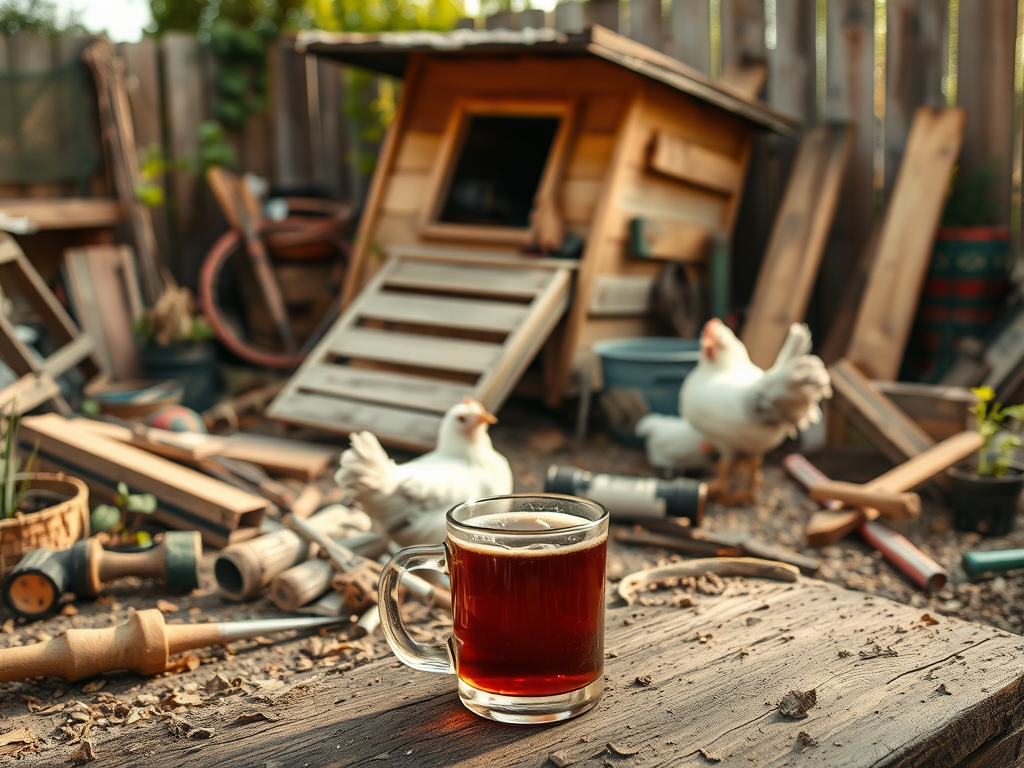
Let’s face it: DIY projects on the homestead are not always the Pinterest-worthy, smooth-sailing, “look how perfect this turned out!” moments we envision. Sometimes, things go hilariously wrong. You might find yourself standing in a puddle of sawdust, holding a power tool, wondering how exactly you managed to turn a simple garden shed project into a full-blown disaster. Or maybe that chicken coop you thought you’d whip up in a weekend has turned into a leaning tower of wonky wood, with more gaps than a spaghetti strainer.
But here’s the truth: when you’re homesteading, chaos is inevitable. And while it’s easy to throw in the towel when things go awry, the real beauty of homesteading comes in embracing those failures, learning from them, and—most importantly—having a good laugh. If you’re feeling like your DIY homesteading projects are taking an unexpected turn, take a deep breath, grab a cup of coffee (or a beer, I won’t judge), and read on for some encouragement and practical advice on how to roll with the punches.
First Things First: Take a Step Back (and Maybe a Deep Breath
It’s easy to get frustrated when your latest homesteading project isn’t going according to plan. Whether you’re trying to build a chicken coop, start a garden bed, or install a new fence, things rarely go off without a hitch. If your DIY project is starting to look more like a horror show than a success story, step back.
Take a breather. Get away from the project for a bit and give yourself a moment to clear your mind. Sometimes, a fresh perspective (and a little bit of space) is all it takes to see the solution. I once spent two days trying to build my brooder shed (don’t ask), only to realize I had the walls upside down.
Pro Tip: If you’re working on something more intense like fencing or building structures, take breaks and pace yourself. That way, you’ll avoid burnout and the temptation to “rush through it” (which, as we all know, leads to more chaos).
Learn to Laugh at Your Mistakes (They Make the Best Stories)
Okay, maybe you’ve spent days building a coop, only to realize the door is on backwards. Or perhaps you tried to fix a leaky faucet and somehow flooded the entire kitchen instead. It happens to the best of us. So, instead of letting it get you down, embrace the comedy of the situation. After all, you’re likely to look back on the disaster and laugh.
Case in point: I once tried to build a garden trellis using a combination of left over gazebo poles and wire. I meant to create a sturdy framework for my pickling cucumbers, but ended up with a lopsided, wobbly structure that looked more like a half-hearted attempt at modern art. I had to embrace the fact that it wasn’t going to win any design awards, but hey—it worked! My cucumbers climbed the structure just fine. Sometimes, the beauty of DIY is that it’s uniquely imperfect, and that’s okay.
Pro Tip: When things go wrong, share the experience! Posting funny stories or photos of your homesteading fails online will not only make you feel better, but you might just inspire someone else who’s dealing with a similar disaster. Trust me, you’re not the only one who’s ever had a “what was I thinking?” moment!
DIY Fail? It’s Actually a Learning Opportunity (Really!)
While it’s tempting to call it quits when a project doesn’t go as planned, remember that every mistake is a learning opportunity. No one gets everything perfect the first time (or the second or third, let’s be real). The key is to learn from the experience and adjust for next time.
I had an epic fail while building a raised garden bed one summer. The boards I used were too short, which led to uneven sides and, well, a very weirdly shaped bed. After much frustration and some choice words, I realized that this was an opportunity to learn how to make better measurements. (I also learned to triple-check my math next time, but that’s another story.) In the end, I fixed the raised bed with a bit of extra wood and a lot of patience.
Pro Tip: Keep a notebook (or digital file) of lessons learned from your DIY projects. This way, you can refer to it next time you’re tackling something similar. Write down measurements, materials, and tips to avoid repeating the same mistakes.
Ask for Help (Yes, Even If You’re a “DIY Master”)
Sometimes, our pride gets in the way. “I can handle this on my own,” we think, even when things are clearly falling apart around us. But here’s the thing: you don’t have to do it alone. Whether you need an extra set of hands, some advice from an expert, or a quick tutorial, asking for help doesn’t make you less of a homesteader—it makes you a smarter one.
If something is outside of your skill set, don’t hesitate to call in an expert or ask a fellow homesteader for help. It’s a lot less stressful and will save you time and frustration.
Pro Tip: Find homesteading communities online or locally. People love to share advice and offer support, and you’d be surprised how willing others are to help when you’re stuck. Plus, those communities often have a good sense of humor about DIY disasters!
Embrace the Chaos (Because Perfection is Overrated)
Here’s a truth bomb: homesteading is messy. Whether it’s a haphazard pile of firewood or a crooked fence that you somehow can’t bring yourself to fix, things rarely go according to plan—and that’s okay. Perfection is overrated anyway. It’s the imperfect, quirky nature of DIY that makes homesteading so rewarding.
I’ve had more than one garden project that didn’t go according to plan. One time, I planted my tomato plants a little too close together (oops), and instead of the neat row of plants I envisioned, I ended up with a tangle of vines. But you know what? It didn’t matter. The tomatoes grew just fine, and the viney chaos made it all the more charming. Plus, the kids loved trying to navigate the jungle to pick the ripe ones!
Pro Tip: Instead of chasing perfection, focus on functionality and enjoyment. Is your chicken coop a bit crooked? Is your garden bed a little lopsided? If it works and your animals are happy, that’s all that matters. Let go of the need for everything to be “picture perfect.”
Fix It, Learn From It, and Keep Going
It’s normal to feel like quitting when things don’t go right, but remember, it’s all part of the process. Some of your best projects will come from fixing what went wrong the first time. Take the opportunity to roll up your sleeves, adjust your plans, and keep going. One of the greatest aspects of homesteading is problem-solving—and let’s face it, sometimes the most creative solutions come from those “uh-oh” moments.
Final Thoughts: DIY Projects Are About the Journey, Not the Destination
So, the next time your DIY project goes completely off the rails, remember to embrace the chaos. Laugh at your mistakes, learn from them, and keep moving forward. After all, homesteading is all about adapting to whatever life throws your way—whether it’s a wonky shed or an overly enthusiastic goat chewing through your garden plans.
At the end of the day, these imperfect projects are what make the experience memorable and fun. And you never know—your “failed” DIY project might turn into your proudest accomplishment, even if it’s a little wobbly around the edges.
Leave a Reply