Tag: small scale homesteading

  • Why Building Homestead Systems Feels So Hard (And What to Do Instead)

    Why Building Homestead Systems Feels So Hard (And What to Do Instead)

    If you’ve ever felt like you finally had your homestead running smoothly…

    the animals were getting fed on time
    the garden was mostly under control
    the house felt manageable
    you had a routine that seemed to be working

    …and then life happened and suddenly everything started falling apart again…

    You are not alone.

    One of the most frustrating parts of homesteading is feeling like you’re constantly trying to “get it together,” only to have your routines collapse the second life gets busy, stressful, or overwhelming.

    And when that keeps happening, it’s really easy to start asking yourself:

    Why can’t I keep up?
    Why do my systems keep failing?
    Why does this feel so hard?

    But honestly?

    Most people don’t struggle with homestead systems because they’re lazy.

    They don’t struggle because they’re incapable.

    And they don’t struggle because they’re just “bad” at routines.

    A lot of times, building homestead systems feels hard because the systems themselves were never designed for real life in the first place.

    A Lot of Homestead Systems Are Built Around “Best Case Scenario” Life

    I think one of the biggest reasons people struggle to build systems that actually last is because they accidentally build them around their best day.

    The day where:

    you have energy
    you’re motivated
    the weather is perfect
    nobody is sick
    nothing unexpected comes up
    your house is calm
    work isn’t overwhelming
    and you somehow have extra time

    So you sit down and make a plan.

    You decide you’re finally going to get organized.

    You’re going to meal prep, track the garden, keep animal records, stay on top of chores, preserve food, work out, drink more water, keep the house cleaner, and create a better routine all at once.

    You write it all out.

    You decide exactly when you’re going to start seeds.
    Exactly when you’re going to weed.
    Exactly how your mornings will look.
    Exactly how your evenings will run.
    Exactly what days you’ll preserve food.
    Exactly how long every task should take.

    And on paper? It looks amazing……For about a week.

    Then real life shows up.

    Work gets busy.
    A kid needs something.
    The weather changes.
    You get tired.
    You have a bad day.
    The garden needs more than you expected.
    The chickens dump their water.
    The freezer needs organized.
    Dinner takes longer than planned.

    And suddenly the system that looked so good on paper starts falling apart.

    Not because it was a bad idea.

    But because it was built around ideal conditions instead of your actual life.

    Real Life Is the Test Every Homestead System Has to Pass

    This is something I think more people need to hear:

    A system that only works when everything is going right is not a very strong system.

    Because real life is not made up of perfect days.

    Real life includes:

    busy work weeks
    bad weather
    sick kids
    low energy
    burnout
    unexpected expenses
    mental overload
    seasonal chaos
    times when you’re simply trying to make it through the day

    If a system can only function when you’re well-rested, motivated, perfectly organized, and operating at your absolute best… it’s probably going to fall apart the second life gets hard.

    That doesn’t mean you failed.

    It means the system wasn’t built with enough flexibility.

    The goal isn’t to build systems that only work on your best days.

    The goal is to build systems that still work on your average days.

    Or even your hard days.

    Because the version of you that’s tired, overwhelmed, busy, stressed, or stretched thin still deserves systems that support her too.

    Trying to Improve Everything at Once Usually Backfires

    Another reason building homestead systems feels so hard is because so many of us try to fix every area of life at the same time.

    We decide we’re going to finally “get our life together” and suddenly we’re trying to build:

    a meal planning system
    a freezer inventory system
    a garden tracking system
    an animal chore system
    a budgeting system
    a cleaning routine
    a better morning routine
    a food preservation routine
    a workout routine

    all at once.

    And for a little while, motivation makes that feel exciting.

    Motivation says:

    Let’s do all of it.
    Let’s start over.
    Let’s make everything better.
    Let’s become a completely different person by next week.

    But motivation and sustainability are not the same thing.

    Motivation is exciting.
    Sustainability is realistic.

    Motivation wants to change everything overnight.
    Sustainability asks, “Can I realistically keep doing this six months from now?”

    That’s a very different question.

    Because most people don’t burn out because they’re incapable of building systems.

    They burn out because they’re trying to build ten systems before they’ve even proven one works.

    Comparison Makes Building Systems Even Harder

    Comparison is another huge reason homestead systems feel harder than they need to.

    Maybe you follow someone online who:

    homeschools multiple kids
    bakes bread from scratch
    milks goats every morning
    preserves everything
    grows a giant garden
    raises livestock
    keeps a spotless kitchen
    and somehow seems to do it all effortlessly

    And without even realizing it, you start thinking:

    “Well if they can do it, I should be able to do it too.”

    But maybe your life looks completely different.

    Maybe you work full time.
    Maybe your kids are in sports.
    Maybe you have a long commute.
    Maybe your energy is lower right now.
    Maybe you’re in a season where you’re already stretched thin.
    Maybe your budget is different.
    Maybe your climate creates totally different challenges.

    But instead of building systems around your reality, you start trying to force someone else’s routine into your life.

    And that’s where a lot of systems start breaking down.

    The problem usually isn’t homemade meals.
    Or gardening.
    Or preserving food.
    Or raising animals.

    The problem is trying to force a system into your life that was never built for it.

    A Good Homestead System Should Work With Your Life, Not Against It

    I think one of the biggest mindset shifts in homesteading is realizing that good systems should support your life — not constantly fight against it.

    That means asking questions like:

    What do I realistically have time for right now?
    What tasks stress me out the most?
    What routines feel sustainable with my current schedule?
    What am I trying to do simply because I think I “should”?
    What keeps falling apart?
    What feels harder than it needs to be?

    Because if you’re constantly building routines that leave you exhausted, behind, and frustrated, the answer is probably not “try harder.”

    The answer may be:

    simplify the system
    build smaller
    slow down
    focus on one area at a time
    remove unnecessary steps
    adjust your expectations
    or stop trying to force your life into someone else’s version of homesteading

    Build for Your Bare Minimum, Not Your Best Day

    If there’s one thing I would encourage more homesteaders to do, it’s this:

    Build systems around your bare minimum.

    Build for the version of you that is:

    tired
    busy
    overwhelmed
    low on motivation
    mentally drained
    physically worn out
    dealing with a stressful week

    Because if your system still works during those seasons, it will probably work during almost anything.

    That doesn’t mean you can’t do more when you have the time or energy.

    Of course you can.

    But your baseline system — the one you rely on long term — should not require constant peak performance to survive.

    It should be simple enough, realistic enough, and flexible enough to still function when life gets messy.

    And honestly?

    That’s what makes a system sustainable.

    Not perfection.

    Not intensity.

    Not motivation.

    Consistency.

    Even imperfect consistency.

    What to Do Instead

    If building homestead systems has been feeling harder than it should, I’d encourage you to stop trying to fix everything at once and start here:

    1. Pick one area that’s causing the most stress

    Not ten things.
    Not your whole life.
    Just one.

    Maybe it’s feeding routines.
    Maybe it’s watering the garden.
    Maybe it’s meal planning.
    Maybe it’s freezer organization.
    Maybe it’s keeping up with animal chores.

    Start with the thing that creates the most friction in your day-to-day life.

    2. Ask what makes it hard

    Is it too time-consuming?
    Too complicated?
    Too inconsistent?
    In the wrong location?
    Dependent on motivation?
    Built around unrealistic expectations?

    3. Make it simpler

    A lot of times the best system is not the fanciest one.

    It’s the one you can actually repeat.

    That might mean:

    • fewer steps
    • a smaller version
    • a different schedule
    • moving supplies closer
    • automating part of it
    • lowering the bar temporarily
    • focusing on consistency over optimization

    4. Test it without making it personal

    If it doesn’t work right away, that does not automatically mean you failed.

    It may just mean the system needs adjusted.

    That’s normal.

    Every homestead is different.
    Every family is different.
    Every season of life is different.

    You’re allowed to experiment.

    You’re allowed to pivot.

    You’re allowed to change things until they fit.

    Final Thoughts

    If building homestead systems feels hard, it doesn’t automatically mean you’re doing something wrong.

    A lot of times it simply means you’re trying to build routines that don’t actually match the life you’re living right now.

    And that’s fixable.

    You do not need to build a perfect homestead routine overnight.

    You do not need to copy someone else’s schedule.

    You do not need to overhaul every area of your life at once.

    You just need to start paying attention to what your real life actually needs.

    Build smaller.
    Build slower.
    Build around your real schedule, your real energy, and your real season of life.

    Because the best homestead systems usually aren’t the most impressive ones.

    They’re the ones that still work when life gets messy.


    If this post resonated with you, I also go deeper into this topic in my latest YouTube workshop on building homestead systems that actually fit real life. I’ll link that video below if you want to watch the full breakdown.

  • I Thought I’d Make $5,000 Selling Garden Starts…

    I Thought I’d Make $5,000 Selling Garden Starts…

    There are some lessons you only learn by doing.

    This is one of those stories.

    Earlier this year, I decided I was going to host my very first plant sale.

    Now…..to be clear, I’ve never had a plant sale before. Every year I start way more seedlings than I need and I usually end up giving the extras away to friends, family, coworkers, and neighbors.

    But this year I had a much bigger idea.

    Somewhere along the way, I convinced myself I was going to make $5,000 selling garden starts.

    Yes…

    Now that I say it out loud, it sounds a little ridiculous.

    But hear me out.

    At the time, it made perfect sense.

    Why I Thought It Would Work

    I’ve been working hard to pay off debt, including my she shed, and I’ve been looking for ways to earn extra income.

    Then it hit me.

    I already grow hundreds of plants every spring.

    I already own a greenhouse.

    I already have grow lights.

    I already know how to start seeds.

    How hard could it really be?

    I wasn’t just planning to sell individual plants either.

    The real money maker, at least in my head, was going to be garden kits.

    • Beginner garden kits
    • Salsa garden kits
    • Ultimate garden kits

    People could simply choose a box, I’d fill it, and they’d leave with an entire garden.

    It sounded like a win for everyone.

    I carefully planned different seed-starting dates, chose varieties that weren’t common in my area, estimated losses from poor germination, and planted extra just in case.

    I truly believed I had thought of everything.

    Then the Plants Took Over My Life

    Apparently…

    I’m pretty good at starting seeds.

    So good, in fact, that I ended up with well over a thousand healthy plants.

    At first everything fit neatly inside my greenhouse.

    Then the greenhouse filled.

    So I reorganized.

    Then I started up-potting everything.

    Soon my barn became overflow storage.

    Every shelf.

    Every table.

    The floor.

    Every inch of space was covered in plants.

    I wasn’t upset about it, though.

    Honestly, I felt proud.

    I had grown an incredible amount of healthy plants, and I couldn’t wait to sell them.

    I Started Building Excitement

    I began posting on Facebook, sharing photos of my plants and talking about my upcoming sale.

    I wasn’t necessarily trying to sell people immediately.

    I just wanted to plant the idea.

    Maybe when it came time to buy tomatoes or peppers, they’d remember me.

    Some people even reached out ahead of time saying they planned to come.

    Everything seemed to be going according to plan.

    Then Reality Showed Up

    First…

    My tomatoes.

    I had started my first batch way too early.

    Then our weather became completely unpredictable.

    Warm one week.

    Freezing the next.

    Several major windstorms rolled through while I was at work.

    One storm literally snapped dozens of plants in half.

    Just like that…

    I lost around 50 tomato plants.

    I reminded myself that was exactly why I’d planted extras.

    Everything would still be okay.

    Or so I thought.

    The Overwhelm Started

    As the weeks went on, more plants needed larger pots.

    Larger pots meant fewer plants fit in each tray.

    Fewer trays fit on my shelves.

    Every day became a juggling act.

    Morning.

    Lunch break.

    After work.

    Watering.

    Moving trays.

    Checking temperatures.

    Hardening plants off.

    Bringing them back inside.

    Doing it all over again.

    At the same time, I kept advertising the sale.

    And almost nobody was engaging with my posts.

    Then I made the mistake so many of us make.

    I started comparing myself.

    I saw other people selling plants.

    Some charged less.

    Some charged more.

    Some had established businesses.

    Some I’d never even heard of.

    And suddenly I started questioning everything.

    Was I charging too much?

    Did people even know who I was?

    Was the idea bad?

    Was I wasting months of my life?

    I Had to Make a Change

    After months of caring for over a thousand plants, I realized something.

    I needed my space back.

    I started taking boxes of peppers to work.

    I donated a bunch to our local food bank.

    Not because I had given up…

    But because I needed to make it manageable again.

    Funny enough, even after donating so many plants, I still had enough to make all of my garden kits.

    Plant Sale Weekend

    Then the weekend finally arrived.

    I put signs out.

    I advertised online.

    I waited.

    And….No one came.

    The second day…

    Two people showed up.

    Two.

    I remember looking around at hundreds and hundreds of plants.

    Months of work.

    Months of planning.

    Months of watering.

    Transplanting.

    Moving trays.

    Buying supplies.

    Watching temperatures.

    Hardening plants off.

    Advertising.

    And two people came!

    I was embarrassed.

    I felt defeated.

    I felt stupid.

    I started asking myself every question imaginable.

    Maybe I didn’t advertise enough.

    Maybe my prices were wrong.

    Maybe people didn’t want what I was selling.

    Maybe nobody knew I existed.

    The hardest part wasn’t caring for the plants.

    It wasn’t the watering.

    Or transplanting.

    Or hauling trays in and out every day.

    The hardest part was believing I’d failed.

    Because this wasn’t just a weekend project.

    This represented months of work.

    Months of imagining a completely different outcome.

    When reality looked nothing like the picture I’d built in my head…

    I took it personally, I started questioning everything around me.

    “Would it be a waste of time?”

    “Is it even going to work?”

    I had completely lost my confidence.

    The Final Decision

    I held another sale the following weekend.

    A few more people came.

    Some bought replacement plants after losing theirs to the weather.

    Some loved the garden kits.

    But I still had hundreds of plants left.

    At that point my own garden was completely planted.

    I didn’t want to spend another month taking care of plants meant for everyone else.

    I wanted my freedom back.

    So I made a decision.

    I gave the rest away for free.

    And here’s the funny part…

    Within hours, they were gone.

    Dozens of people came to my house.

    Families were excited.

    People were genuinely grateful.

    The vision I’d imagined actually happened.

    It just didn’t happen the way I expected.

    So… How Much Did I Actually Make?

    Remember my goal?

    Five thousand dollars.

    My actual total?

    $537.

    At least I got the five right.

    Was It a Failure?

    Honestly…

    I don’t think so anymore.

    Would I do another giant plant sale?

    Right now?

    Probably not.

    I work full-time, I have a homestead, animals, my own garden, kids, dinner plans….Responsibilities.

    Trying to manage over a thousand plants on top of all of that simply wasn’t sustainable.

    Maybe someday, when life looks different, I’ll try again.

    But next time I won’t attach some giant number goal to it.

    I’ll do it because I genuinely enjoy growing plants.

    What This Experience Taught Me

    Looking back, I actually learned a lot.

    Just because I’m good at growing plants doesn’t mean I need to grow a thousand of them.

    Timing matters.

    Marketing matters.

    Convenience matters.

    The economy matters.

    Having an established customer base matters.

    But maybe the biggest lesson was this:

    I helped dozens of families grow food this year.

    Some picked up plants from the food bank.

    Others came to my house.

    Whether they paid for them or not, those gardens still exist because I grew those plants.

    That’s something I’m proud of.

    Sometimes the Lesson Is Worth More Than the Outcome

    If you’ve followed me for a while, you’ve probably heard me talk about building systems that fit your life.

    Starting small.

    Avoiding overwhelm.

    Not comparing yourself to other people.

    Funny enough…

    I did the exact opposite with this project.

    I got ahead of myself.

    I took on too much.

    I planned the outcome before I gave real life a chance to weigh in.

    And maybe that’s the biggest lesson of all.

    No matter where you are in your journey, you’re still going to be humbled sometimes.

    You’re still going to have ideas that don’t work out the way you imagined.

    You’re still going to have seasons where your plans completely fall apart.

    No amount of experience or education will protect you from that.

    But that doesn’t mean you stop trying.

    It doesn’t mean the idea was stupid.

    And it definitely doesn’t mean the effort was wasted.

    Sometimes you simply have to do the thing, learn the lesson, and do it a little better the next time.

    So if you’re sitting on an idea that’s intimidating you…

    Or you’re beating yourself up because something didn’t work…

    Give yourself a little grace.

    Even people with experience get it wrong sometimes.

    And that’s okay.

    Because every failure leaves you with something valuable if you’re willing to learn from it.

  • Systems That Survive Sick Days and Chaos

    Systems That Survive Sick Days and Chaos

    One of the biggest misconceptions about homesteading is thinking that good systems eliminate chaos.

    They don’t.

    Life still happens.

    People get sick.
    Work schedules change.
    Animals escape.
    Weather destroys plans.
    Unexpected expenses show up.
    Mental burnout happens.
    Energy disappears.

    And honestly?

    One of the biggest differences between sustainable homesteads and overwhelming ones is not perfection.

    It’s whether the systems can survive difficult seasons.

    Because eventually, everyone experiences hard weeks.

    Real Life Will Interrupt Your Plans

    A lot of people accidentally build homestead routines that only function during ideal circumstances, their best days.

    Everything works great when:

    • energy is high
    • schedules are calm
    • the weather cooperates
    • motivation exists
    • nothing unexpected happens

    But real life rarely stays that predictable.

    And when systems are too rigid, even one difficult week can create a domino effect:

    • chores pile up
    • gardens fall behind
    • meals become stressful
    • routines collapse
    • guilt increases
    • burnout gets worse

    Not because you failed.

    But because the system had no flexibility built into it.

    Sustainable Systems Plan for Hard Days

    This is one of the most important mindset shifts in homesteading.

    Good systems are not designed only for your best days.

    They are designed to still function during your hard ones.

    That doesn’t mean everything will run perfectly.

    It means the MOST important things continue getting handled even when life becomes messy.

    For example:

    • animals still get fed and watered
    • essential chores remain manageable
    • meals stay simple during stressful weeks
    • routines are flexible enough to adjust temporarily
    • systems are simplified instead of abandoned completely

    That flexibility matters more than perfection ever will.

    The Bare Minimum Still Counts

    One of the healthiest things you can do is define what your “bare minimum” looks like during hard seasons.

    Because sometimes survival mode happens.

    And during those times, the goal may simply become:

    • keeping animals cared for
    • maintaining basic routines
    • protecting your mental health
    • getting through the week

    That does NOT mean you failed.

    It means you adapted.

    And honestly, adaptation has always been part of homesteading.

    Some seasons are growth seasons.

    Some seasons are maintenance seasons.

    Both are valid.

    Complicated Systems Usually Break First

    One thing many people eventually realize is that overly complicated systems tend to collapse quickly under stress.

    Not because they’re bad ideas.

    But because stressful seasons reduce:

    • time
    • energy
    • focus
    • emotional capacity

    Simple systems usually survive chaos better because they require less maintenance and decision-making.

    For example:

    • simplified chore routines
    • organized feed storage
    • manageable gardens
    • backup meal plans
    • low-maintenance setups
    • automation where possible

    Those systems may not look impressive online…

    but they become incredibly valuable when life gets hard.

    Give Yourself Permission to Simplify Temporarily

    A lot of people carry guilt when they can’t maintain their “normal” routines during difficult seasons.

    But temporary simplification is often the healthiest choice.

    Maybe during stressful weeks:

    • weeds grow more than usual
    • projects get delayed
    • convenience foods happen
    • chores become more basic
    • goals shift temporarily

    That’s okay.

    You are allowed to prioritize stability over perfection.

    Because trying to maintain unrealistic expectations during hard seasons often creates even more burnout.

    Your Homestead Should Support You Too

    This matters.

    A lot of people build homesteads entirely around output and productivity.

    But your systems should also support YOUR well-being.

    That means asking:

    • What systems reduce stress?
    • What creates unnecessary pressure?
    • What repeatedly overwhelms me?
    • What could be simplified?
    • What would help future me during difficult weeks?

    Sometimes the best improvement isn’t adding more.

    It’s removing unnecessary complexity.

    Rest Is Not Failure

    This is especially important in homesteading culture where productivity is often glorified.

    But rest is not laziness.

    Slowing down does not erase your progress.

    Needing a break does not make you incapable.

    And honestly?
    Burning yourself completely out helps nobody.

    Not your family.
    Not your animals.
    Not your goals.
    Not your homestead.

    Sustainable homesteading requires recovery too.

    Grace-Based Systems Matter

    One of the healthiest approaches to homesteading is building “grace-based systems.”

    Meaning:

    • systems with flexibility
    • systems with realistic expectations
    • systems that allow room for hard days
    • systems that support consistency instead of perfection

    Because life is unpredictable.

    And systems built around constant peak performance usually don’t last long-term.

    Grace-based systems recognize that humans are not machines.

    You will have:

    • difficult seasons
    • emotional exhaustion
    • low-energy weeks
    • unexpected setbacks

    That’s normal.

    Your systems should allow room for that reality.

    Adaptability Is a Homesteading Skill

    Historically, homesteaders constantly adapted.

    Weather changed.
    Crops failed.
    Illness happened.
    Resources shifted.

    Adaptability has always been part of survival.

    And honestly?
    Modern homesteading is no different.

    Learning how to:

    • pivot
    • simplify
    • adjust expectations
    • reorganize systems
    • recover after setbacks

    is an incredibly valuable skill.

    Sometimes resilience looks less like “pushing harder” and more like learning how to recover without quitting entirely.

    Final Thoughts

    The goal of homesteading is not creating a life that never experiences chaos.

    That’s impossible.

    The goal is building systems that help you continue moving forward even when life becomes difficult.

    Simple systems.
    Flexible routines.
    Realistic expectations.
    Grace during hard seasons.

    Those things matter far more long-term than perfection ever will.

    Because sustainable homesteading isn’t built by never struggling.

    It’s built by learning how to keep going without destroying yourself in the process.


    Watch the Full Video Version

  • Budgeting Isn’t About Money—It’s About Habits

    Budgeting Isn’t About Money—It’s About Habits

    If you’ve ever tried budgeting and it didn’t stick…

    You’re not alone.

    Most people think budgeting is about:

    • Tracking every dollar
    • Cutting spending
    • Using spreadsheets
    • Or just having more discipline

    But here’s the truth:

    Budgeting isn’t about money—it’s about habits.

    And if your habits don’t support your budget…
    no app, printable, or system will work for you long-term.

    Why Budgeting Fails for Most People

    Let’s talk about why budgeting feels so frustrating.

    You start out motivated.

    You tell yourself:

    “This time will be different, I’m going to stick with it.”

    You track everything for a week… maybe two.

    Then life happens.

    • You get busy
    • You forget
    • unexpected expenses pop up
    • You fall behind or forget a payment

    And suddenly it feels easier to just… stop.

    Not because you’re bad with money.

    But because you were relying on willpower alone instead of systems.

    Budgeting for Beginners: What It Actually Means

    Budgeting gets overcomplicated.

    So let’s simplify it.

    Budgeting is the habit of paying attention to your money.

    That’s it.

    It’s:

    • Knowing what’s coming in
    • Knowing what’s going out
    • Checking in regularly
    • Making small adjustments

    Not perfectly.

    Not all at once.

    Just consistently.


    Budgeting With Irregular Income (Real Life, Not Perfect Life)

    If you’re a homesteader, side hustler, or working with variable income…

    You already know:

    Your finances don’t look the same every month.

    One month might include:

    • Feed costs
    • Garden supplies
    • Vet bills

    The next might look completely different.

    That’s why strict, rigid budgets don’t work here.

    👉 You need a flexible system that adjusts with your life.


    The Real Problem: Habits, Not Numbers

    Most budgeting advice focuses on numbers.

    But the real issue?

    👉 Daily habits.

    Things like:

    • Avoiding your bank account
    • Impulse spending when you’re stressed
    • Not planning for irregular expenses
    • Saying “I’ll figure it out later”

    Those habits shape your financial reality far more than any budget ever will.


    How to Break Bad Money Habits (Without Overwhelm)

    You don’t fix this by changing everything overnight.

    You start with awareness.

    Ask yourself:

    • When do I overspend?
    • What triggers it?
    • What patterns do I see?

    Because you can’t change what you don’t notice.


    How to Build Better Money Habits That Actually Stick

    This is where real change happens.

    Not in a perfect plan…

    But in small, repeatable actions.

    Start with:

    • Checking your spending once a week
    • Writing down upcoming expenses
    • Pausing before purchases

    That’s it.

    👉 Small habits done consistently will outperform any “perfect” budget.


    Systems vs Willpower (Why You Keep Starting Over)

    If budgeting has never stuck for you…

    This is probably why:

    👉 You’ve been relying on willpower.

    And willpower runs out.

    Especially when:

    • You’re tired
    • You’re busy
    • Life gets overwhelming

    What works instead?

    👉 Systems.

    Simple, repeatable systems like:

    • A weekly money check-in
    • A place to track spending
    • Planning for upcoming expenses

    Systems keep you consistent—even when motivation is gone.


    Watch This: Breaking Down Budgeting Habits (Video)

    If you want to hear this explained step-by-step and see how it works in real life…

    Watch my full video here 👇

    In the video, I walk through:

    • Why budgeting fails
    • How habits actually form
    • How to break bad money habits
    • And how to build systems that stick

    Tools That Actually Help (Without Overcomplicating It)

    You don’t need something fancy.

    You need something you’ll actually use.


    1. Homestead Budget Binder (Simple, Flexible System)

    If you want a place to organize everything without overwhelm…

    My Homestead Budget Binder was designed for real life:

    • Irregular income
    • Seasonal expenses
    • Feed, garden, and household costs
    • Busy schedules

    It helps you build clarity and consistency, not perfection.

    👉 Grab the binder here: Printable Homestead Budget Binder


    2. The Grounded Homesteader: Book 1 (Budgeting)

    If you want to go deeper into the mindset and habits behind budgeting…

    My book The Grounded Homesteader: Budgeting breaks it down in a simple, real-life way.

    This isn’t about strict rules.

    👉 It’s about building a system that actually works for your life.

    👉 Get the book here: Homesteading On A Budget


    Simple Budgeting Tips You Can Start Today

    If you’re overwhelmed, start here:

    • Check your spending once this week
    • Write down your next big expense
    • Choose ONE habit to focus on

    That’s it.

    Not everything.

    Just one.


    Final Thought: Budgeting That Actually Works

    Budgeting isn’t about restriction.

    It’s not about being perfect.

    👉 It’s about building habits that support your life.

    Because once your habits change…

    Everything else starts to follow.

  • Homesteading Is Like an Umbrella

    Homesteading Is Like an Umbrella

    There’s this idea floating around online that homesteading has to look a certain way. Perfect gardens. Acres of perfect green pasture. Perfect chicken coops with matching feed bins and cute little signs hanging over the nesting boxes. Social media has a way of making it feel like every homestead should look like it belongs in a magazine or on Pinterest, and honestly, if that’s what someone wants to build, that’s completely fine. There’s nothing wrong with wanting beautiful raised beds, coordinated décor, or chickens gracefully wandering around a perfectly maintained yard. Some people genuinely enjoy creating that kind of space, and if that’s their dream, they should absolutely go for it.

    But the truth is, homesteading is not — and never will be — one size fits all.

    I’ve started explaining homesteading like an umbrella. At the center of that umbrella is the idea of living a little closer to the land, your food, your family, and yourself. Then branching out from that center are all the spokes. Gardening can be one spoke. Raising chickens can be another. Baking bread, canning food, composting, preserving harvests, learning herbal remedies, sewing, cooking from scratch, hunting, fishing, budgeting, DIY projects, raising livestock, collecting rainwater, or even just growing herbs in a windowsill planter can all be spokes on that umbrella.

    And the best part? You get to choose which spokes belong on your umbrella.

    That’s what makes homesteading so customizable. You don’t have to do every single thing. You don’t have to know how to milk a cow, butcher a chicken, sew your own clothes, bake sourdough, and grow a year’s worth of food just to call yourself a homesteader. Maybe you love gardening but chickens completely freak you out because tiny dinosaurs with attitude are not your thing. Cool — then don’t get chickens. Maybe you love cooking from scratch but have zero interest in sewing your own sweaters or hemming pants. Honestly, same here. If I tried sewing anything important, there’s a good chance I’d somehow make it worse instead of fixing it. Maybe your version of homesteading is learning how to preserve food. Maybe it’s raising rabbits. Maybe it’s growing tomatoes in containers on an apartment patio. Maybe it’s learning to rely a little less on convenience culture and a little more on yourself.

    It all counts.

    Somewhere along the way, I think people started believing that if your homestead doesn’t look polished enough, organized enough, or productive enough, then you’re somehow “doing it wrong.” I absolutely hate the phrase “real homesteader” because who exactly gets to decide that? I’ve had old-timers tell me, “That’s not homesteading. Homesteading means working the land.” And historically, sure, that’s where the term came from. But language evolves. Lifestyles evolve. People evolve. Today, homesteading means a lot of different things to a lot of different people.

    To me, if someone is trying to live more intentionally, learn useful skills, become more self-sufficient, connect more deeply with their food, or simply slow down and appreciate the process of creating instead of constantly consuming, then they belong in this community too.

    And honestly? Most homesteads in real life do not look like the polished pictures online.

    Most homesteads have junk piles somewhere. Scrap metal leaning against fences because “we might need that someday.” Random buckets with mysterious purposes. Half-finished projects. Feed bags stuffed in corners. Broken gates fixed with baling twine and determination. Coops held together with screws, zip ties, leftover wood, and hope. There’s usually at least one project that’s been “almost finished” for six months. That’s real life. That’s normal.

    And there’s something kind of beautiful about that too.

    Because most homesteaders aren’t wealthy people building a curated lifestyle for social media. Most are regular people simply trying their best to create a better life for themselves and their families with what they have available. They’re learning as they go. They’re making mistakes. They’re figuring things out one season at a time.

    That’s another thing people don’t talk about enough: homesteading can be hard. There’s a learning curve to everything. Plants die. Animals get sick. Fences fail. Gardens get destroyed by weather, pests, or pure bad luck. You’ll spend hours working on something only to realize you did it wrong and have to start over. There will absolutely be moments where you wonder why you’re doing any of it at all.

    And yes, there will probably be moments where you want to quit.

    I know I’ve had those moments.

    I’ve sat there wondering what life would look like if I didn’t have animals depending on me, chores waiting for me, weeds taking over the garden, projects piling up, or one more thing needing repaired. Sometimes it feels overwhelming. Sometimes it feels exhausting.

    But then I think about who I was before all of this.

    Before the animals. Before the garden. Before learning these skills.

    Back then, something always felt missing. I couldn’t explain it at the time, but I felt disconnected from everything. Now, even after the longest days, there’s this feeling of fulfillment that’s hard to describe unless you’ve experienced it yourself. There’s purpose in it. There’s meaning in growing something with your own hands, caring for animals, building something useful, learning new skills, and creating a life that feels more grounded and intentional.

    Homesteading isn’t about perfection.

    It’s about connection.

    Connection to your food. Connection to your environment. Connection to your family. Connection to your own capabilities. It’s about realizing you can learn things you never thought you could learn. It’s about understanding that self-sufficiency isn’t an all-or-nothing lifestyle. Every small step counts.

    And the beautiful thing is, you can start almost anywhere.

    You do not need acres of land. You do not need a giant farmhouse. You do not need expensive equipment. You do not need to know everything before you begin. I don’t care if you live in an apartment, a rental, a tiny house, or yes, even your mother’s basement — although maybe help your mom with the dishes if you do. My point is, you can still start learning. You can still grow herbs in a window. You can still learn to cook from scratch. You can still compost. You can still preserve food. You can still build skills that make you more confident, capable, and connected to the world around you.

    You start where you are.

    You use what you have.

    You grow what you can.

    And maybe that’s really what homesteading is all about.

  • 1 Week Old Chicks: What’s Normal vs Warning Signs (Beginner Guide)

    1 Week Old Chicks: What’s Normal vs Warning Signs (Beginner Guide)

    If you’ve ever stood over your brooder thinking:

    “Are they okay… or am I overthinking this?”

    You are NOT alone.

    The first week with chicks is one of the most nerve-wracking stages because everything is new, they’re tiny, and honestly… sometimes caring for them can be a little confusing.

    They sleep a lot.
    They move weird sometimes.
    They randomly pile up.

    And it’s really hard to tell:

    What’s normal… and what’s actually a problem?

    Let’s break it down in a simple, real life way so you can feel confident and not constantly worried.

    What Healthy 1 Week Old Chicks Actually Look Like

    Healthy chicks are more active than people expect—but they’re also not running around nonstop.

    Here’s what’s normal:

    • Sleeping often (this is a big one)
    • Bursts of energy followed by rest(just like a toddler)
    • Eating and drinking regularly
    • Soft peeping (not constant distress sounds)
    • Moving around the brooder comfortably

    They should look alert when awake, not weak or struggling to stay awake while standing.

    Tired vs Sick Chicks (This Confuses Everyone)

    This is where most beginners panic.

    A tired chick will:

    • Sit down and rest
    • Close its eyes
    • Wake up and act normal again

    A sick chick will:

    • Stay lethargic even when others are active
    • Not respond much when touched
    • Separate from the group
    • Look weak or unbalanced
    • Look “sad” or sleeping while standing up

    If they don’t “bounce back” after resting, that’s when you need to pay attention.

    Normal Chick Behavior (That Looks Weird But Isn’t)

    Let’s normalize a few things that freak beginners out:

    Sleeping A LOT

    Totally normal. They grow fast and need the rest just like all babies.

    Piling Together

    Can be normal—but also watch temperature (we’ll cover that below).

    Random Zoomies

    Short bursts of energy are a GOOD sign.

    Quiet Moments

    Not every chick is noisy 24/7.

    Warning Signs of Illness in Baby Chicks

    Now let’s talk about what actually matters.

    These are the signs you don’t ignore:

    • Constant lethargy
    • Weakness or wobbling
    • Not eating or drinking
    • Loud, distressed peeping
    • Sitting puffed up for long periods
    • Isolates or looks like its sleeping standing up
    • Dirty or blocked vent

    If you see multiple signs together—take action.

    How to Check for Pasty Butt (And Why It Matters)

    This is a common issue in young chicks where their droppings stick to their backside and block their vent. When the vent is blocked, they can’t pass waste, which can quickly become serious and even fatal if not addressed. It’s one of the most common problems beginners run into when raising chicks.

    What to look for:

    • Dried poop stuck to their backside
    • Swollen or blocked vent area

    What to do:

    • Gently clean with warm water
    • Dry them completely before putting them back

    Why Clean Water and Dry Bedding Matter More Than You Think

    This is HUGE—and often overlooked.

    Dirty conditions = fast problems.

    Make sure:

    • Water is clean (not full of shavings or poop)
    • Bedding stays dry
    • You’re doing regular refreshes

    A lot of chick health issues start here.

    Temperature Cues: Your Chicks Will Tell You Everything

    Forget guessing—your chicks will show you what they need.

    Too Cold:

    • Huddled tightly together
    • Loud peeping

    Too Hot:

    • Spread out far from heat source
    • Panting

    Just Right:

    • Moving around evenly
    • Calm and comfortable

    Their behavior is more accurate than your thermometer.

    Subtle Warning Signs Beginners Miss

    These are the ones that sneak up on people:

    • One chick consistently off by itself
    • Slight drop in activity compared to others
    • Eating less than the group
    • Just “not quite right” behavior

    Trust your gut here. If something feels off—it probably is.

    Watch This: Real Examples of Healthy vs Sick Chicks

    If you want to actually see what this looks like in real life…

    Watch my full video here 👇

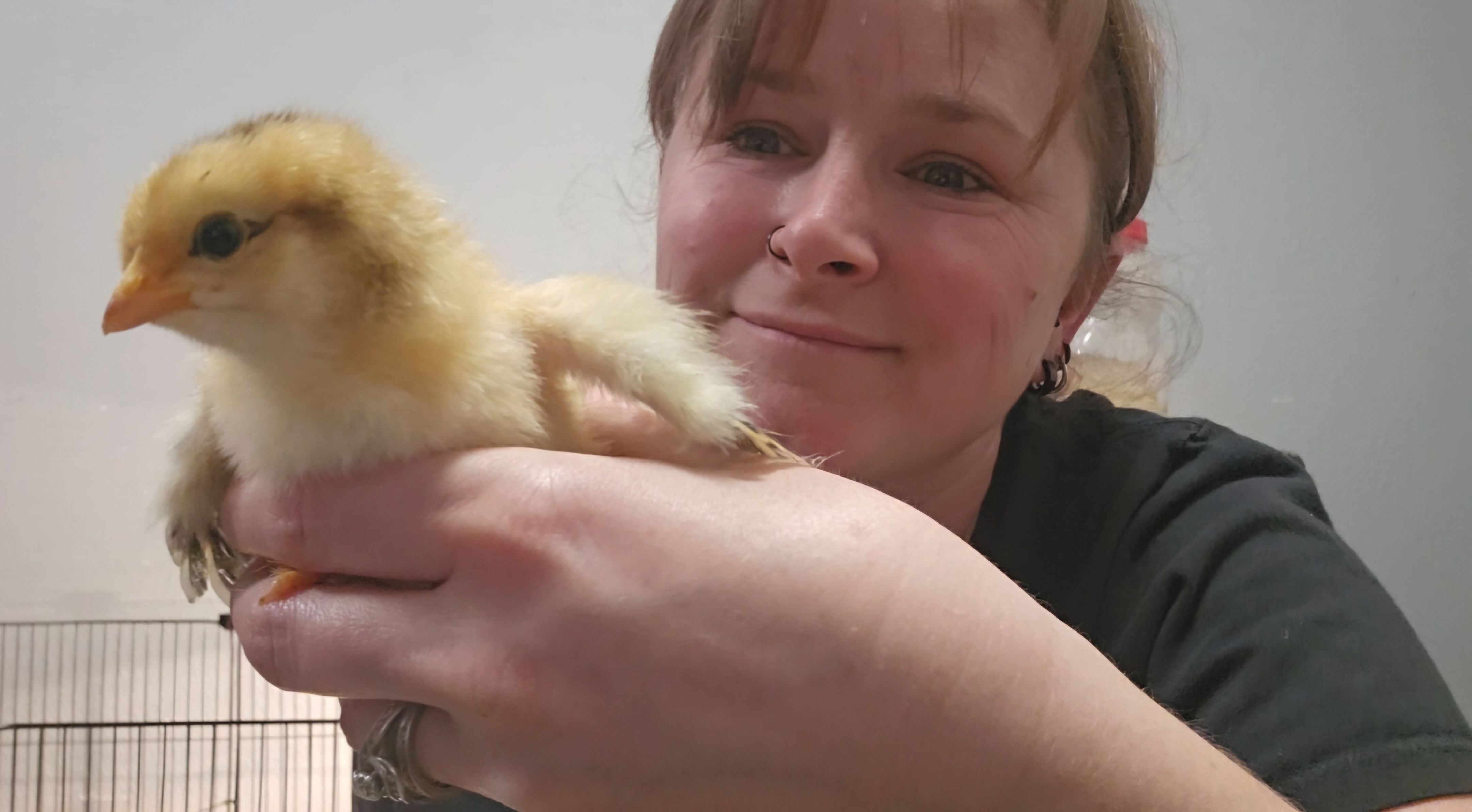
    I’m showing my own one-week-old chicks so you can:

    • See normal behavior
    • Spot warning signs
    • And feel more confident in what you’re looking at

    Free Guide: Raising Chickens With Confidence

    If you’re new and want something simple to follow…

    I put together a free beginner-friendly guide inside my freebie hub.

    👉 Freebie Hub

    It includes:

    • Chick care basics
    • Simple checklists
    • Easy-to-follow guidance

    Take what helps and leave the rest.

    Want to Stay Organized? (Chicken Binder)

    If you’re someone who likes having everything written down and organized…

    My Chicken Binder helps you track:

    • Chick growth
    • Feeding
    • Health checks
    • Coop planning

    It’s perfect if you’re raising chickens seriously or just want less mental chaos.

    Chicken Planner For Backyard Flocks

    Final Thoughts: You’re Probably Doing Better Than You Think

    If you’re standing over your brooder wondering if everything is okay…

    That means you care. And that already puts you ahead.

    Most chick issues don’t come from people not knowing enough—
    they come from not paying attention.

    Watch your chicks, learn their behavior and adjust as you go.

    That’s how confidence is built.

    Not overnight…
    but one day at a time.

    And before you know it,
    you won’t be second-guessing everything anymore.

    And if you want to keep learning as you go…

    Come hang out with me over on Facebook.

    I share simple homesteading education, real-life tips, and I do giveaways over there too.

    It’s a really good place to learn, ask questions, and be around people doing the same thing you are.

    I’d love to have you there.

  • Homesteading Hacks: 15 Life-Changing Tips to Make Your Farm Work (and Your Life Easier)

    Homesteading Hacks: 15 Life-Changing Tips to Make Your Farm Work (and Your Life Easier)

    Homesteading—it’s a lifestyle that’s all about getting your hands dirty, coming up with creative solutions, and living a simpler, self-sustaining life. But let’s be honest, sometimes that “simpler” part gets lost when you find yourself knee-deep in chores, tangled in garden hoses, or trying to herd a stubborn goat back into its pen (again).

    Luckily, there are a few homesteading hacks that will save you time, energy, and perhaps a little bit of your sanity. From clever ways to organize your tools to brilliant tricks for managing your animals, here are 15 life-changing homesteading hacks to make your farm work—and your life easier.


    1. Use an Old Ladder as a Tool Organizer

    That old wooden ladder you’ve been meaning to fix? Turn it into a tool rack! Just hang it horizontally wherever you want some rustic charm. The rungs can hold hoes, shovels, and even your gardening gloves. It’s a quirky yet functional solution to your tool clutter, and hey, it gives your barn a bit of farmhouse charm.


    2. DIY Bug Repellent with Essential Oils

    You love the great outdoors, but bugs…. Not so much? Instead of buying expensive chemical bug sprays, make your own using essential oils. A simple recipe: mix 10-20 drops of lavender, peppermint, or citronella oil with some water in a spray bottle, and boom—you’ve got a natural bug repellent that works wonders and smells much better than the store-bought stuff. Plus, your goats will appreciate the lavender scent.


    3. Repurpose Empty Egg Cartons for Seed Starting

    No need to spend a fortune on seed-starting trays. Those empty egg cartons you have piling up in the kitchen? They’re perfect for starting seeds! Simply fill each compartment with soil, drop in your seeds, and watch them grow. Plus, once the seedlings are ready, you can plant the whole carton in the ground—no need to remove them. The cardboard will biodegrade over time, making it an eco-friendly alternative.


    4. Make a Homemade Chicken Feeder with PVC Pipe

    Tired of constantly refilling your chicken’s feeder? A simple PVC pipe can solve your problem. Just grab a piece of PVC pipe, a few elbows, and T-joints from your local hardware store, and voilà! You’ve got an automatic feeder that prevents waste and gives your chickens access to food throughout the day. Bonus points if it’s elevated off the ground to keep things cleaner.


    5. Use Milk Jugs to Protect New Plants

    If you’ve ever had a young plant fall victim to the chilly early spring nights, you’ll love this hack: use empty milk jugs to protect your tender plants! Cut the bottom off a plastic milk jug, and place it over your new plant as a mini greenhouse. It’ll keep the frost off, and the sun will still get through the clear plastic. Plus, it’s free and recycling at its finest!


    6. Label Your Seeds with Popsicle Sticks

    In the whirlwind of spring planting, it’s easy to forget what you planted where. So, grab a pack of popsicle sticks, and use them as plant labels. Simply write the name of the plant with a permanent marker, and stick them in the soil. Not only is this an easy and affordable way to keep track of your garden, but it also makes you feel like an arts and crafts pro.


    7. Repurpose Old T-Shirts as Shop or Garden Rags

    Those old, holey t-shirts you’ve been hanging onto make excellent shop or garden rags. Cut them up and use them to wipe hands, clean tools, handle muddy pots, or protect your skin during quick garden jobs. They’re washable, reusable, and perfect for the homestead — even if they’re no longer wearable. It’s an easy way to reduce waste and get a little more use out of something you already have.


    8. The One-Bucket Homestead Hack

    Keep one sturdy bucket by the door and let it do multiple jobs. It can collect kitchen scraps for chickens or compost, haul garden tools, carry weeds, hold feed scoops, or catch random homestead messes that pop up throughout the day. It’s simple, flexible, and saves you from walking back and forth ten times. Sometimes the best homestead systems aren’t fancy — they’re just convenient.


    9. Reuse Containers for Simple Homestead Storage

    You don’t need to buy special organizers for your homestead. Old containers you already have — coffee cans, jars, tins, yogurt tubs, plastic bins — can be repurposed for all kinds of storage. They work great for seeds, bolts and screws, garden labels, small tools, animal supplements, and odds and ends that tend to get lost. Label them, stack them, and keep them where you actually use them. It’s not fancy, but it’s practical, saves money, and keeps clutter from taking over. Homesteading isn’t about having matching storage — it’s about making what you have work.


    10. Store Bedding Where You Actually Use It

    Instead of hauling bedding back and forth every time the coop needs freshening, keep a small bin or bag stored right inside or near the coop. Being able to quickly toss in a fresh layer makes maintenance faster and keeps small messes from turning into big cleanups. Simple access beats perfect storage every time.


    11. Keep Hoses Where They’re Needed

    If you have multiple garden or animal areas, it’s often easier to keep one hose permanently assigned to each spot instead of moving one hose everywhere. Less dragging, less wear and tear, and way less frustration.


    12. Collect Rainwater Where It Makes Sense

    Rainwater can be a great supplemental water source for gardens, especially during dry stretches. If it’s legal where you live, collecting rainwater in a simple barrel or container can help reduce water use and stretch your resources. Even a small setup can be useful for watering plants, filling watering cans, or spot-watering beds. Just remember — rainwater systems don’t have to be fancy to be helpful, and they work best as part of a bigger plan, not a cure-all. Always check local regulations, and start small to see what actually works for your space and climate.


    13. Use Scented Plants as a Gentle Pest Deterrent

    Instead of relying on one product to fix pest problems, adding strongly scented plants around your garden and home can help deter some insects naturally. Mint and lavender are two popular options — just make sure to plant mint in containers, not directly in the ground, unless you want it taking over everything. These plants won’t eliminate pests entirely, but they can help reduce pressure when used alongside other good garden practices. Think of them as part of a layered approach, not a cure-all.


    14. Use Free Pallets Instead of Buying New Materials

    Old pallets are often free and easy to find, which makes them a practical shortcut for homestead projects. Instead of buying new lumber, pallets can be repurposed for quick fixes like garden borders, compost bin walls, temporary fencing, or simple storage solutions. They’re not meant to be permanent or perfect, but they allow you to solve problems fast and cheaply using what’s available. When you’re learning as you go, pallets give you flexibility without a big investment — which is exactly what a good homestead hack should do.


    15. Air-Dry Herbs Using a Clothesline or Simple Hanging Space

    Drying herbs doesn’t require special equipment or a dehydrator. A clothesline, drying rack, or even a simple string indoors works just fine. Tie herbs in small bundles and hang them in a dry, well-ventilated space out of direct sunlight. This low-effort method saves energy, preserves flavor, and lets you work with what you already have. It’s a simple, old-fashioned solution that still holds up — especially for small batches.


    Final Thoughts: Homesteading Doesn’t Have to Be Hard—Just Clever

    Homesteading doesn’t have to be complicated or expensive to be rewarding. Most of the time, the best “hacks” are simply finding easier ways to do the things you’re already doing — using what you have, building systems that make sense for your space, and letting go of the idea that everything needs to be perfect. Try one or two of these ideas, skip the ones that don’t fit your homestead, and adjust as you go. That’s how real homestead routines are built. And if you’re looking for more simple, practical tools to help you stay organized and confident, be sure to check out my Freebie Hub for free printables all about homesteading. I’ll link it below so you can grab what fits your life right now. 🙂

  • How to Build Homesteading Confidence (Even If You’re Starting Small)

    How to Build Homesteading Confidence (Even If You’re Starting Small)

    When most people start homesteading, they want to jump in all the way.
    Chickens, garden, goats, sourdough, canning, DIY projects — all at once.

    And honestly? That’s the fastest way to feel overwhelmed, stressed out, and like you’re failing before you even get started.

    Starting small isn’t boring. It isn’t weak.
    It’s how you build real confidence that actually lasts.

    Why Starting Small Always Wins

    I preach this over and over because it’s true: starting small will always win.

    When you try to do everything at once, you get in over your head fast. You’re learning too many new skills at the same time, making constant decisions, and putting pressure on yourself to “keep up” with what you see online.

    That pressure leads to burnout.
    Burnout leads to quitting.

    Starting small does the opposite. It gives you space to learn, make mistakes, and grow without drowning in responsibility.

    Instead of doing everything, pick one thing.

    • One animal
    • One crop
    • One skill

    Learn it. Practice it. Get comfortable.
    Then — and only then — add something new.

    Master One Thing Before Moving On

    Confidence doesn’t come from doing more.
    It comes from knowing what you’re doing.

    When you focus on one animal or one growing skill, you get the chance to:

    • Learn how it really works
    • See problems before they become emergencies
    • Build routines that fit your life
    • Gain experience you can actually rely on

    Once you’ve mastered that one thing, upgrading feels exciting instead of stressful. And when you add the next thing, you’re building on a solid foundation — not scrambling to keep up.

    Small Goals = Easy Wins

    One of the biggest mindset shifts you can make is learning how to create small goals.

    Big goals are inspiring, but they can also feel heavy. Small goals are different — they’re achievable, measurable, and motivating.

    Easy wins build momentum.

    When you hit a small goal, your brain registers success. That success builds confidence. Confidence makes you more willing to keep going.

    It’s not about rushing.
    It’s about stacking wins.

    Expect Failure — and Keep Going Anyway

    Here’s the truth no one talks about enough: failure is part of homesteading.

    Plants die. Animals get sick. Projects don’t turn out the way you planned. Things break. Weather doesn’t cooperate.

    Failure doesn’t mean you’re bad at this.
    It means you’re learning.

    The key is knowing ahead of time that setbacks will happen — and deciding that you’ll keep going anyway. Confidence isn’t built by never failing. It’s built by learning how to recover and adjust.

    Remember Your “Why”

    When things get hard (and they will), your “why” matters.

    Why did you start homesteading?

    • To feed your family better?
    • To live slower?
    • To be more self-reliant?
    • To feel connected to your food and land?

    Write it down.
    Post it somewhere you’ll see it.
    Keep a picture, a note, or a reminder that brings you back to that reason.

    On the days you feel overwhelmed or discouraged, that “why” can keep you grounded.

    Confidence Is Built — Not Born

    You don’t wake up one day confident at homesteading.
    You build it through small steps, patience, and grace with yourself.

    Start small.
    Learn deeply.
    Expect mistakes.
    Celebrate progress.

    That’s how confidence grows — quietly, steadily, and sustainably.

    And remember: you don’t have to do everything to be doing enough. 🌱

  • 10 Ways to Lower Homestead Costs (Without Sacrificing Quality or Comfort)

    10 Ways to Lower Homestead Costs (Without Sacrificing Quality or Comfort)

    Homesteading is an incredibly rewarding lifestyle — but let’s be honest, it can also get expensive fast. Feed costs go up, electricity spikes in the winter, projects add up, and before you know it, the budget feels tighter than last year’s jeans.

    The good news? There are dozens of simple, realistic ways to lower homestead costs without sacrificing your quality of life. In fact, most of these tips will make your homestead more efficient while freeing up money for the projects and animals you really care about.

    Here are 10 practical, beginner-friendly ways to shrink your expenses and stretch your resources further.


    1. Reuse What You Already Have (The #1 Homesteader Money Saver)

    If there’s one rule every homesteader learns early on, it’s this:

    Reuse before you buy.

    From scrap wood to old jars to leftover fencing materials — what you already have is almost always cheaper (and usually faster) than running to the store.

    Common things every homesteader reuses:

    • Old feed bags → weed barrier, trash liners, storage
    • Glass jars → pantry storage, seed saving, fermenting
    • Scrap lumber → nesting boxes, shelves, temporary fencing
    • Buckets → soaking grain, watering animals, hauling compost
    • Totes with broken lids → mini raised beds or brooder bins

    Every reused item is one less thing you need to spend money on. And the savings add up fast.

    💡 Pro Tip: Before buying ANYTHING, ask yourself:
    “Can I build this? Borrow it? Or repurpose something instead?”


    2. Ferment Your Animal Feed to Stretch It Further

    Feed is one of the biggest expenses on the homestead — especially if you have chickens, ducks, or pigs.

    Fermenting feed is an easy way to:
    ✔ Reduce feed consumption by 20–30%
    ✔ Improve gut health
    ✔ Increase egg production
    ✔ Boost nutrient absorption

    All you need is water, a bucket, and 24–48 hours.

    Fermented feed is more filling, so your animals eat less but stay healthier. That means fewer feed runs, less waste, and better overall performance.

    💡 Pro Tip: Start with small batches until you find the perfect consistency. It should be like thick oatmeal — not soup.


    3. Shop From Your Pantry Before Making Your List

    One of the biggest invisible money leaks?
    Buying food you already have.

    Before making a grocery list, shop your pantry, fridge, and freezer first.
    You’ll be shocked how many meals you can create without adding anything to your cart.

    Try this weekly routine:

    1. Check what needs to be used up (produce, dairy, frozen meats).
    2. Build 3–5 meals around those items.
    3. Write a grocery list ONLY for what’s missing.

    This simple habit cuts grocery spending dramatically while reducing food waste — a win-win.


    4. Line-Dry Your Clothes (A Hidden Energy Saver)

    Dryers are one of the biggest electricity hogs in the home.

    Line-drying clothes can:
    ✔ Cut your electric bill
    ✔ Reduce wear on clothes
    ✔ Add that wonderful “fresh air” smell

    Even drying HALF your loads on a line or rack makes a noticeable difference.

    💡 Bonus: In the summer, line-drying helps keep your house cooler by not running the hot dryer inside.


    5. Hand-Wash Dishes When You Can

    It sounds old-fashioned, but choosing to hand-wash small loads of dishes (especially when you’re already at the sink cooking or cleaning) uses significantly less water and electricity.

    You don’t have to hand-wash everything — just the quick stuff.
    It all adds up on your utility bill.


    6. Use a Wood Stove or Fireplace Instead of Electric Heat

    If you have access to wood, using a fireplace or wood stove can save hundreds of dollars each winter.

    Benefits include:
    🔥 Lower electric or propane bills
    🔥 Warmer, more even heat
    🔥 The ability to cook or boil water in emergencies
    🔥 Backup heat during outages

    Even running your wood heat a few nights a week reduces overall heating costs.

    💡 Pro Tip: Stock up on free or cheap wood from tree services, storm-damaged branches, or fallen trees on your land.


    7. Thrift, Barter, or Buy Used Before Shopping New

    Homestead essentials don’t need to be shiny and brand new.

    Check these first:

    • Facebook Marketplace
    • Local farm swaps
    • Estate sales
    • Thrift stores
    • Community buy/sell groups

    You can find fencing, tools, canning jars, heaters, buckets, brooders, and even animal shelters for a fraction of retail price.

    And don’t forget bartering!
    Eggs, produce, or labor can often be traded for tools or supplies.


    8. Grow and Preserve Foods You Use Most

    Instead of trying to grow everything at once, focus on the foods your family actually eats.

    Grow your most-used staples:

    • Potatoes
    • Tomatoes
    • Lettuce
    • Herbs
    • Green beans
    • Peppers

    Then preserve the extras by canning, freezing, dehydrating, or fermenting.
    This reduces grocery spending AND keeps your pantry stocked year-round.


    9. Repair Instead of Replace

    The homestead lifestyle comes with broken tools, ripped gloves, loose screws, cracked buckets, and leaking hoses — constantly.

    Before tossing anything, ask yourself:
    “Can I fix this for cheaper than replacing it?”
    Most of the time, the answer is YES.

    Simple repairs can add years to your tools and equipment.

    💡 A small repair kit goes a long way: duct tape, JB Weld, zip ties, replacement parts, extra screws, hose menders, etc.


    10. Start Small — Add More Only When You’re Ready

    One of the most expensive homestead mistakes?
    Expanding too fast.

    Every new animal comes with:
    ✔ Feed
    ✔ Shelter
    ✔ Watering equipment
    ✔ Bedding
    ✔ Emergency costs

    Every new garden bed comes with soil, compost, fencing, and irrigation needs.

    Growing slowly protects both your wallet and your sanity.

    💡 Rule of Thumb:
    If you can’t afford the setup, the feed, AND the emergency fund…
    wait.

    Your homestead will grow stronger — and cheaper — when you take it one step at a time.


    Final Thoughts

    Lowering homestead costs isn’t about cutting corners — it’s about working smarter, being resourceful, and building systems that support you long-term.

    Reuse what you can.
    Grow what you eat.
    Invest slowly.
    Fix things when they break.
    And always, ALWAYS check your scrap pile first.

    With a little creativity, your homestead can become not only more self-sufficient… but more affordable, too.

  • 5 Simple Homestead Organization Systems That Actually Work

    5 Simple Homestead Organization Systems That Actually Work

    Let’s be honest: homesteading comes with a lot of moving parts. Feed schedules, breeding records, garden plans, never-ending projects, and that mountain of laundry that somehow multiplies overnight.

    If you’ve ever felt like you’re juggling too many things (while holding a feed bucket and a coffee mug), you’re not alone. Over the years, I’ve learned that staying organized doesn’t mean having a perfect system — it just means having simple habits that help the chaos make sense.

    Here are five systems I use to keep my homestead (and my sanity) in check.

    1. Keep a Homestead Binder

    Your binder is your best friend — a place to keep all your important information in one spot. It doesn’t have to be fancy; just functional.

    Here’s what I include in mine:

    • Education & Notes: Animal care tips, and any research or education about future animals I plan to raise.
    • Goals & projects: what I’m working on this season or hope to build next year.
    • Animal records: medications, vaccinations, births, and weights.
    • Pasture rotation logs: where animals grazed and when.

    It’s part planner, part memory keeper — and when life gets hectic, having it all written down is a lifesaver.

    Need a starting point? I have a printable homestead binder available on my website with clean, beginner-friendly pages.

    2. The 5-Minute Tidy Rule

    This rule changed my life: if it takes five minutes or less, do it now.
    Wipe the counter. Put away the boots. Fold the towels.

    Those little tasks may seem minor, but they add up fast — and they keep the house (and barn) from turning into a full-blown disaster zone.

    The same goes for your feed room, workshop, or garden shed. A quick tidy here and there keeps big messes from ever forming.

    3. Practice the O.H.I.O. Rule — Only Handle It Once

    When you pick something up, put it where it actually belongs.
    Don’t move it from one pile to another or set it “for later.”

    Whether it’s a bucket, a feed scoop, or your mail, handle it once.
    Put it in its home, and move on. It saves time, brain space, and a whole lot of clutter.

    4. Use Color-Coded Bins or Shelves

    This is a small change that makes a huge difference — especially if you have multiple animals or shared supplies.

    Color-coding helps everyone (including helpers, kids, or partners) know what goes where.

    • Blue bins: poultry supplies
    • Green bins: garden tools
    • Yellow bins: goat or livestock gear
    • Red bins: emergency or medical items

    You can use tape, bins, or even painted shelf edges — whatever fits your setup. The goal is simple: make it easy to find what you need and just as easy to put it back.

    5. Create Themed Days (and Keep a Realistic Project List)

    It’s easy to feel overwhelmed when every task feels urgent. The truth? It’s not.

    I like to give my week a rhythm by assigning themed days:

    • Feed Day Friday – check and restock feed, hay, minerals.
    • Meal Prep Monday – batch-cook and plan dinners.
    • Clean-Up Day – catch up on laundry, dishes, and deep cleaning.

    I also keep a “Project List” — but here’s the key: it’s an eventually list, not a today list.
    I write everything down so I don’t forget it, but I remind myself constantly:

    “It doesn’t all have to be done. In fact, it’ll never be done — and that’s okay.”

    Homesteading is a lifestyle, not a finish line.

    Final Thoughts

    Staying organized isn’t about perfection — it’s about peace of mind. A binder, a few color bins, and some simple routines can transform the daily chaos into something that feels doable.

    Remember: your homestead will never be fully finished, and that’s part of its beauty. You’re growing, learning, and creating something meaningful — one small, organized step at a time.