Category: In The Kitchen

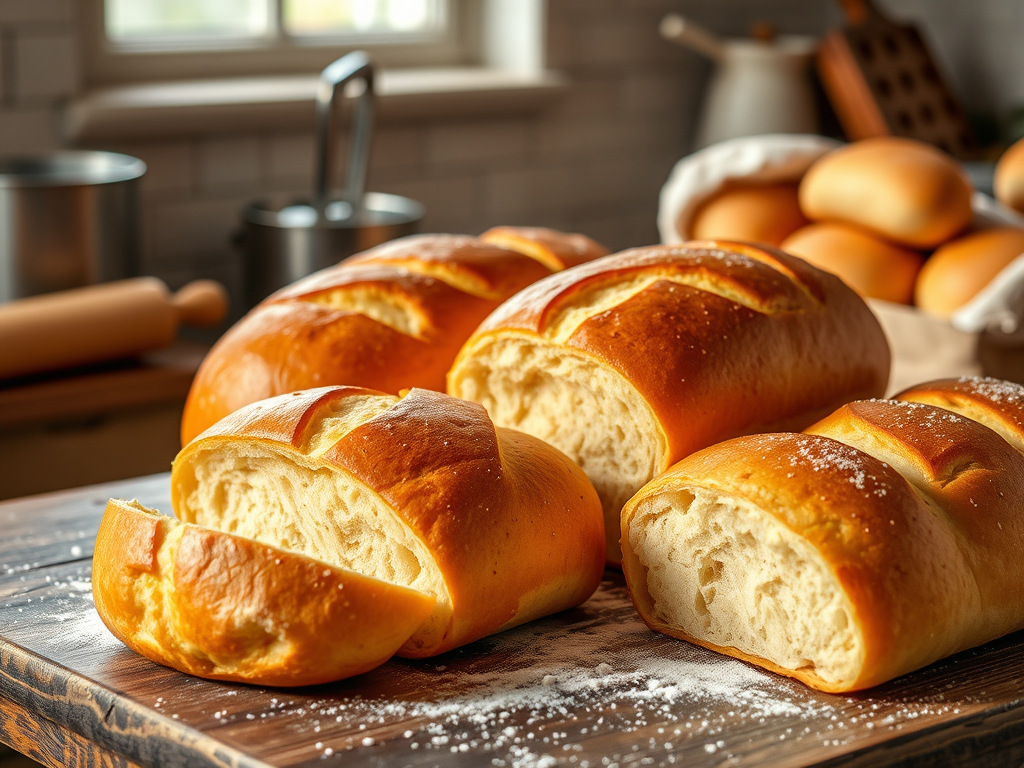
  • Soft Homemade French Bread Loaves + Hoagie Roll Option

    Soft Homemade French Bread Loaves + Hoagie Roll Option

    There is nothing—nothing—like the smell of fresh homemade bread baking in your kitchen. It instantly makes your home feel warmer, cozier, and just… happier. And this recipe? It’s one of my absolute favorites because it’s simple, reliable, and incredibly versatile.

    This homemade French bread comes out soft, squishy, lightly golden, and perfect for serving with dinner, slicing for sandwiches, or turning into hoagie rolls. It uses everyday ingredients, requires no fancy tools, and makes two full loaves — or one loaf and a batch of hoagie rolls like I did!

    If you’ve been looking for a beginner-friendly bread recipe that works every time, this is the one.


    Ingredients

    • 5–6 cups flour
    • 2 ¼ cups warm water
    • 2 tablespoons sugar
    • 1 tablespoon yeast
    • ¾ teaspoon salt
    • 2 tablespoons oil

    🥖 How to Make Becky’s Homemade French Bread

    1. Activate your yeast

    Pour the warm water and sugar into a large mixing bowl.
    Sprinkle the yeast on top and gently stir.
    Let it sit for a few minutes until it starts to bubble and foam — this means the yeast is alive and ready to work its magic.

    2. Add oil, salt & flour

    Stir in the oil and salt.
    Slowly add 5 cups of flour, mixing until everything is well combined.

    3. Knead the dough

    Turn your dough out onto a lightly floured surface.
    Use the remaining 1 cup of flour during kneading as needed.
    Knead for 4–5 minutes, adding flour only until the dough is soft, smooth, and just a little tacky — not sticky.

    4. Shape your loaves

    This recipe makes 2 full French bread loaves.
    Shape them however you like:

    • 2 large French loaves
    • 8 hoagie rolls
    • or 16 small bun-sized rolls

    5. Let rise

    Place your shaped loaves or rolls on a greased baking sheet.
    Cover with a towel and let rise for 1 hour, or until visibly puffy.

    Score the tops if desired — this helps the bread expand beautifully while baking.


    🔥 6. Bake

    Bake at 375°F for 20–25 minutes.

    For an extra golden brown, soft top:
    Brush with melted butter during the last 10 minutes of baking.

    The smell when these come out of the oven… heavenly.
    The texture is soft, warm, and perfectly squishy.


    🍽️ How to Use This Dough

    This dough is incredibly versatile. Try using it for:

    • French bread
    • Hoagie rolls
    • Sub sandwiches
    • Garlic bread
    • Bread bowls
    • Dinner rolls
    • Picnic sandwiches

    Once you make it, you’ll realize how many meals it fits into.


    💛 Final Thoughts

    This homemade French bread is one of those recipes that instantly becomes a family staple. It’s easy, forgiving, and makes your whole home smell amazing. Whether you’re making classic French loaves or hoagie rolls for the week, this bread is soft, warm, and absolutely delicious.

    If you make this recipe, I’d love to hear how it turned out for you!

  • 7 Pantry Staples Every Homesteader Should Have Year-Round

    7 Pantry Staples Every Homesteader Should Have Year-Round

    A well-stocked pantry is the heartbeat of any homestead. Whether you’re deep in canning season or throwing together a last-minute dinner, having reliable staples on hand makes everything smoother.

    Over the years, I’ve learned that there are a few items I never let myself run out of — simple, versatile ingredients that stretch meals, preserve food, and keep us prepared for whatever comes our way.

    Here are my 7 must-have pantry staples that every homesteader should keep stocked year-round.

    1. Dried Beans and Lentils

    They’re affordable, filling, and incredibly versatile. Dried beans and lentils can be used in soups, stews, casseroles, or canned for quick, ready meals. Lentils cook faster and don’t need soaking, which makes them perfect for those days when you forget to plan dinner.

    💡 Tip: Store in airtight jars or food-grade buckets with oxygen absorbers to extend shelf life. Rotate them yearly for freshness.

    2. Flour and Grains

    Flour is the base for so many homestead staples — bread, pancakes, biscuits, tortillas, you name it. I like to keep both all-purpose and whole wheat flour, along with oats, cornmeal, and rice (more on rice below!). These shelf-stable grains can carry you through busy seasons or lean times.

    💡 Tip: Freeze flour for 48 hours before long-term storage to prevent pests. Then transfer it to airtight containers.

    3. Rice

    Rice deserves its own category because of how versatile and long-lasting it is. It pairs with nearly any meal and stores beautifully. We keep both white rice (for long-term storage) and brown rice (for flavor and nutrition, though it has a shorter shelf life).

    💡 Tip: Store rice in sealed containers or mylar bags with oxygen absorbers. A 5-gallon bucket can hold around 35 pounds — that’s a lot of meals!

    4. Salt — The Ultimate Preserver

    Salt isn’t just for flavor — it’s a tool for survival. It’s essential for curing meat, fermenting vegetables, and preserving food. I always keep sea salt for everyday cooking and pickling salt for canning.

    💡 Tip: Skip iodized salt for canning projects — it can cloud your jars and change the taste.

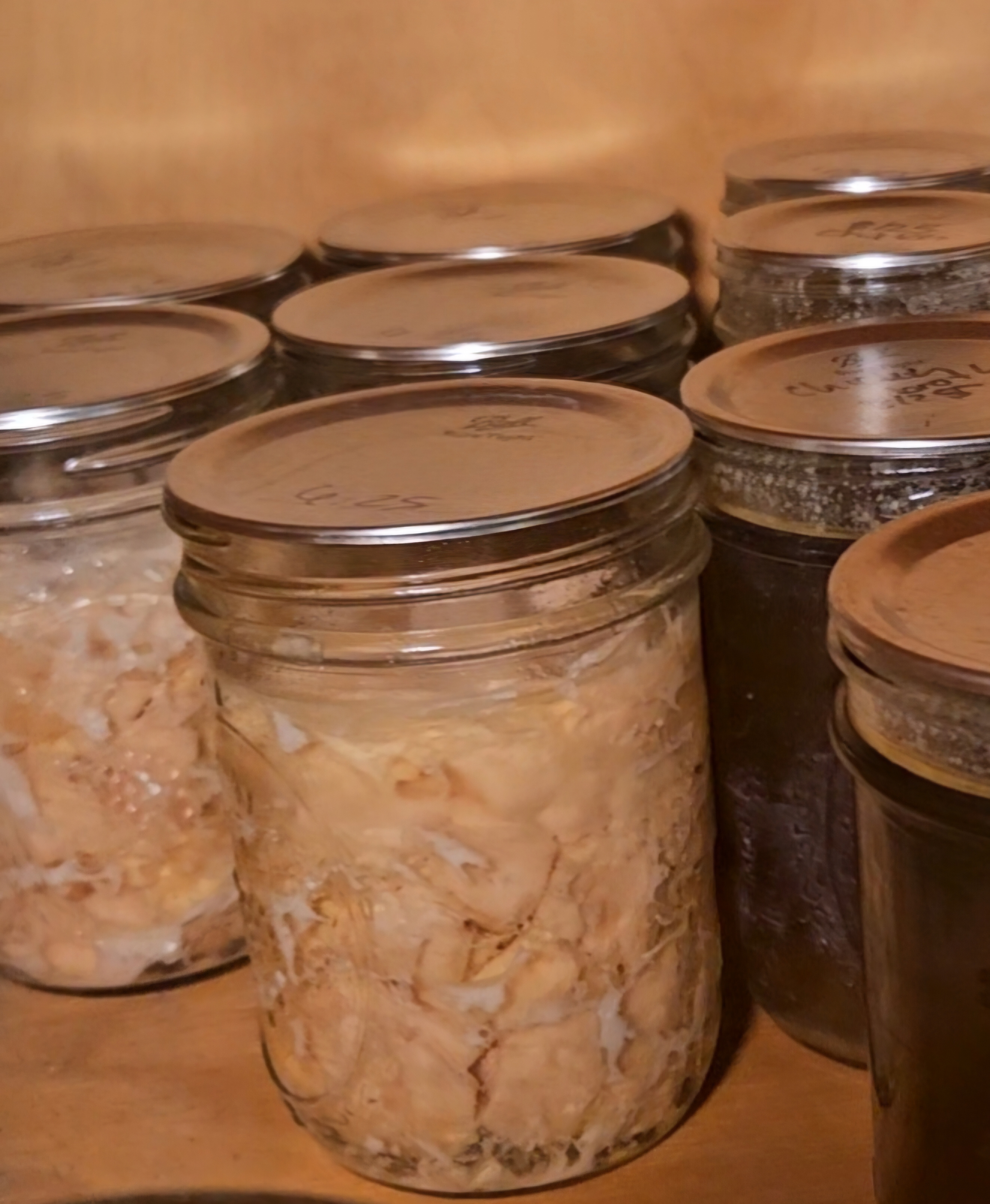
    5. Home-Canned Meat and Broth

    Few things make me happier than seeing rows of home-canned meat and broth on my shelves. It’s convenient, shelf-stable protein ready for any meal. Whether it’s turkey, chicken, or beef, I can throw together soups, dips, and casseroles in minutes — no thawing required.

    💡 Tip: Check out my post on From Freezer to Pantry: How I Pressure Can Turkey for Long-Term Storage for exact times and steps.

    6. Tomatoes and Tomato Products

    Tomatoes are one of the most versatile ingredients in the pantry — think sauces, soups, stews, chili, and salsa. Every year, I can plenty of diced tomatoes, tomato sauce, and paste so we’re set until next harvest.

    💡 Tip: Add bottled lemon juice or citric acid when canning to keep the acidity safe for storage.

    7. Vinegar

    If I could only keep one “multi-tool” in my kitchen, it would be vinegar. It’s used for cleaning, pickling, cooking, canning, and even animal care. I keep both white distilled vinegar (for cleaning and canning) and apple cider vinegar (for marinades, dressings, and even goat care!).

    💡 Tip: Store vinegar in a cool, dark place. It lasts indefinitely when sealed properly.

    Final Thoughts

    A well-stocked pantry is about more than just food — it’s about security, simplicity, and peace of mind. When you build your pantry with intention, you’re not just preparing for busy seasons; you’re investing in your family’s independence year-round.

    These seven staples have earned a permanent spot in my pantry because they’re versatile, affordable, and practical — the kind of ingredients that keep our homestead running, no matter the season.

    What’s one item you can’t live without in your pantry? Let me know in the comments below!

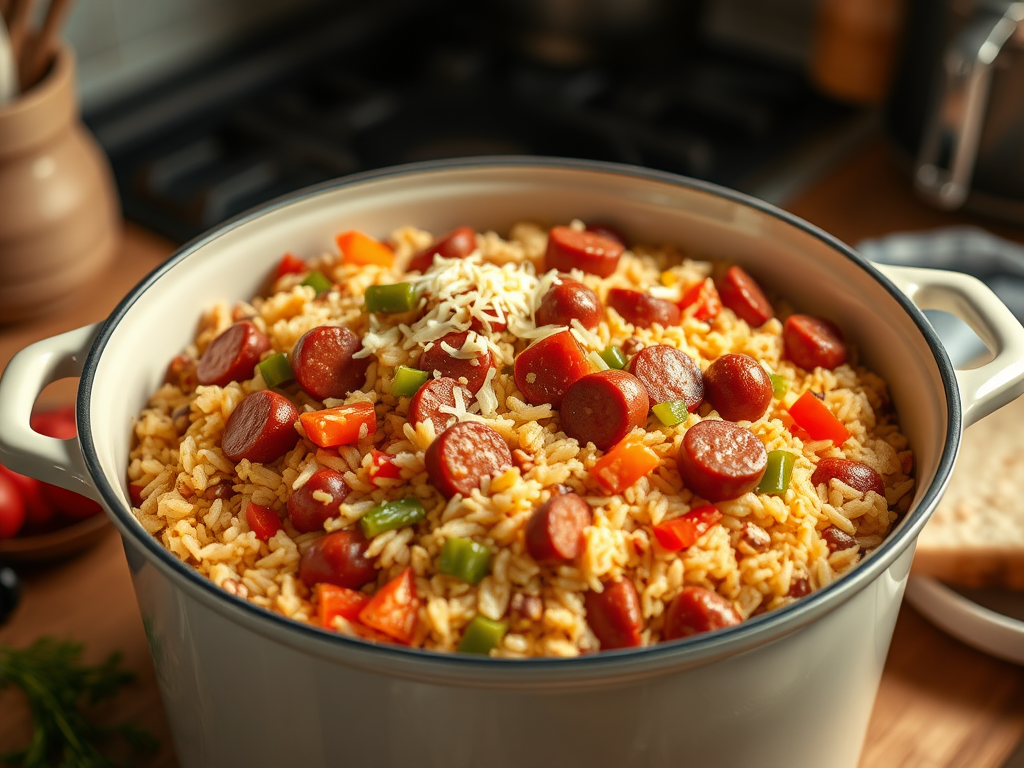
  • The Nikki Special: Big-Batch Kielbasa Rice Dinner (Dump-and-Go)

    The Nikki Special: Big-Batch Kielbasa Rice Dinner (Dump-and-Go)

    Some recipes come from cookbooks… some come from Grandma… and some come from a coworker named Nikki who casually hands you a recipe one day and changes your entire dinnertime routine forever.

    This dish—which we lovingly call The Nikki Special—has gone through many tweaks and adjustments over the years. At this point, it’s very much my version… but the name sticks because it makes me smile every time.

    And fair warning: this makes a BIG batch.
    Like, “feed the whole family for dinner AND have lunches for the rest of the week” big.
    It’s hearty, flavorful, comforting, and ridiculously easy to customize.

    Let’s dive in!


    Ingredients

    • 2 boxes Rice-A-Roni or 2 cups uncooked white rice
    • 1 whole onion, chopped
    • 3 bell peppers, chopped
    • 2 pint jars of homemade chicken broth
      (About 4 cups — you can do half broth, half water if needed)
    • 1 kielbasa sausage, sliced into bite-sized pieces
    • 1 can corn, drained
    • A handful of cheese, your choice (cheddar, Colby Jack, etc.)

    Optional add-ins:

    • Garlic (fresh or powdered)
    • Green onions
    • Peas
    • Mushrooms
    • Anything you’d throw in a stir fry

    🍳 How to Make the Nikki Special

    1. Cook your rice

    If you’re using Rice-A-Roni, follow the instructions on the box—just swap the water for broth for extra flavor.

    If you’re using white rice, you’ll want to season it yourself since it doesn’t come with a flavor packet. Add:

    • Salt
    • Pepper
    • Garlic powder
    • Onion powder
    • Or your favorite all-purpose seasoning blend

    This step ensures the rice is flavorful and not bland once everything comes together.

    2. Add your veggies while the rice cooks

    Throw the chopped onion and bell peppers right into the pot while the rice cooks.
    No extra pan, no extra dishes—my kind of cooking.
    They soften perfectly and add tons of flavor.

    3. Add the kielbasa

    Once the rice is done, stir in the sliced kielbasa.
    It warms through quickly and gives the dish a hearty, smoky bite.

    4. Add the corn + cheese

    Stir in:

    • 1 can of corn
    • A handful of shredded cheese

    Mix until the cheese melts and everything is combined.

    5. Taste & tweak

    Now channel your inner Ratatouille.
    Smell it. Stir it. Taste it. Adjust seasonings.
    Add more cheese, garlic, veggies—whatever makes your heart happy.

    And viola! Dinner is served.


    🍽️ Why My Family Loves This Recipe

    • Makes a HUGE batch
    • Reheats beautifully
    • Has everything in one pot (rice, veggies, protein, cheese!)
    • Easy to customize
    • Comfort food at its finest

    It’s one of those meals that somehow turns out great every single time—even when you wing it( which is essentially every meal in my household). Let me know if you try this one, and what you thought!

  • Creamy Buffalo Chicken Crack Dip with Canned Chicken

    Creamy Buffalo Chicken Crack Dip with Canned Chicken

    If you’re looking for the perfect dip to take to a party, potluck, family gathering—or honestly just to enjoy on the couch while watching a movie—this Homemade Chicken Crack Dip is it.

    It’s creamy, spicy (but not too spicy), cheesy, and unbelievably easy to whip together. This is one of those dips that disappears FAST. Like… blink and it’s gone.

    I’ve been making this for years using my own canned chicken, but store-bought canned chicken works perfectly too. The real magic is in the creamy base and the buffalo sauce that brings everything to life.


    Why I Love This Chicken Crack Dip

    • Dump-and-go style
    • Perfect for using your home-canned chicken
    • Easy to adjust spice level
    • Always a crowd-pleaser
    • Amazing with chips, crackers, veggies, or bell peppers (my favorite!)
    • No fancy skill required—just mix, bake, and enjoy

    🥣 Ingredients

    • 1 pint jar of home-canned chicken
      or 2 standard cans of store-bought chicken (drained)
    • 16 oz cream cheese, softened
    • 16 oz sour cream
    • 1 large handful shredded cheese (cheddar, Colby Jack, or your favorite)
    • Frank’s Buffalo Hot Sauce
      About ¼ cup for mild/medium,
      ½ cup or more for spicy!
      (Or, as I do: “measure with your heart” depending on the occasion.)

    Optional toppings:

    • Extra shredded cheese
    • Sliced green onions
    • Bacon Bits

    🧡 How to Soften Your Cream Cheese

    Cream cheese MUST be softened or it won’t blend smoothly.

    • Leave it on the counter for 1–2 hours OR
    • Microwave for 10–15 seconds at a time until soft (not melted)

    🍗 How to Make Chicken Crack Dip

    1. Mix the base

    Add softened cream cheese and sour cream to your mixer bowl.
    I use my KitchenAid for this because my arms get tired, and cream cheese sometimes fights back. 😂
    Blend until completely smooth—no clumps.

    2. Add the chicken, cheese & hot sauce

    Mix in:

    • Your canned chicken
    • A handful of shredded cheese
    • Frank’s Buffalo Hot Sauce

    Start with ¼ cup of hot sauce if you’re unsure. You can always add more!
    At home I add way more because that’s how my daughter likes it.

    Mix again until everything is fully combined. Mixy mixy!

    3. Bake

    Spread your dip into a casserole dish.
    Bake at 400°F for 15 minutes or until it’s hot and bubbly around the edges.

    (Yes, 400° for 15 minutes is perfect!)


    🥨 How to Serve

    This dip is amazing with:

    • Tortilla chips
    • Crackers
    • Pita chips
    • Celery sticks
    • Bell pepper slices (my personal favorite!)

    Honestly… it’s one of those dips that tastes good with anything


    If you try this recipe, let me know what you think!
    I can almost guarantee there won’t be leftovers.

  • 5 Homestead Kitchen Hacks That Save Time, Money, and Sanity

    5 Homestead Kitchen Hacks That Save Time, Money, and Sanity

    Homesteading means a lot of home-cooked meals, but let’s be honest — the kitchen can feel like a full-time job all by itself. Between canning, baking, feeding animals, and trying to keep the counters visible, it’s easy to feel like you’re always cooking or cleaning.

    That’s why I’ve learned a few simple hacks that save me hours every single week — without cutting corners on real, nourishing food. These are the tricks I use in my own kitchen to stay organized, save money, and make cooking from scratch a little more manageable.

    1. Save Your Soup & Bone Scraps for a Weekend Cook-Down

    Don’t toss those veggie ends, onion skins, or chicken bones — they’re gold! I keep a freezer bag labeled “Soup Scraps” and add odds and ends all week long. When the bag’s full, I do a weekend broth cook-down using bones from roasted chicken, pork, or beef.

    Homemade broth is full of collagen, protein, and extra nutrition — plus it adds rich flavor to soups, stews, and sauces. I even use it in place of water when cooking rice, beans, or pasta.

    Once it’s done, I pressure can the broth so I always have jars ready to go on the shelf. It’s one of those behind-the-scenes homestead habits that makes every meal taste better.

    2. Batch Use the Oven (and Time It Right)

    If you’re going to fire up the oven, make it count! I try to bake or roast multiple things at once — like bread, casseroles, and veggies — to save energy and time.

    In the summer, do your baking first thing in the morning before the house heats up. In the winter, let the oven warmth double as a cozy space heater for the kitchen.

    Little tweaks like this stretch your resources and make cooking feel more intentional — not like an endless to-do list.

    3. Pre-Make Your Mixes

    Think of this as your homemade version of those boxed baking mixes — but healthier and cheaper. On slower days, I mix up jars or baggies of:

    • Pancake mix
    • Biscuit mix
    • Cornbread or muffin mix

    When you’re ready to cook, just add the wet ingredients. You can even write the directions right on the jar with a dry-erase marker.

    Buy in bulk to save money — I grab 25–50 lb bags of flour or oats and re-seal them into gallon-size freezer bags. It’s cheaper per pound and makes it easy to grab just what I need without hauling a huge bag every time.

    4. Clean as You Cook

    It sounds obvious, but it’s a game-changer. Keep a sink of soapy water ready while you cook and wash dishes as you go. Wipe counters between steps. Stack cutting boards neatly instead of letting them pile up.

    When dinner’s done, you’ll only have a few things left to rinse — not a mountain of dishes staring at you. Your future self will thank you!

    5. Repurpose or Reuse Leftovers

    Before you toss it, ask: can this become lunch tomorrow? Leftover roasted veggies can become an omelet. Extra rice turns into fried rice. A bit of beef roast can fill tacos or burritos.

    And if something truly isn’t edible anymore — your animals will happily take care of it. Pigs, chickens, and even compost piles appreciate those odds and ends, so nothing goes to waste.

    Final Thoughts

    Homesteading doesn’t have to mean spending all day in the kitchen. With a few smart habits — like saving your scraps, batching your baking, and cleaning as you go — you can reclaim your time and make meals that feel homegrown and hearty.

    Remember: cooking from scratch should feel rewarding, not exhausting. A little prep goes a long way toward a calm, happy, well-fed homestead.

  • Best Homemade Waffle Recipe with Quick Homemade Maple Syrup

    Best Homemade Waffle Recipe with Quick Homemade Maple Syrup

    There is nothing better than a cozy breakfast at home—especially when it involves fresh, fluffy homemade waffles and warm maple syrup bubbling on the stove. This is one of those recipes that looks and tastes fancy, but it’s actually incredibly simple to make. And if you’ve seen any of my dump-and-go style recipes before, you already know I’m not about extra dishes or complicated steps.

    Just toss it all together, plug in the waffle iron, start your syrup, and boom—breakfast magic.

    These waffles are soft on the inside, crisp on the outside, and perfect for adding chocolate chips, fruit, whipped cream, or whatever your family loves. And the homemade syrup? Let’s just say my youngest goes through it so fast that I honestly couldn’t tell you the exact shelf life… but it easily lasts a month in the cupboard in a sealed jar!

    This is one recipe pair you’re going to want to keep forever.


    🧇 Homemade Waffle Recipe

    Ingredients

    • 2 ¼ cups flour
    • ¼ cup sugar
    • 1 tablespoon baking powder
    • ½ teaspoon salt
    • ½ cup butter (melted)
    • 2 cups milk
    • 2 eggs
    • 2 teaspoons vanilla

    Optional add-ins:

    • Chocolate chips
    • Blueberries
    • Cinnamon
    • Chopped nuts

    🧇 How to Make the Waffles

    If you’ve followed my cooking style for any amount of time, you know what’s coming…

    Just toss everything in a bowl and mix it well.
    That’s it.

    No separating eggs, no beating egg whites, no mixing dry and wet ingredients in two different bowls. One bowl, one spoon, one happy cook.

    Once your batter is smooth, let it sit while your waffle iron heats up. Cook according to your waffle maker’s instructions—usually 3–5 minutes per waffle.


    🍁 Homemade Maple Syrup Recipe

    This syrup comes together so fast you won’t believe it, and it tastes way better than the store-bought versions—especially if you use the maple extract.

    Ingredients

    • 1 cup water
    • 2 cups sugar
    • 1 teaspoon molasses
    • ½–1 teaspoon maple extract
    • 1 teaspoon vanilla (optional, but makes it taste more “store bought”)

    🍯 How to Make the Syrup

    1. Bring water to a boil in a saucepan.
    2. Add sugar and molasses, stirring until dissolved (about 2 minutes).
    3. Remove from heat and stir in maple extract and vanilla (if using).
    4. Let it sit and thicken as it cools.

    That’s it!
    You just made homemade syrup in minutes.

    It stores beautifully in a sealed jar in your cupboard for up to a month—although in my house, it never lasts anywhere near that long because my youngest is obsessed with waffles.


    💛 Put It All Together

    My favorite thing about this combo is how perfectly the timing works out. Usually I start the syrup while the first waffle is cooking. By the time the last waffle comes off the iron, the syrup has thickened, cooled just enough, and is ready to drizzle.

    Fluffy waffles + warm homemade syrup = happy family.

    If you give these recipes a try, let me know what you think! I love hearing when other families enjoy these cozy homestead meals as much as we do.

  • Homestead Meal Planning: 5 Easy Meal Prep Hacks for Busy Families

    Homestead Meal Planning: 5 Easy Meal Prep Hacks for Busy Families

    5 Practical Tips I Use Every Week to Save Time, Reduce Waste, and Keep Our Homestead Kitchen Running Smoothly

    Homesteading means a lot of things — feeding animals, tending gardens, canning food, and tackling endless projects. But one chore that never ends? Cooking.
    If you’re anything like me, dinner often sneaks up right when the animals are loudest and the kids are hungriest. That’s why I’ve learned to rely on simple meal prep habits that help me cook from scratch without losing my mind.

    Here are 5 meal prep hacks I use every single week to keep our homestead meals wholesome, quick, and budget-friendly.

    1. Batch Cook Your Proteins

    If you only do one thing from this list, do this.
    On Sundays (or whatever day you can), cook all your main proteins at once. Ground beef, shredded chicken, or even a few pounds of pork roast — it all saves time later.

    Then you can mix and match throughout the week:

    • Ground beef: tacos, spaghetti, or a cheeseburger casserole.
    • Chicken: chicken salad sandwiches, soups, stir-fry, or wraps.
    • Pork: pulled-pork sliders, burrito bowls, or breakfast hash.

    Tip: Keep the seasonings neutral when batch cooking. You can always add flavor later depending on what meal you’re making.

    2. Chop and Prep Your Veggies in Advance

    A big reason home cooking feels hard is all the chopping. Save yourself from the midweek scramble by pre-cutting veggies right after your grocery or garden haul.

    • Slice onions, peppers, and carrots and store them in clear containers.
    • Wash and dry lettuce or spinach so salads come together in seconds.
    • Freeze excess garden veggies in labeled bags for quick soups or casseroles.

    Having ready-to-go ingredients makes grab-and-go cooking a breeze — and helps you use what you grow before it spoils.

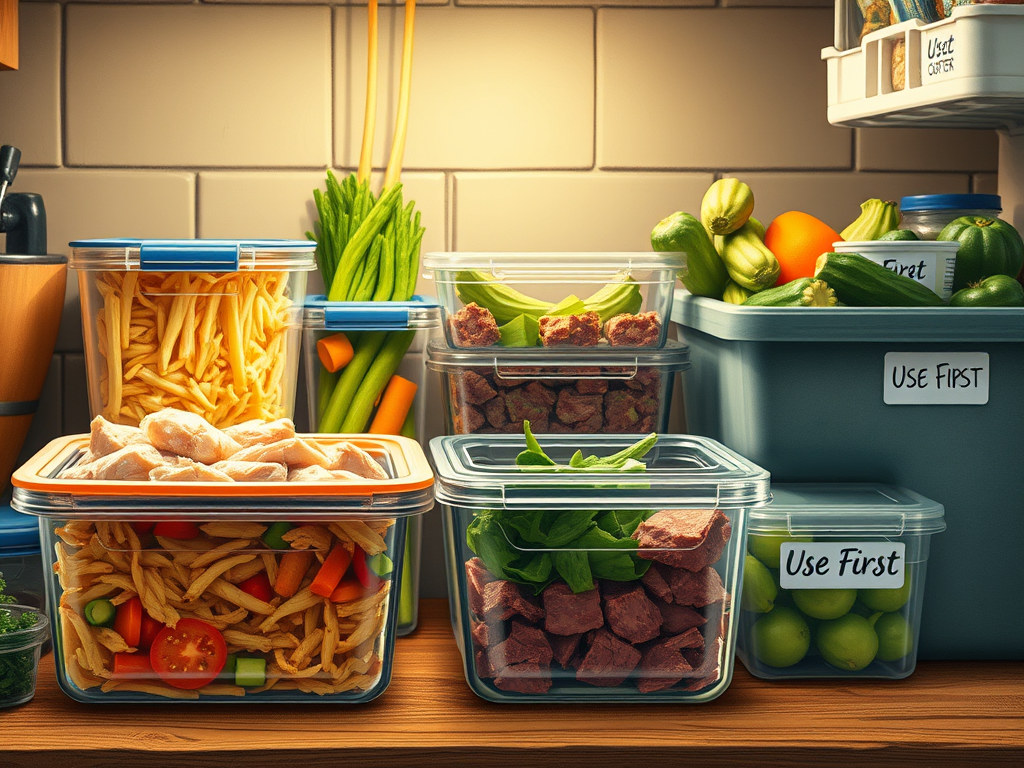
    3. Keep a “Use First” Bin in Your Fridge

    We’ve all done the fridge shuffle — moving jars and containers around until you find something that’s gone bad. To avoid that, I use a simple system:

    • A small bin(or shelf) labeled “Use First.”
    • Anything close to expiring or leftover goes in there.
    • Everyone in the family knows to check it first before grabbing something new.

    Pair this with masking tape and a Sharpie to label containers and jars with the date and contents. It’s cheap, fast, and prevents waste — plus, you’ll always know what’s next in line before it turns into a science experiment.

    4. Embrace “Base Ingredients” for Mix-and-Match Meals

    Instead of cooking full recipes every night, I prep a few base ingredients I can reuse in multiple ways:

    • Cooked rice, quinoa, or potatoes
    • Roasted veggies
    • Beans or lentils

    Then I just combine them with whatever protein or sauce we have on hand. For example:

    • Rice + shredded chicken + veggies = easy stir fry
    • Potatoes + ground beef + cheese = hearty skillet dinner
    • Beans + pork + tomatoes = quick chili

    It’s like building blocks for dinner — you can create endless combinations without starting from scratch.

    5. Make Your Pantry Work for You

    Your pantry is your best friend during busy weeks. Keep it stocked with home-canned goods, dried herbs, and staples that help stretch fresh ingredients.

    Some of my must-haves:

    • Home-canned broth or tomatoes for instant soups
    • Dried herbs and spice blends
    • Flour, oats, and baking basics
    • Rice, pasta, and beans for filling sides

    A well-organized pantry makes it easy to see what you have, plan around it, and avoid those “nothing to cook” moments.

    Final Thoughts

    Meal prepping on the homestead doesn’t have to be complicated. It’s about setting yourself up for success — cooking smart once so you can eat well all week.

    With a little organization (and a roll of masking tape), you can spend less time stressing about dinner and more time enjoying the fruits of your labor — literally.

  • No-Bake Lemon Fudge (3 Ingredients & Ridiculously Easy!)

    No-Bake Lemon Fudge (3 Ingredients & Ridiculously Easy!)

    If you’re looking for a dessert that’s sweet, creamy, refreshing, AND doesn’t require you to turn on your oven… you just found it!
    This No-Bake Lemon Fudge is one of the easiest desserts you’ll ever make—and with only three simple ingredients, your friends and family will absolutely beg you for the recipe.

    It’s bright, zesty, silky, and dangerously addicting. Also? Foolproof. Like truly “dump, melt, mix, chill” foolproof.

    Let’s get into it!


    Why You’ll Love This Lemon Fudge

    • No baking involved (hallelujah)
    • Only 3 ingredients
    • Ready to chill in minutes
    • Perfect for holidays, BBQs, potlucks, teacher gifts… or just because
    • Kid-friendly and super customizable

    This recipe is basically sunshine in fudge form.


    🍋 Ingredients

    • 24 oz white almond bark or white chocolate chips
    • 1 (14 oz) can sweetened condensed milk
    • 1 package lemon instant pudding mix (the whole thing!)

    🔥 How to Make No-Bake Lemon Fudge

    1. Melt the chocolate

    If you have a double boiler, this is its moment to shine.
    If not? A microwave works perfectly.

    Using almond bark:
    Cut or shave it into smaller chunks so it melts faster and more evenly.

    Microwave method:
    Place the chocolate in a microwave-safe bowl and heat in 30-second intervals, stirring each time.
    Don’t skip the stirring—if you heat it too long without mixing, you’ll end up with burned chocolate in some spots and unmelted hunks in others. Trust me, 30 seconds + stir is your new best friend.

    Double boiler method:
    Heat on low and stir continuously until smooth and melty.


    2. Add the magic

    Once your chocolate is melted, stir in:

    • the full can of sweetened condensed milk, and
    • the entire package of lemon pudding mix

    Don’t skimp on the pudding mix—it helps the fudge set and gives it that delicious lemony flavor.
    Mix until everything is smooth and combined. Mixy mixy! 😄


    3. Pour & chill

    Line an 8×8 pan with parchment paper and pour the mixture in.
    Smooth the top and pop it in the fridge for 2 hours (or until firm).

    Once set, lift the fudge out by the parchment, slice into squares, and enjoy!


    🍋 Time to Taste!

    This fudge is creamy, bright, and SO refreshing. The lemon flavor makes it perfect for spring and summer, but honestly… I’d make this any day of the year.

    I’m already thinking about experimenting with other pudding flavors—maybe butterscotch? Chocolate? Banana cream?
    I’ll test them out on my coworkers first before sharing the official verdict with you. 😉

    If you try this recipe, let me know what you think! Have a wonderful day, everyone!

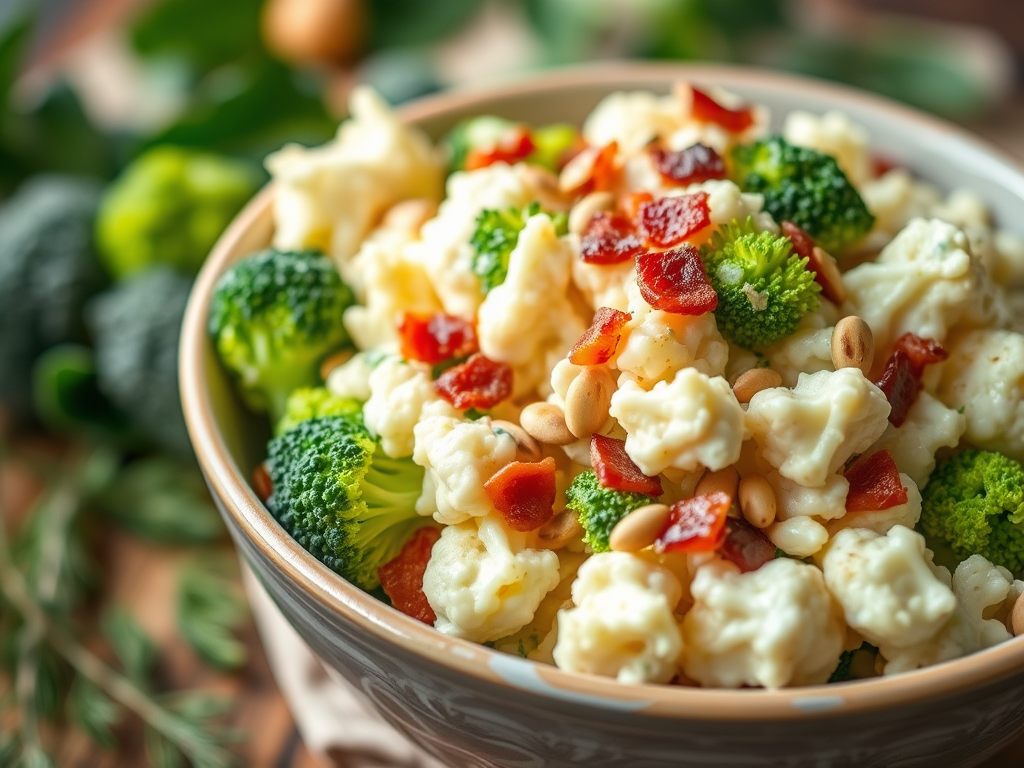
  • The Best Cauliflower Salad for Holidays – Easy Dump-and-Go Recipe

    The Best Cauliflower Salad for Holidays – Easy Dump-and-Go Recipe

    If you’ve been around here long enough, you know I love a good dump-and-go recipe—especially the kind that makes people think you spent way more time in the kitchen than you actually did. And friends… this cauliflower salad? It’s exactly that.

    I’m normally not one for raw cauliflower. I usually prefer it cooked and softened because it’s just easier to eat. But this salad? This salad converted me. It’s creamy, crunchy, flavorful, and so ridiculously easy to throw together that you’ll find yourself making it over and over again.

    And with the holidays right around the corner, this recipe deserves a spot on your table. Trust me—bring this to a gathering and watch it disappear.


    Why This Salad Is Always a Crowd Favorite

    It’s the perfect blend of crunchy veggies, salty bacon, nutty sunflower seeds, and a creamy dressing that ties everything together. Every bite has a little bit of everything, and the flavors get even better the longer it sits.

    This is one of those dishes that tastes like something your aunt spent three hours making… except it takes about 15 minutes and almost zero effort.


    Ingredients

    • 12 slices of bacon, cooked and crumbled
    • 1 head cauliflower, cut into bite-sized pieces
    • 1 head broccoli, cut into bite-sized pieces
    • ¾ cup sunflower seeds (salted or unsalted—your call!)
    • ½ red onion, diced
    • 1 cup creamy ranch dressing
    • 1 ½ Tbsp white wine vinegar
    • ¼ cup sugar

    Directions

    1. Prep your veggies

    Cut the cauliflower and broccoli into bite-sized pieces—nothing too tiny and nothing the size of a small tree. Just nice, fork-friendly bites. And feel free to adjust the ratio while you’re at it! More cauliflower, less broccoli, or vice versa… remember, it’s your kitchen and your rules.

    Think of a good salad: you want to get a little bit of everything in one bite. That’s the goal here.

    2. Dump everything in a big bowl

    Here’s a cleaned-up, fun, and on-brand rewrite:

    Grab a big bowl—trust me, this recipe makes a generous batch.

    Add in your cauliflower, broccoli, bacon, sunflower seeds, and diced red onion.
    You can whisk the ranch dressing, white wine vinegar, and sugar together in a separate bowl…

    Or, let’s be real: just dump it straight into the big bowl and mixy-mixy. Your kitchen, your rules, soo your choice.

    Give everything a good stir until all the pieces are coated in that creamy, delicious dressing.

    3. Refrigerate

    Let the salad chill for at least 4 hours before serving.
    But if you really want the flavors to shine, make it 24 hours ahead. Everything melds together and it tastes even better the next day.


    4. Serve & Enjoy!

    Serve cold and enjoy the crunchy, creamy goodness. This is always a hit at potlucks, holidays, cookouts, and honestly… random Tuesdays.

    If you try this recipe, drop a comment and let me know what you think!
    Writing this out actually made me want to run to the store for ingredients—so don’t be surprised if I’m making a batch tonight too. 😆

  • From Freezer to Pantry: How I Pressure Can Turkey for Long-Term Storage

    From Freezer to Pantry: How I Pressure Can Turkey for Long-Term Storage

    After we finished processing our turkeys this season (you can read about that here), I set aside some of the breast meat specifically for canning. I love having ready-to-eat meat on the shelf — it’s perfect for quick meals, soups, and dips, and it gives me peace of mind knowing exactly where our food came from.

    Why I Can My Own Meat

    Freezer space fills up fast around here, especially after butchering season. Canning lets me preserve our homegrown meat safely without worrying about power outages or freezer burn. And once you learn the process, it’s actually simple — it just takes time and attention to detail.

    My Preferred Method: Cold Packing

    Everyone has their own favorite way to can meat, but my go-to is cold packing. That means I fill the jars with raw turkey (or chicken, pork, or beef) and let it create its own juices during the canning process. No broth, no water — just meat, salt, and time.

    Step-by-Step: How I Pressure Can Turkey

    1. Sterilize your jars, lids, and rings.
      I run mine through a hot dishwasher cycle or boil them briefly before I start.
    2. Cube your turkey into 1-inch pieces.
      This size helps the heat penetrate evenly during processing.
    3. Add salt (optional but recommended).
      I use ½ teaspoon per pint or 1 teaspoon per quart.
      It adds a touch of flavor and helps with preservation.
    4. Pack jars tightly, leaving 1 inch of headspace.
      Use a funnel to keep rims clean while filling.
    5. Wipe rims with vinegar.
      This removes any grease and ensures a good seal.
    6. Add lids and rings, finger tight.
      Don’t overtighten — just snug enough to stay in place.
    7. Process in a pressure canner:
      • Pints: 75 minutes
      • Quarts: 90 minutes
        Adjust for your altitude and follow your canner’s manual carefully.

    The time matters — it’s what ensures the heat reaches all the way to the center of each jar.

    After Canning: The Cooling Process

    Let your canner cool naturally (no rushing it). When the pressure drops completely, remove the jars carefully and let them rest undisturbed for 12–24 hours.
    You’ll hear that satisfying pop as the lids seal — one of my favorite homestead sounds.

    Check the seals before storing, and if any didn’t seal properly, pop those in the fridge and use them within a few days.

    Safety First

    • Always inspect before eating — if something smells off, toss it.
    • Don’t consume anything with a broken seal, discoloration, or fizzing liquid.
    • When in doubt, throw it out.

    Why It’s Worth the Work

    Canning meat takes time, but it pays off every single time I grab a jar off the shelf. Whether it’s turkey salad, soup, or a quick casserole, it’s ready to go — no thawing, no cooking, no stress.

    After several days of work — butchering, resting, and canning — I’m reminded why we do it. Knowing what goes into our food, how it was raised, and how it’s preserved means everything to us.
    And honestly? It’s the kind of work I’m grateful for.