
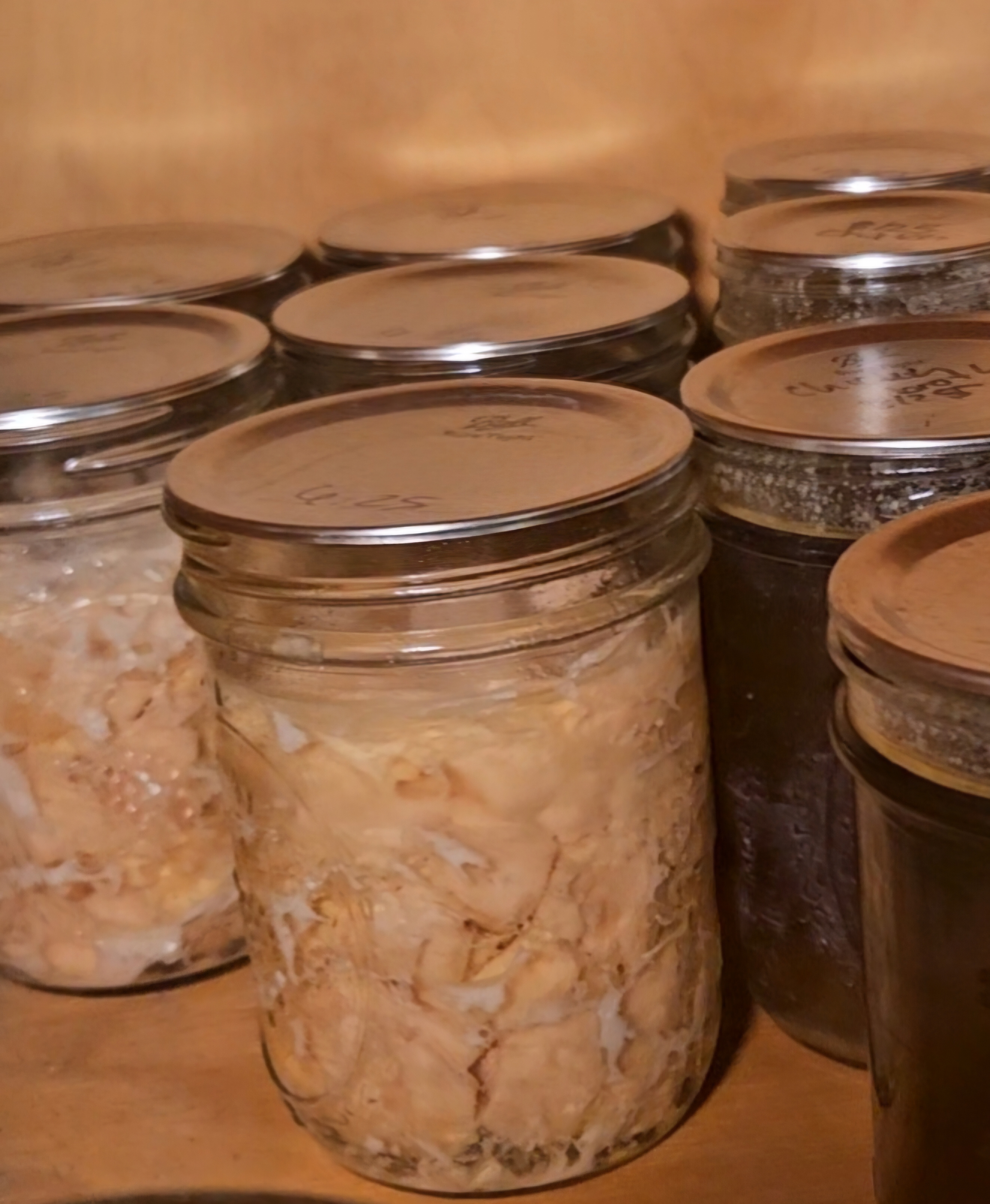
After we finished processing our turkeys this season (you can read about that here), I set aside some of the breast meat specifically for canning. I love having ready-to-eat meat on the shelf — it’s perfect for quick meals, soups, and dips, and it gives me peace of mind knowing exactly where our food came from.
Why I Can My Own Meat
Freezer space fills up fast around here, especially after butchering season. Canning lets me preserve our homegrown meat safely without worrying about power outages or freezer burn. And once you learn the process, it’s actually simple — it just takes time and attention to detail.
My Preferred Method: Cold Packing
Everyone has their own favorite way to can meat, but my go-to is cold packing. That means I fill the jars with raw turkey (or chicken, pork, or beef) and let it create its own juices during the canning process. No broth, no water — just meat, salt, and time.
Step-by-Step: How I Pressure Can Turkey
- Sterilize your jars, lids, and rings.
I run mine through a hot dishwasher cycle or boil them briefly before I start. - Cube your turkey into 1-inch pieces.
This size helps the heat penetrate evenly during processing. - Add salt (optional but recommended).
I use ½ teaspoon per pint or 1 teaspoon per quart.
It adds a touch of flavor and helps with preservation. - Pack jars tightly, leaving 1 inch of headspace.
Use a funnel to keep rims clean while filling. - Wipe rims with vinegar.
This removes any grease and ensures a good seal. - Add lids and rings, finger tight.
Don’t overtighten — just snug enough to stay in place. - Process in a pressure canner:
- Pints: 75 minutes
- Quarts: 90 minutes
Adjust for your altitude and follow your canner’s manual carefully.
The time matters — it’s what ensures the heat reaches all the way to the center of each jar.
After Canning: The Cooling Process
Let your canner cool naturally (no rushing it). When the pressure drops completely, remove the jars carefully and let them rest undisturbed for 12–24 hours.
You’ll hear that satisfying pop as the lids seal — one of my favorite homestead sounds.
Check the seals before storing, and if any didn’t seal properly, pop those in the fridge and use them within a few days.
Safety First
- Always inspect before eating — if something smells off, toss it.
- Don’t consume anything with a broken seal, discoloration, or fizzing liquid.
- When in doubt, throw it out.
Why It’s Worth the Work
Canning meat takes time, but it pays off every single time I grab a jar off the shelf. Whether it’s turkey salad, soup, or a quick casserole, it’s ready to go — no thawing, no cooking, no stress.
After several days of work — butchering, resting, and canning — I’m reminded why we do it. Knowing what goes into our food, how it was raised, and how it’s preserved means everything to us.
And honestly? It’s the kind of work I’m grateful for.
Leave a Reply