
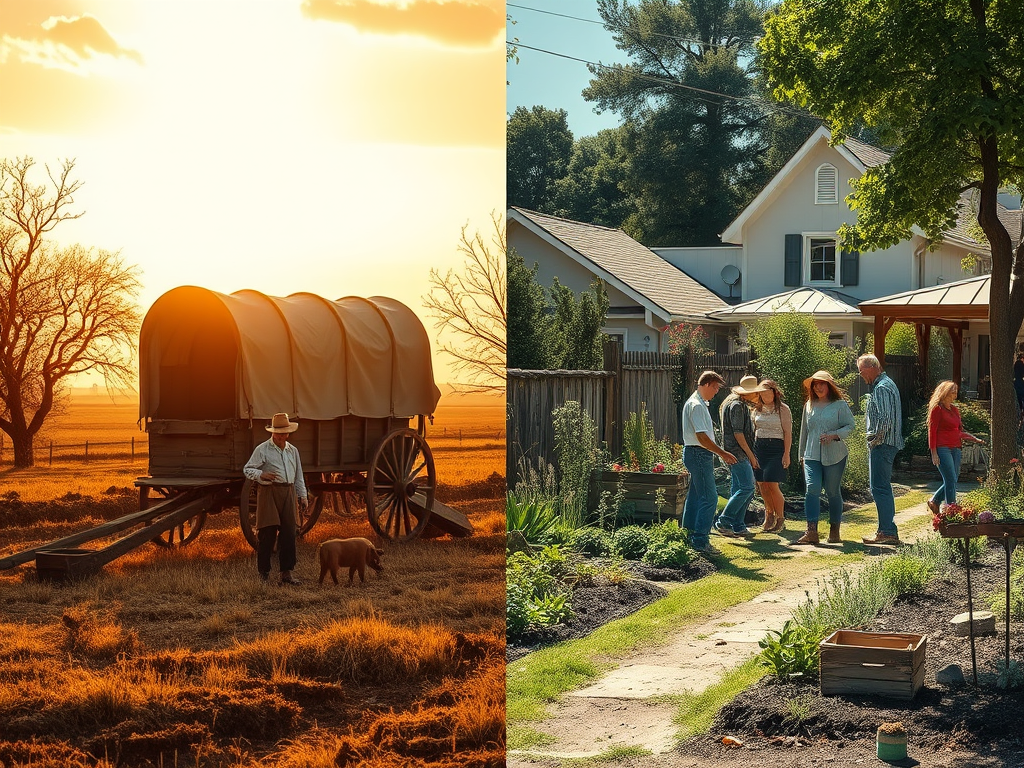
When most people hear the word homesteading, they picture covered wagons, prairie houses, and families carving a life out of wild land. That picture isn’t wrong—it comes from the original Homestead Act of 1862, when families could claim 160 acres of land if they farmed it, built a home, and survived on it.
Back then, homesteading wasn’t a lifestyle choice. It was survival. If you didn’t grow it, hunt it, or trade for it, you simply went without.
Fast forward to today, and modern homesteading looks very different. It’s not about proving up a land claim anymore—it’s about weaving self-sufficiency into our everyday lives, no matter where we live. Whether you’re on a few acres, in the suburbs, or even in an apartment, you can practice homesteading skills and reap the rewards.
Homesteading Then vs. Now
Food & Survival
Then: Families relied 100% on what they could grow, hunt, or trade. If the harvest failed, survival was at risk.
Now: We can walk into a grocery store if the garden flops—but many of us still grow and preserve food because it gives us peace of mind, healthier options, and a sense of control.
Daily Life
Then: Families worked sunup to sundown just to put food on the table. Every task—hauling water, chopping wood, cooking—was done by hand.
Now: Most of us balance homesteading with jobs, kids, and busy schedules. We aren’t being “paid” in land to do it—in fact, it usually costs us time and effort—but we do it because we value the lifestyle and what it gives back to our families.
Tools & Technology
Then: Canning was done over open fires, fences were built with hand tools, and communication with neighbors was rare.
Now: We use stove tops for canning(easier temperature control), electric fencing to save hours of labor, and even online seed swaps to connect us with resources our great-grandparents couldn’t imagine.
Community
Then: Homesteaders were often isolated, relying only on family and a handful of neighbors.
Now: We have farmers markets, co-ops, and online groups that remind us we’re not in this alone. Connection is a huge part of modern homesteading.
Why People Are Turning Back to Homesteading
So why are so many people embracing homesteading today?
Food Costs & Quality: Rising grocery prices and concerns about food quality have made homegrown food more appealing.
Lifestyle: Homesteading invites us to slow down, connect with nature, and enjoy hands-on skills like gardening, preserving, and caring for animals.
Family Education: Kids get to learn responsibility, patience, and where their food actually comes from.
Resilience: When supply chains are unpredictable or money gets tight, having skills and resources to provide for yourself is empowering.
In short, modern homesteading isn’t about survival anymore—it’s about choice.
How to Start (Even If You’re Busy)
The idea of “homesteading” can feel overwhelming. But you don’t have to do everything at once—in fact, you shouldn’t!
Here are a few ways to start small:
Pick one skill or project at a time.
Choose what excites you most (fresh eggs? a tomato plant? homemade bread?).
Use the space you already have—balcony, backyard, or community garden.
Learn as you go. Don’t wait for the “perfect setup.”
Modern homesteading is about doing what fits your life and brings you joy—not checking off a list of chores.
Final Thoughts
Homesteading today looks very different from the past—but the heart behind it remains the same: building a life rooted in self-sufficiency, family, and resilience.
You don’t need 160 acres to start. You don’t need to know it all. You just need to take one small step and begin.
Don’t wait. Just start.