Tag: chickens

  • How I Grow with the Homesteading Seasons: A Year on My Pacific Northwest Homestead

    How I Grow with the Homesteading Seasons: A Year on My Pacific Northwest Homestead

    Homesteading isn’t just a lifestyle—it’s a rhythm that flows with the natural seasons. On my small homestead nestled in the Pacific Northwest, every season brings a new set of responsibilities, challenges, and joys. Understanding the homesteading seasons is key to building a sustainable and fulfilling life close to the land.

    Whether you’re just starting out or deep into your homesteading journey, knowing what to expect from each season can help you plan ahead, reduce burnout, and enjoy the process more fully. Here’s what life looks like on my homestead, season by season.

    Winter: Rest, Reset, and Indoor Growing

    Winter is the slowest season on our homestead—and we embrace it. While snow and frost blanket the garden beds, this season gives us a chance to rest and reflect. Our animals require basic care: feeding, water checks (especially in freezing temps), and shelter maintenance. But compared to summer, their needs are minimal.

    It’s also the perfect time for planning. I spend my evenings with seed catalogs, budgeting for the year ahead, and experimenting with indoor growing methods like microgreens and herbs under grow lights. Understanding the homesteading seasons means appreciating this necessary lull—winter is for hibernation, both for nature and the homesteader.

    Spring: New Life and New Beginnings

    Spring is when everything bursts into action. The garden begins to wake up, and so do the projects. Depending on your setup, you might be incubating eggs, bringing home new chicks or ducklings, or watching for signs of labor in pregnant goats or sheep from the previous year’s breeding.

    Spring is also a busy time for planting. Soil preparation, composting, and succession sowing keep us busy as we try to get ahead before the summer heat hits. On my homestead, this homesteading season becomes very real in spring—it’s a time of energy and motion, and the farm feels alive again.

    Summer: Full Tilt Homesteading

    Summer is the heart of the homestead hustle. The garden is in full swing, animals need extra attention (especially in the heat), and the harvests start rolling in. If you raise meat animals, this is also a time when harvesting may begin for broilers, rabbits, or even ducks.

    Preservation kicks into high gear—canning, fermenting, dehydrating, freezing. It’s not unusual to be up late boiling jars or checking the dehydrator while making dinner. On my homestead, we lean into the long days and try to keep pace with nature’s abundance.

    Understanding the homesteading seasons helps keep burnout at bay. Summer is busy, yes—but it’s also deeply rewarding.

    Fall: The Big Shift

    Fall is the season of transition and preparation. The weather begins to cool, and if you’ve planted a fall garden, it’s a good time to enjoy cool-weather crops like kale, carrots, and broccoli.

    For us, fall is also butchering season. Our meat birds are processed, and we begin preparations for butchering our hogs as we near the colder months. It’s bittersweet but necessary, and part of honoring the cycle of life on the homestead.

    Fall is also a time to clean up the garden, mend fences, and prepare animal shelters for the cold months ahead. For those who follow the homesteading seasons, fall is when we start to wind down, stock up and prepare to hunker down for winter.

    End of Fall into Winter: The Final Push

    The end of fall into early winter is hog butchering season on our homestead. We wait until the temperatures drop to help keep the meat safe during processing. Freezers are filled, lard is rendered, and smoked meats are prepped for the pantry.

    This time of year wraps up our homesteading seasons and reminds us of the importance of planning, pacing, and working with the natural cycles. We slow down once again and welcome the restful rhythm of winter.

    Final Thoughts

    Every homesteader’s year will look a little different depending on your climate, goals, and setup. But understanding and honoring the homesteading seasons can help you build a more peaceful, productive, and balanced life on your land. Whether it’s seed-starting in March, harvesting in August, or butchering in November—each season has a purpose.

    On my homestead, I’ve learned to grow with the seasons, not against them—and that mindset has made all the difference.

  • How to Decide What Animals Are Right for Your Small Farm

    How to Decide What Animals Are Right for Your Small Farm

    Starting a small farm is an exciting journey, and one of the biggest decisions you’ll make is choosing which animals to raise. From chickens to goats to pigs, each animal offers unique benefits and comes with its own set of needs. But how do you decide which animals are the best fit for your farm?  

    Whether you’re looking for eggs, milk, meat, or simply a more sustainable lifestyle, this guide will help you evaluate your goals, resources, and capabilities to choose the perfect animals for your small farm.  

    Start with Your Farm’s Goals

    Before you choose any animals, consider what you want to achieve with your small farm.  

    Eggs or Dairy: If your goal is a steady supply of eggs or milk, chickens or dairy goats may be a good place to start.  

    Meat Production: If you’re looking to raise your own meat, animals like pigs, rabbits, or sheep might be ideal.  

    Land Management: For clearing brush or improving pastures, goats or grazing animals like sheep or cows can be invaluable.  

    Companionship and Hobby Farming: If your primary goal is to enjoy the experience of caring for animals, chickens or ducks are fun and beginner-friendly.  

    Understanding your goals will narrow down your options and help you choose animals that align with your vision.  

    Assess Your Land and Space  

    The size and quality of your land will play a major role in determining which animals you can raise.  

    Small Spaces: If you only have a small backyard or limited acreage, chickens, rabbits, or ducks are great options since they don’t require much space.  

    Moderate Space: With a few acres, you can consider goats, pigs, or sheep. These animals need more room to roam and graze.  

    Larger Acreage: If you have 10+ acres, you can think about larger livestock like cows or horses. These animals require significant space and grazing land to thrive.  

    Also, consider the quality of your land. Goats, for example, are excellent for hilly or rocky terrain, while sheep prefer lush pastures.  

    Factor in Time and Labor 

    Different animals require different levels of care and time commitment.  

    Low Maintenance: Chickens, ducks, and rabbits are relatively low-maintenance animals. They need daily feeding, water, and a clean coop, but their care is manageable for beginners or busy schedules.  

    Moderate Maintenance: Goats and sheep require more attention, including proper fencing, health checks, and occasional hoof trimming.  

    High Maintenance: Larger animals like cows and horses need significant time for feeding, grooming, and pasture management.  

    Be realistic about how much time and energy you can dedicate to your animals each day.  

    Consider Your Budget  

    The cost of raising animals can vary widely depending on the species and your setup.  

    Initial Costs: Consider the price of purchasing the animals, building housing, and setting up fencing or infrastructure. For example, a chicken coop is much cheaper than a barn for cows.  

    Ongoing Costs: Factor in feed, bedding, veterinary care, and supplies. Larger animals like cows and pigs will eat much more than chickens or rabbits, leading to higher feed costs.  

    Unexpected Expenses: Be prepared for emergencies, like vet visits or equipment repairs, that can add to your overall costs.  

    Choose animals that fit within your budget, especially if you’re just starting out.  

    Research Local Regulations

    Before you bring animals to your farm, check local zoning laws and regulations.  

    – Some areas have restrictions on livestock, especially in suburban or urban locations.  

    – You may need permits for certain animals or be required to follow specific guidelines for housing and fencing.  

    – Keep in mind that roosters, for example, can be noisy and may not be allowed in some neighborhoods.  

    Understanding the rules in your area will save you from potential fines or the heartbreak of having to rehome your animals.  

    Evaluate Your Climate  

    Not all animals thrive in every climate, so it’s essential to consider your local weather conditions.  

    Cold Climates: Animals like sheep, cows, and certain chicken breeds are hardy and can handle cold winters with proper shelter.  

    Hot Climates: Goats, pigs, and heat-tolerant chickens like Leghorns do well in warmer regions.  

    Extreme Weather: If you live in an area with extreme heat, cold, or storms, invest in sturdy shelters and infrastructure to protect your animals.  

    Choose animals that are well-suited to your climate to ensure their health and well-being.  

    Start Small 

    If you’re new to farming, it’s best to start with one or two types of animals and expand as you gain experience.  

    Chickens: A small flock of hens is a great way to begin. They’re easy to care for, provide fresh eggs, and can help control pests in your garden.  

    Rabbits: These quiet, low-maintenance animals are excellent for small spaces and can provide meat or fertilizer for your garden.  

    Goats: Dairy goats are a good next step if you’re ready to tackle milking and want a steady supply of milk for your family.  

    Starting small allows you to learn the ropes without becoming overwhelmed.  

    Learn About Each Animal’s Needs

    Do your homework before bringing any animals to your farm.  

    Housing: What kind of shelter do they need? Chickens require a secure coop, while goats need a barn or covered pen.  

    Fencing: Some animals, like goats, are escape artists and require strong, well-designed fencing.  

    Diet: Learn about each animal’s nutritional requirements and plan for feed and supplements.  

    Understanding the specific needs of your chosen animals will set you up for success and keep your animals happy and healthy.  

    Think About Your Future Plans 

    As you choose animals, consider how they fit into your long-term vision for your farm.  

    – Do you want to expand your operation in the future?  

    – Are you raising animals for personal use or planning to sell products like eggs, milk, or meat?  

    – Will your current infrastructure support additional animals as your farm grows?  

    Planning ahead will help you make choices that align with your goals and prevent unnecessary expenses down the line.  

    Trust Your Passion 

    Finally, let your passion guide your decision. Farming is hard work, and it’s much more enjoyable when you’re caring for animals you truly love.  

    – Do you dream of fresh eggs every morning? Start with chickens.  

    – Are you fascinated by the idea of making your own cheese? Consider dairy goats or cows.  

    – Do you love watching animals graze in your fields? Sheep or cattle might be the perfect choice.  

    The animals you choose should bring you joy and fulfillment, not just practicality.  

    Final Thoughts

    Choosing the right animals for your small farm is a deeply personal decision that depends on your goals, resources, and lifestyle. By starting with clear priorities, assessing your land and budget, and doing thorough research, you can build a farm that meets your needs and brings you lasting satisfaction.  

    Remember, there’s no “perfect” farm setup—what works for one family may not work for another. Start small, stay flexible, and enjoy the journey of learning and growing alongside your animals.  

    What animals do you have on your small farm? Or what are you planning to raise? Share your thoughts and experiences in the comments below—I’d love to hear from you!

  • How to Raise Chickens on a Budget: A Beginner’s Guide

    How to Raise Chickens on a Budget: A Beginner’s Guide

    Raising chickens is one of the most rewarding things you can do on a homestead—fresh eggs, natural pest control, and endless entertainment! But if you’ve been holding off because you’re worried about the cost, we’ve got good news: you can absolutely raise chickens without breaking the bank.

    With a little creativity and planning, it’s possible to start and maintain a healthy flock on a tight budget. Here’s how to do it:

    Start Small and Smart

    You don’t need a massive flock to get started. Begin with 3–6 hens—enough to give you regular eggs but not so many that feed and housing costs get overwhelming. Many beginners also choose to skip the rooster if they’re not planning to hatch eggs (and want to avoid noise complaints!).

    Build Your Own Coop (or Upcycle One)

    Coops can get expensive fast—some premade ones cost hundreds of dollars. But chickens don’t care about fancy. Use scrap wood, pallets, or even an old shed to build your own coop. Check local classifieds or Facebook Marketplace for free or cheap materials—or even an unused dog house you can convert!Just make sure it’s predator-proof, dry, and well-ventilated.

    Buy Chicks from Local Sources

    Hatcheries are great, but you might find better prices buying chicks locally—especially from farm swaps, feed stores, or other homesteaders. Some people even give away extra chicks for free or cheap in spring.

    Bonus tip: Don’t go overboard with rare or fancy breeds if you’re on a budget. Stick with hardy, reliable layers like Rhode Island Reds, Australorps, or Buff Orpingtons.

    Feed Them Smarter

    Feed can be one of the biggest ongoing costs—but there are ways to slash that bill:

    • Ferment your feed (it stretches farther and improves digestion).
    • Give kitchen and garden scraps (they love veggie peels, bread ends, and more).
    • Let them free-range when safe to supplement their diet with bugs and greens.
    • Grow your own feed, like sunflowers, pumpkins, and greens.

     Use DIY Waterers and Feeders

    You don’t need expensive feeders or waterers. A 5-gallon bucket and a few nipples or PVC pipe can make a perfect gravity-fed waterer. Same goes for feeders—there are tons of easy, low-cost DIY tutorials out there.

    Skip the Heat Lamp (If You Can)

    If you’re raising chicks in spring or summer and can brood them inside, you might not need a heat lamp running 24/7. A well-insulated brooder with a heating pad or a safe radiant heater can cost less to run and be safer overall.

    Keep It Clean to Avoid Medical Expenses

    Healthy chickens = fewer expenses. Keep their coop clean, dry, and well-ventilated to avoid disease. Give them grit, oyster shell, and fresh water. A little prevention goes a long way toward saving money down the road.

    Barter with Other Homesteaders

    Need a rooster? Extra feed? Materials for a coop? Try trading! Many homesteaders love to barter, and you might be able to swap eggs, labor, or produce for what you need. Check local homesteading or farming groups online.

    Reuse What You Have

    Before you buy anything, look around your property. Can you turn an old dog crate into a brooder? Repurpose old fence posts for a chicken run? Use leftover wire for a predator screen? Homesteading on a budget is all about creativity.

    Let Your Chickens Work for You

    Chickens don’t just give you eggs—they’re also great composters, pest controllers, and tillers. Let them help in the garden, turn compost, and reduce your need for pesticides or fertilizers. That’s money saved across your whole homestead!

    Final Thoughts

    You don’t need a lot of money to raise happy, productive chickens. With a few frugal hacks and a little elbow grease, you can build a thriving flock that earns its keep and brings joy to your homestead.

    Start simple, stay resourceful, and enjoy every quirky, egg-laying minute of it!

  • Chicken Coop Building 101

    Chicken Coop Building 101

    Whether you’re a new homesteader or a seasoned pro, providing your chickens with a safe and comfortable home is crucial for their health and productivity. A well-designed chicken coop not only keeps your flock secure from predators but also offers them a comfortable environment to lay eggs and thrive. If you’re building or upgrading your chicken coop, there are several essentials to consider, from ventilation and nesting boxes to predator-proofing. Plus, with a little creativity, you can reuse and recycle materials to keep your budget in check.

    If you are new to owning chickens or they are in your forseeable future you should check out this Beginner article! I give you a run down of all the basics to give you a head start.

    Ventilation: A Must-Have for Healthy Chickens

    Good airflow is one of the most important aspects of a chicken coop. Chickens produce moisture, heat, and waste that can quickly make the air stuffy and unhealthy if not properly ventilated. Inadequate ventilation can lead to respiratory problems and poor egg production. 

    Tips for Proper Ventilation

    Windows and Vents: Install adjustable windows or vents at different heights around the coop. Higher vents allow warm air to escape, while lower vents let fresh air in.

    Cross-Ventilation: Make sure air can flow across the coop from one side to the other. This can be achieved by placing vents or windows on opposite walls.

    Natural Ventilation:Position the coop in a shaded area to help keep temperatures down during the summer months.

    If you’re working with a tight budget, consider using old window frames, mesh, or even plastic vent covers from a local salvage yard to create effective ventilation.

    Bedding: Creating a Clean Environment

    Choosing the right bedding for your chicken coop is essential for their health, comfort and cleanliness. Here are some of the best bedding types for your coop.

    Wood Shavings: Pine or cedar both work well. They’re highly absobent, helping to manage moisture and control odors in your coop.

    Straw/Hay: Provides a soft, cushioned bedding thats great for nesting boxes. Its cheap, easily replaced, biodegradable and helps provide extra warmth in the winter.

    Construction Sand: Easy to clean, drains well so it’s great for managing moisture and odors. It also provides a natural surface for chickens to take their dust baths in.

    Compost- AKA The Deep Litter Method: This method involves using straw, hay or other organice materials like leaves that naturally compost over time. Instead of changing out the bedding your just add to it. This promotes a natural decomposition, creating a self-cleaning system that requires less changing but keeps chickens in a warm and dry environment.

    Nesting Boxes: Comfort and Privacy for Egg-Laying

    Nesting boxes are a must-have for any chicken coop. They provide a private, secure space for hens to lay eggs and encourage them to lay in the right spot instead of on the floor. Proper nesting boxes can help prevent egg breakage and keep your eggs clean.

    Nesting Box Tips

    Size: Each box should be around 12 inches by 12 inches, and you can add a few extra boxes to accommodate your flock size. Typically, one box per 3-4 hens is sufficient.

    Height: Place the boxes about 18 inches off the ground, so hens feel safe but can easily access them.

    Bedding: Use straw, hay, or wood shavings for bedding inside the boxes. Not only does this provide comfort, but it also helps absorb moisture.

    For a budget-friendly option, repurpose wooden crates, old cabinets, or even milk cartons to make your nesting boxes. You can often find these items at thrift stores, yard sales, or even for free from neighbors.

    Predator-Proofing: Keeping Your Flock Safe

    One of the biggest threats to your chickens is predators. Raccoons, foxes, weasels, and even neighborhood dogs can cause serious harm to your flock if your coop isn’t secure. A well-built, predator-proof chicken coop will give you peace of mind and keep your chickens safe.

    Predator-Proofing Tips

    Strong Construction: Use sturdy materials for the coop frame, such as treated lumber or recycled pallets. Make sure all doors and windows close securely.

    Wire Mesh: Use 1-inch hardware cloth for windows and doors. Avoid chicken wire, as predators can easily tear through it. If you want to secure the floor of the coop, bury the wire 6 inches into the ground to prevent digging predators.

    Secure Latches: Install heavy-duty locks or latches on doors and nesting boxes to prevent raccoons from opening them.

    Roof Protection: A solid roof, either metal or sturdy plywood, is essential. Ensure it is secure to prevent predators from sneaking in from above.

    If you’re on a budget, you can recycle old fencing, wire, or scrap lumber from construction projects. This is a great way to save money and still keep your flock safe.

    Also please keep in mind that many people choose to free range their flock and that is perfectly fine. Depending on where you live that may be a feasible option for you. I have personally done both and choose to have mine cooped up most of the year. After garden season is over, I like to let them out but I do notice a higher rate of death when I let mine free range. Whether its due to illness or predators.

    Insulation and Comfort: Keeping Your Flock Happy Year-Round

    Chickens need protection from both the cold and heat, so it’s important to think about insulation in your coop. This will help maintain a comfortable temperature for your chickens in every season.

    Comfort Tips

    Winter Insulation: If you live in a cold climate, you’ll need to insulate your coop to keep your chickens warm in the winter. Use recycled foam panels, cardboard, or even old insulation materials to line the walls.

    Summer Cooling: In hot weather, ensure your coop has plenty of shade and airflow. You can make a simple shade structure from recycled tarps or old roofing materials to create a cooler environment.

    Depending on your climate and the breed of chickens you keep, winter insulation may not be necessary. Chickens can tolerate cold temperatures, and it’s best to keep them as natural as possible. I don’t insulate my coop during the winter months but I do use the deep litter method to help maintain a warmer temperature in their coop. I also have chickens who still prefer to roost outside even with snow on the ground. However, if you live in a climate where the temperature drops below zero, insulation for your coop may be needed to keep your flock healthy.

    Herbs: Lavender, Mint, Oregano, Thyme, Rosemary, Dandelion and even Chamomile can be beneficial additions to your chicken coop. I like to just sprinkle some around the coop on top of whatever bedding you prefer to reap the benefits.

    Lavender: Is widely known for it’s calming properties, so yes it can help keep your chickens in a relaxed state. It also repels flies and mosquitos.

    Mint: Also has a strong distinct sent that will deter rodents and insects.

    Oregano: Natural micorbial properties that can help prevent bacterial infections. It can also boost their immune systems! (Can also be added to their feed.)

    Thyme: Also has microbial benefits and can help with respiratory issues. (Can also be added to their feed.)

    Rosemary: Has antifunal and antibacterial propertties and can help reduce the presence of bacteria in your coop. Also helps digestion if comsumed.

    Chamomile and Dandelion can also help support digestion.

    Reuse, Recycle, and Save Money: Building a Budget-Friendly Chicken Coop

    You don’t have to spend a fortune to create a comfortable, functional chicken coop. With a little creativity and a focus on reusing and recycling materials, you can build or upgrade your coop on a budget.

    Budget-Friendly Ideas

    Pallets: Wooden pallets are a fantastic building material. They can be disassembled and repurposed for walls, floors, and even roosting bars. Many businesses give away pallets for free or at a low cost.

    Old Furniture: Repurpose old wooden furniture, such as cabinets or dressers, for nesting boxes, roosting bars, or even coop walls.

    Scrap Metal or Wood: Check with local construction sites or salvage yards for leftover materials. Many contractors are happy to give away scrap materials that are perfect for building or upgrading your coop.

    By repurposing materials, you not only save money but also reduce waste, contributing to a more sustainable lifestyle.

    Final Thoughts

    A chicken coop is more than just a shelter; it’s the heart of your flock’s well-being. By focusing on ventilation, bedding, nesting boxes, predator-proofing, and insulation, you can ensure your chickens live in a safe and comfortable environment. And remember, building a budget-friendly coop doesn’t mean sacrificing quality. With a bit of creativity and a focus on reusing and recycling materials, you can create a chicken coop that works for you and your flock without breaking the bank. Happy homesteading!

    Here is a low budget coop my husband and I put together with repurposed materials if you want to check it out below.

  • Raising Chickens for Beginners: Everything You Need to Know

    Raising Chickens for Beginners: Everything You Need to Know

    Raising chickens is one of the most rewarding steps toward self-sufficiency and sustainable living. You may have heard that they are the gate-way animal to homesteading. 😂 Not only do they provide fresh eggs and meat, but they also make delightful companions and help control pests in your yard. If you’re new to chicken keeping, don’t worry—it’s easier than you think! Here’s everything you need to know to get started. 

    Why Raise Chickens?

    First off, why should you raise chickens? Chickens are incredibly versatile animals, making them a perfect addition to any homestead, backyard or beginner. Here are some benefits:  

    Fresh Eggs: Home-raised eggs are tastier and more nutritious than store-bought.  

    Natural Pest Control: Chickens love eating insects like ticks, beetles, and flies.  

    Composting Helpers: Their droppings are a rich source of nitrogen for compost.  

    Low-Maintenance Pets: Chickens are easy to care for and can provide endless entertainment.  

    Choosing the Right Breeds 

    Selecting the right breed depends on your goals. Some chickens are better for egg production, while others are ideal for meat or dual-purpose. I always recommend doing your own research to find whats right for your life and your homestead but here are a few popular options:  

    Egg-Layers: Leghorns, Rhode Island Reds, and Australorps are amazing layers.  

    Meat Birds: Cornish Cross and Freedom Rangers are great for meat production but these are birds you would stricly buy from a hatchery. They are bred to be larger and aren’t recommended for re-breeding as the genetics just wont turn out the same. So therfore you would be buying them from a hatchery every year. Orpingtons and Bresse’s are a good option if you want to breed yourself.

    Dual-Purpose: Breeds like Orpingtons, Wyandottes, or Rhode Island Reds are good options for both eggs and meat.  

    Cold-Hardy Breeds: Brahmas, Black Australorp and Barred Rocks tolerate colder climates well.  

    Heat-Tolerant Breeds: Leghorns and Andalusians do better in warm climates.  

    Setting Up Your Chicken Coop 

    A well-designed chicken coop is essential for keeping your flock safe, healthy, and productive. Here’s what to consider:  

    Space Requirements: Provide at least 4 square feet per bird inside the coop and 10 square feet per bird in the outdoor run.  

    Ventilation: Proper airflow prevents moisture buildup and reduces the risk of respiratory issues.  

    Nesting Boxes: Provide one nesting box for every 3–4 hens for egg-laying.  

    Roosting Bars: Chickens need roosts to sleep on at night, about 8–12 inches per bird.  

    Predator Protection: Use sturdy materials, and ensure doors and windows are secure. Install hardware cloth instead of chicken wire for better protection against predators.

    Remember, there are many options for building or purchasing a suitable coop for your birds. It can still be purposeful without being pretty. We utilized an old shed that was on our property, cut the chicken door, built roosts, and bought some laying boxes. I’ve seen people turn old campers, large dog kennels, and even make simple hoop coops to house their chickens. The possibilities are endless. So please don’t think you need $1,000 to build a coop; you just don’t.

    Feeding Your Chickens

    A balanced diet is crucial for healthy chickens and quality eggs. Here is a quick run down or you can check out my article here:

    Feeding Your Chickens for a Healthy Flock: A Guide to Quality Eggs and Meat

    Chicken Feed: Start with a commercial feed formulated for the age and purpose of your chickens (starter feed for chicks, layer feed for hens, or grower feed for meat birds).  

    Scratch Grains: A treat for chickens, but not a primary food source.  

    Kitchen Scraps: Chickens love vegetable scraps, fruits, and grains, but avoid feeding them raw potatoes, avocado, chocolate, or anything moldy.  

    Grit and Oyster Shells: Grit aids in digestion, and oyster shells provide extra calcium for strong eggshells.  

    Fresh Water: Chickens need constant access to clean water.  

    Managing Health and Hygiene  

    Healthy chickens are happy chickens. Here’s how to maintain their well-being:  

    Clean the Coop: Regularly remove droppings and old bedding to prevent ammonia buildup.  

    Check for Parasites: Inspect your chickens for mites, lice, and worms. Treat as needed with appropriate solutions.  

    Quarantine New Birds: Keep new chickens separate for a few weeks to ensure they’re not carrying diseases.  

    Watch for Signs of Illness: Be alert for lethargy, loss of appetite, or abnormal behavior, which could indicate health issues.  

    Raising Baby Chicks 

    Starting with baby chicks can be a fun and rewarding experience. Here’s what they’ll need:  

    Brooder Box: A safe, enclosed space with proper ventilation.  

    Heat Source: Use a heat lamp to maintain a temperature of 95°F in the first week, decreasing by 5°F each week until they’re fully feathered.  

    Chick Feed: Provide starter feed with the nutrients they need for healthy growth. 

    Fresh Water: Use a shallow dish to prevent chicks from drowning. Yes, this happens.  

    Bedding: Use pine shavings or straw, but avoid newspaper, which can cause leg problems. This would be like using no bedding as the newspaper just slips and slides everywhere, putting your babies at risk for splayed leg syndrome.

    Egg Collection and Storage  

    Hens typically start laying eggs around 4–6 months of age depending of the breed. To ensure clean and fresh eggs:  

    Daily Collection: When left unattended in the nest, eggs can become dirty, cracked or even eaten(either by the chicken herself orother invaders). In some cases, hens might also conceal them. Interestingly, chickens have a unique ability to carry their eggs tucked under their wings, transporting them to a more secure location(for hatching).  

    Store Properly: Farm fresh eggs have what we call a ‘bloom’ on them that protects them for weeks at room temperature. However if you wash this bloom off, then the eggs must refrigerated.  The eggs still last up to 3 months if stored in the fridge. I personally leave all my eggs at room temperature and rotate them into my kitchen about once a week. I will then wash if they are dirty and store them in the fridge or give away to family as I see fit.

    Common Challenges 

    Even experienced chicken keepers face challenges. Here are a few and how to handle them:  

    Predators: Raccoons, hawks, and foxes are common threats. Always secure your coop and run.  

    Broody Hens: A broody hen essentially acts like a mother anticipating the arrival of chicks. She will lay a certain number of eggs and then stop, choosing to settle on her nest in hopes of hatching them. Interestingly, even without a rooster, meaning the eggs are not fertilized, or if you routinely gather the eggs she lays, she may still insist on sitting on her empty nest. This behavior can lead her to attempt hatching eggs that won’t ever develop or remain fixed on an empty space. To curb this broodiness, it’s important to remove her from the nest, sometimes repeatedly over several days. While she won’t be pleased and will likely express her discontent LOUDLY, this intervention is crucial. Left to her own devices, she might starve herself in her relentless pursuit to incubate those eggs.

    Molting: Chickens shed old feathers and temporarily stop laying eggs during molting season. Usually this happens in fall. It’s normal and doesn’t require intervention, however you may come out one day thinking a murder happened with all the excess feathers you find.

    Building a Routine

    Chickens thrive on consistency. Establish a daily routine that includes:  

    – Feeding and watering in the morning.  

    – Collecting eggs daily.  

    – Letting them out to free-range (if possible).  

    – Many chicken tenders choose to put their chickens to bed and close their coop doors at night to keep them safe from predators. I don’t lock mine up in their coop, but I do ensure they are safe in their run, especially during the summer when daylight hours are long and they are most likely up past my bedtime.

    Enjoy the Process  

    Raising chickens is about more than just eggs and meat—it’s about building a connection to your food and enjoying the simple pleasures of life. Chickens have unique personalities and are fun to watch as they scratch, peck, and interact. Take the time to enjoy the process and celebrate the small victories.  

    Final Thoughts

    Raising chickens is a rewarding journey that offers both practical benefits and joyful moments. By starting with the right preparation and knowledge, you’ll set yourself up for success. Whether you’re looking to gather fresh eggs every morning or simply enjoy the companionship of these feathery friends, chickens are a wonderful addition to any homestead or backyard.  

    What questions do you have about raising chickens? Share your thoughts in the comments below!

  • Feeding Your Chickens for a Healthy Flock: A Guide to Quality Eggs and Meat

    Feeding Your Chickens for a Healthy Flock: A Guide to Quality Eggs and Meat

    Raising chickens is not just about providing a safe environment and clean shelter; their diet plays a significant role in their overall health, productivity, and the quality of eggs and meat they produce. Whether you’re raising chickens for eggs, meat, or both, understanding what to feed your flock is essential for ensuring they thrive. In this guide, we’ll explore the importance of a balanced diet, provide tips on feeding your chickens for optimal health, and highlight some nutritious herbs that can benefit your flock.

    The Basics of a Balanced Chicken Diet

    A healthy, balanced diet is the foundation of a thriving chicken flock. The right nutrition will ensure that your chickens are healthy, produce high-quality eggs, and grow into strong, healthy meat birds

    Key Components of a Chicken’s Diet

    Layer Feed (For Egg-Laying Hens): The primary food for egg-laying hens is a specially formulated layer feed. This feed is designed to provide the right balance of protein, calcium, and other essential nutrients. A typical layer feed contains around 16-18% protein, which supports healthy growth and egg production. The added calcium in layer feed is vital for strong eggshells.

    Starter Feed (For Chicks): Chicks require a higher protein content to support their rapid growth. Starter feed is formulated with 18-20% protein and includes all the nutrients necessary for healthy development. Once chicks are a few weeks old, you can switch to a grower feed.

    Grower Feed (For Meat Birds): If you’re raising chickens for meat, grower feed is the best choice. This feed is typically lower in calcium but provides higher levels of protein (around 18-20%) to support muscle development. It’s formulated to ensure healthy growth and optimal meat production.

    Grain and Scratch: Grains such as corn, wheat, oats, and barley can be offered to chickens in moderation. While they are not complete feeds, they provide energy and variety. Scratch is usually offered as a treat but should be limited to prevent imbalanced nutrition.

    Greens and Vegetables: Fresh greens, such as lettuce, kale, spinach, and herbs, are excellent additions to your chickens’ diet. These provide vitamins, minerals, and fiber. Chickens love pecking at fresh vegetables, and offering a variety can help keep them engaged.

    Clean Water: Water is just as important as food in a chicken’s diet. Ensure your flock has constant access to clean, fresh water, as dehydration can lead to poor health, reduced egg production, and weight loss.

    Incorporating Healthy Herbs Into Your Chicken’s Diet

    Herbs can not only spice up your chickens’ diet but also provide numerous health benefits. Many herbs are rich in vitamins, minerals, and antioxidants, supporting your chickens’ immune systems and overall well-being. Here are a few herbs to consider:


    Parsley: High in vitamin K, vitamin C, and folic acid, parsley is excellent for supporting bone health and overall immune function. It can also help with digestion.

    Oregano: Known for its antibacterial properties, oregano is a great herb for supporting respiratory health. It can help fight off infections and boost the immune system.

    Thyme: Thyme is another herb with powerful antimicrobial and antioxidant properties. It can promote respiratory health and aid in digestion.

    Mint: Fresh mint is known for its digestive benefits, helping with bloating and upset stomachs. It also has a refreshing scent that can help deter pests in the coop.

    Dandelion: Dandelion is full of vitamins A, C, and K and has anti-inflammatory properties. It can aid digestion and promote overall vitality.

    Basil: Basil contains essential oils that have anti-inflammatory and antioxidant properties. It’s great for promoting healthy digestion and boosting the immune system.

    Garlic: While not technically an herb, garlic is a natural antibiotic and can help fight off infections. It also helps boost immunity and can deter internal parasites. However, garlic should be used in moderation.

    How to Feed Herbs to Your Chickens

    You can offer fresh or dried herbs to your chickens. Simply hang bundles of herbs in the coop or scatter them in their outdoor run. Chickens will naturally peck at the herbs, gaining the benefits as they eat. You can also mix chopped herbs into their regular feed or sprinkle them on top of greens or vegetables.

    Providing Treats and Supplementing Their Diet

    While a balanced base feed should make up the majority of your chickens’ diet, occasional treats can offer enrichment and variety. However, treats should never exceed more than 10% of their total diet to avoid nutritional imbalances.

    Healthy Chicken Treats

    Fruits and Berries: Chickens enjoy fruits like berries, apples, and bananas. These are rich in vitamins and antioxidants. However, make sure to remove any seeds or pits, as they may be harmful.

    Vegetables: Chickens love leafy greens, carrots, cucumbers, and squash. These vegetables provide fiber and essential nutrients.

    Mealworms and Grubs: These high-protein treats are ideal for chickens that need extra protein, especially during molting season.

    Sunflower Seeds: A healthy snack that is high in fats and protein, sunflower seeds can be offered in moderation.

    Supplements

    To ensure your chickens are getting all the nutrients they need, you may need to supplement their diet occasionally

     Calcium Supplements: For laying hens, you can provide crushed oyster shell or limestone to ensure they get the necessary calcium for strong eggshells.

    Grit: Chickens need grit to help them digest food properly. Grit aids in grinding down food in their gizzards, especially if they eat grains and seeds. You can offer commercial grit or even small stones from your yard.

    Signs of an Imbalanced Diet

    While chickens generally have hearty appetites, you should be aware of the signs of an unbalanced diet, which can affect their health and productivity.

    Decreased Egg Production: If your hens suddenly stop laying or produce soft-shelled eggs, it may indicate a lack of calcium or an imbalance in their diet.

    Pale Comb and Wattles: If a chicken’s comb or wattles appear pale, it could signal nutritional deficiencies, anemia, or illness.

    Lethargy or Weight Loss: If chickens become weak, lethargic, or lose weight despite eating regularly, they may be lacking essential nutrients.

    Feather Loss or Poor Plumage: Feather loss, or the development of dull, brittle feathers, can indicate inadequate protein or vitamins.

    Conclusion: The Key to Healthy Chickens and Quality Eggs and Meat

    Feeding your chickens the right diet is crucial for their health, egg production, and meat quality. By providing a balanced diet that includes layer or grower feed, plenty of fresh water, and healthy herbs, you can ensure that your flock thrives. Including a variety of fruits, vegetables, and occasional treats can also support their overall well-being and keep them happy and engaged. Keep an eye on your chickens’ condition, and always look for signs of dietary imbalance. A well-fed flock will reward you with vibrant health, high-quality eggs, and delicious meat.

    Happy chicken keeping!

  • Duck Eggs vs Chicken Eggs: Key Differences Explained

    Duck Eggs vs Chicken Eggs: Key Differences Explained

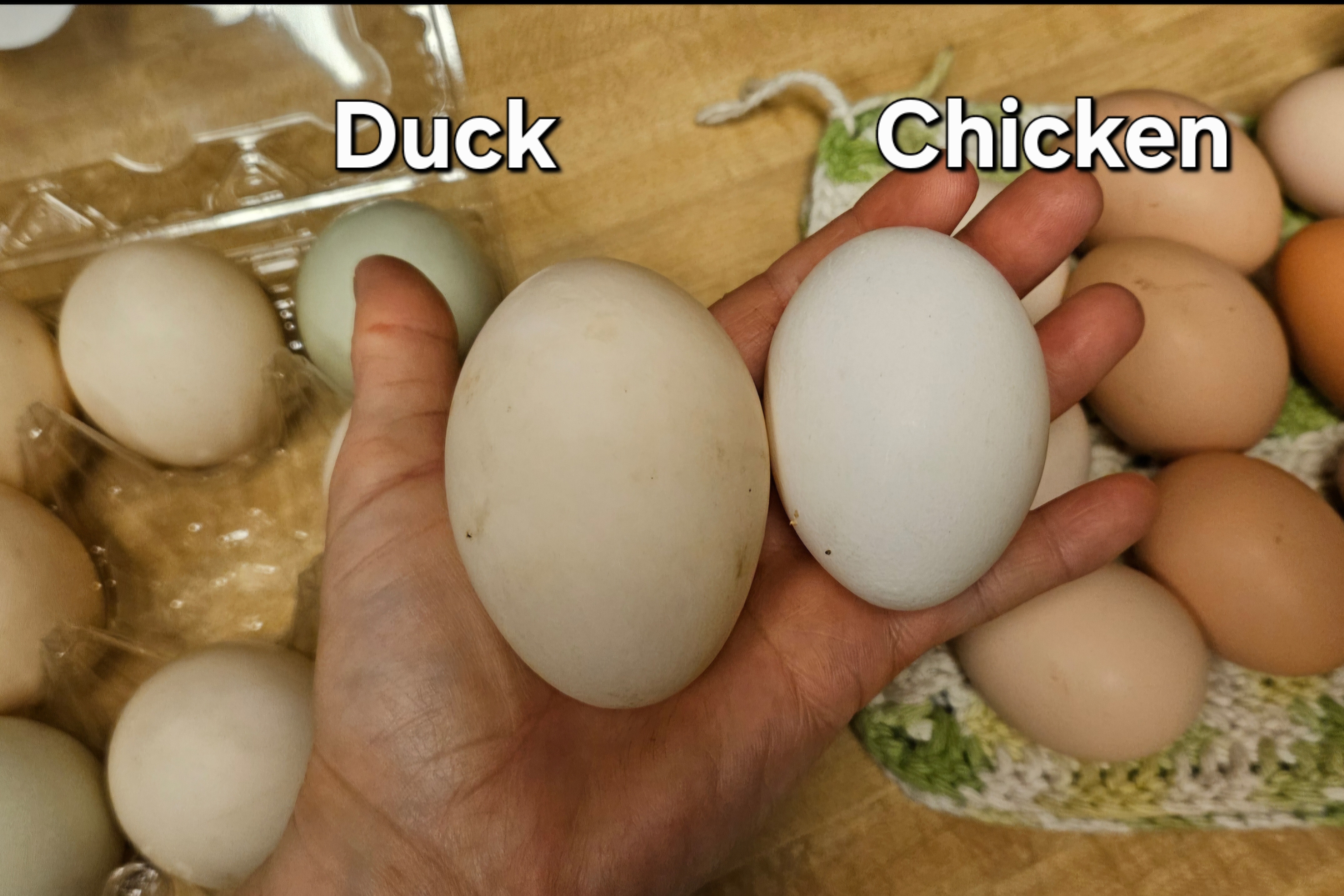
    Duck egg and Chicken egg side by side

    When it comes to choosing between duck and chicken eggs, both options might catch your eye during your next trip to the local market or while tending to your poultry on the homestead. These eggs may appear quite similar at first glance, but they offer distinct nutritional benefits, flavors, and culinary uses that set them apart. Duck eggs, for instance, are often richer and creamier than chicken eggs, making them a favorite among bakers and gourmet cooks alike. As you weigh the pros and cons of each type, it’s important to consider how these differences might align with your cooking needs and taste preferences. Understanding the unique qualities of duck eggs can help you make the best choice for your kitchen and lifestyle.

    Nutritional Content

    Higher Protein Content: Duck eggs contain more protein than chicken eggs, making them an excellent choice for those looking to increase their protein intake.  

    More Omega-3s: Duck eggs are rich in omega-3 fatty acids, which support brain health and reduce inflammation.  

    Higher Vitamin and Mineral Levels: Duck eggs have more vitamins (A, D, B12) and minerals like iron and selenium compared to chicken eggs.  

    Calories and Fat: Duck eggs are larger and have a higher fat content, which provides more energy but might not be suitable for those on low-fat diets.  

    Flavor and Taste

    Duck eggs have a richer, creamier flavor compared to chicken eggs.  

    – The yolks are larger and have a more vibrant orange color, often described as “buttery.”  

    – Many bakers prefer duck eggs for their richer taste and ability to enhance baked goods’ texture and flavor. 

    Baking Benefits

    Duck eggs are a favorite among bakers and chefs.  

    Better Structure: The higher protein content helps create fluffier cakes, stronger meringues, and denser, more moist baked goods.  

    Richer Texture: Duck eggs contribute to a creamier texture in custards, quiches, and other recipes. 

    A dozen duck eggs

    Longer Shelf Life

    Duck eggs have thicker shells than chicken eggs, which:  

    – Makes them more durable and less likely to crack.  

    – Helps them stay fresher for longer, especially when stored properly

    Allergen Alternative

    Some people with chicken egg allergies find that they can tolerate duck eggs. While they’re not suitable for everyone, this can be a great alternative for those who miss eating eggs.

    More Sustainable for Small Homesteads

    Ducks are hardy, low-maintenance animals that:  

    – Lay eggs consistently, even in colder weather.  

    – Thrive in a variety of environments, including wetlands or small homesteads.  

    – Are great pest controllers, eating slugs, snails, and insects.  

    Their eggs can provide a reliable source of nutrition year-round.  

    Richer in Healthy Fats

    Duck eggs contain more healthy fats, including monounsaturated and polyunsaturated fats. These fats are important for heart health and maintaining healthy skin and hair. 

    Larger Size

    Duck eggs are larger than chicken eggs, which means:  

    – You get more egg per shell.  

    – Fewer eggs are needed for recipes or meals, making them more efficient in the kitchen.  

    Downsides to Consider

    While duck eggs offer many benefits, they may not be for everyone:  

    Cost: Duck eggs tend to be more expensive than chicken eggs due to lower supply.  

    Taste: The richer flavor might not appeal to everyone, especially if you prefer the lighter taste of chicken eggs.  

    Fat and Cholesterol: The higher fat and cholesterol levels may not suit individuals with specific dietary restrictions.

    Smell: The aroma of duck eggs can resemble that of cooked fish, depending on the cooking method. This scent is attributed to their rich omega-3 fatty acid content, which is similar to that found in fish.

    Which Should You Choose?

    Choosing between duck eggs and chicken eggs is a matter of personal taste, nutritional needs, and usage. For those in search of superior flavor, richer nutrition, or exceptional baking outcomes, duck eggs are an excellent option. Conversely, if a gentler flavor profile or specific dietary considerations are your priorities, chicken eggs remain a wonderful selection. For homesteaders, the decision to raise both ducks and chickens can yield a multifaceted experience—offering delicious eggs, natural pest control, and an array of dietary choices!


    Both duck and chicken eggs present an abundance of nutritional benefits and culinary versatility. Including a mix of these eggs in your dishes can bring an exciting variety of flavors and textures into your kitchen and home. Embracing the distinct characteristics of each type enriches your meals and broadens your cooking skills, enhancing the joy and diversity at your dining table. Whether you savor the robust taste of duck eggs or the subtler flavor of chicken eggs, having both available unlocks endless culinary adventures. Personally, I find duck eggs to be delightful! Have you had a chance to try duck eggs? I’d love to hear your thoughts in the comments!

  • Embracing Homesteading: A Journey to Self-Sufficiency

    Hi there! I’m Becky J and I’m thrilled to welcome you to my homesteading blog. Sharing my journey with you fills me with excitement, and I hope to inspire you as you embark on your own adventure in this fulfilling lifestyle. Life doesn’t hand us a guidebook, and there’s truly no right or wrong moment to pursue your dreams.
    Let me share a bit about my background. My roots are firmly planted in a small, rural town where I’ve spent my entire life. From a young age, my heart yearned for farm animals and the satisfaction that comes from gardening. However, living in an apartment or a small lot in town made those dreams feel out of reach. While my friends flourished in 4-H clubs and agricultural classes, I found myself on the sidelines, missing countless opportunities to get involved in growing plants in the school greenhouse or diving into advanced animal science classes. Instead, I gravitated toward cooking, baking, and art classes—skills I still cherish and utilize today.
    Meeting my husband was a game changer; we discovered that we shared the same ambitions. Our vision was to embrace a life grounded in self-sufficiency, nurturing animals, and cultivating our own food. We devised a plan to save up for a home with some land. Our perseverance paid off after a few years, and we secured a little over three acres, which suits our family of five perfectly.
    Our homesteading journey took off with chickens(doesn’t it always😄). We found an old shed on our property and transformed it into a cozy coop, home to six laying hens. Our first garden was modest; it produced enough for a few harvests, but for me, it was a significant victory considering my previous struggles with plants.
    As the seasons rolled on, my husband expanded our livestock by adding a few cows to our pasture. Meanwhile, I decided to adopt a pet pig—just for funzies! I committed wholeheartedly to this lifestyle; there would be no more half-measures. With newfound energy, I immersed myself in learning about raising livestock, butchering, and food preservation.
    Today, we proudly have chickens, ducks, turkeys, two guinea hens (which my husband definitely isn’t fond of), several pigs, goats, and cows. And let’s not forget the myriad of beloved pets inside our home! This year, our garden thrived, yielding enough produce for us to enjoy fresh meals, share with friends, and can for the colder months ahead.
    My mind is always buzzing with ideas on how to enhance our processes and what new endeavors we can undertake to achieve our homesteading goals. It’s a continuous journey filled with learning and discovery. There’s such joy in connecting with nature, and each day, I strive to nurture the life we’ve built together.
    These baby steps have guided me onto this rewarding path, and I’m committed to turning my dreams into reality. Together, we can transform yours into something tangible, too!