Category: Embracing the Homestead

  • 10 Simple Ways to Lower Homestead Costs This Month

    10 Simple Ways to Lower Homestead Costs This Month

    I’ve written several articles about cutting back on feed costs, supplies, and everyday homestead expenses — and honestly? I don’t think there can ever be too many of these.

    Because maybe this is your first time here.
    Maybe you’ve never seen my work before.
    Maybe you don’t know who I am at all.

    So let’s start with the most important thing:
    I want to help you save money on your homestead — right now, this month, without needing more stuff.

    Homesteading can be incredibly rewarding, but it can also get expensive fast if you’re not intentional. The good news? There are plenty of simple, realistic ways to cut costs without sacrificing the lifestyle you’re building.

    Here are 10 simple ways to lower your homestead costs this month.


    1. Feed Your Animals What You’re Already Throwing Away

    If you raise livestock, very little should be going into your garbage.

    Kitchen scraps can supplement feed for many animals — chickens, ducks, pigs, and even goats (depending on what you’re feeding). Vegetable peels, stale bread, leftover rice, eggshells, and garden trimmings can all be repurposed.

    💡 Important note: Always research what’s safe for your specific animals — not everything is appropriate for every species.

    Reducing waste doesn’t just save money on trash bags — it lowers your feed bill too.


    2. Ferment Feed to Stretch What You Buy

    Fermenting feed is one of the easiest ways to make your feed go further.

    By soaking grains in water for 24–72 hours, you:

    • Increase nutrient availability
    • Improve digestion
    • Reduce waste
    • Use less feed overall

    Many homesteaders find their animals stay fuller longer and consume less when feed is fermented. That’s a win for both your animals and your wallet.


    3. Grow Herbs, Greens, and Sprouts at Home

    You don’t need a huge garden to start saving money here.

    • Herbs like oregano, mint, basil, and thyme can be grown cheaply and used for animal health and kitchen cooking.
    • Sprouts (like barley, wheat, or sunflower sprouts) can be grown indoors with minimal supplies and fed to livestock year-round.
    • Even a small patch of greens can supplement both you and your animals feed.

    These are low-cost, high-impact additions to your homestead.


    4. Embrace DIY (This Is Where I Shine)

    I am a DIY queen, and I say that proudly.

    Before you buy something new, ask:

    • Can I fix this?
    • Can I repurpose something I already have?
    • Can I make a simpler version myself?

    From feeders and waterers to shelving, storage, and garden structures — DIY saves hundreds over time. Reuse, recycle, and reimagine whenever possible.

    It might not be Pinterest-perfect, but if it works, it works.


    5. The Bartering System Is Still Alive

    Yes, bartering still exists — it just takes a little effort to find your people.

    You might trade:

    • Eggs for milk
    • Baked goods for canned jam
    • Garden starts for labor
    • Skills for supplies

    The key is making sure the trade feels fair to both sides. And remember — the worst someone can say is no. So why not ask?


    6. Sell What You Already Know How to Make

    A little extra cash can go a long way on a homestead.

    Consider selling:

    • Homemade baked goods
    • Soap, candles, or crafts
    • Chicks or hatching eggs
    • Garden starts or seedlings
    • Extra produce

    You don’t need a full-blown business — even small, consistent sales can help offset feed, supplies, or utility costs.


    7. Shop Your Pantry Before You Shop the Store

    This is a big one.

    You should never be planning meals for the week without checking your pantry, freezer, and fridge first.

    Build meals around:

    • What you already preserved
    • What’s close to expiring
    • What you can use up creatively

    This habit alone can drastically reduce grocery spending.


    8. Learn to Preserve Your Harvest (Any Way You Can)

    Preservation doesn’t have to be complicated.

    • Freezing counts
    • Dehydrating counts
    • Water bath or pressure canning counts

    Preserve what you grow when it’s abundant, then intentionally eat from it until it’s gone. This prevents waste and reduces how often you rely on store-bought food.


    9. Improve Energy Efficiency at Home

    Saving money isn’t just about food and feed.

    Simple changes add up:

    • Hang-dry clothes instead of using the dryer
    • Turn off lights and unused appliances
    • Use natural light when possible
    • Adjust thermostat habits seasonally

    Energy efficiency lowers your monthly bills without sacrificing comfort.


    10. Focus on Progress, Not Perfection

    You don’t need to do all of these things at once.

    Pick one or two areas to focus on this month. Build habits slowly. Every small change compounds over time — and that’s how sustainable homesteads are built.


    Final Thoughts

    Homesteading doesn’t have to drain your bank account. With intention, creativity, and a willingness to try old-school solutions, you can lower costs and still live the life you’re working toward.

    Whether you’re brand new here or have been following along for a while — I’m glad you’re here. And I hope this helps you keep a little more money in your pocket this month.

    🌱 Progress over perfection. Always.

  • 5 Simple Homestead Organization Systems That Actually Work

    5 Simple Homestead Organization Systems That Actually Work

    Let’s be honest: homesteading comes with a lot of moving parts. Feed schedules, breeding records, garden plans, never-ending projects, and that mountain of laundry that somehow multiplies overnight.

    If you’ve ever felt like you’re juggling too many things (while holding a feed bucket and a coffee mug), you’re not alone. Over the years, I’ve learned that staying organized doesn’t mean having a perfect system — it just means having simple habits that help the chaos make sense.

    Here are five systems I use to keep my homestead (and my sanity) in check.

    1. Keep a Homestead Binder

    Your binder is your best friend — a place to keep all your important information in one spot. It doesn’t have to be fancy; just functional.

    Here’s what I include in mine:

    • Education & Notes: Animal care tips, and any research or education about future animals I plan to raise.
    • Goals & projects: what I’m working on this season or hope to build next year.
    • Animal records: medications, vaccinations, births, and weights.
    • Pasture rotation logs: where animals grazed and when.

    It’s part planner, part memory keeper — and when life gets hectic, having it all written down is a lifesaver.

    Need a starting point? I have a printable homestead binder available on my website with clean, beginner-friendly pages.

    2. The 5-Minute Tidy Rule

    This rule changed my life: if it takes five minutes or less, do it now.
    Wipe the counter. Put away the boots. Fold the towels.

    Those little tasks may seem minor, but they add up fast — and they keep the house (and barn) from turning into a full-blown disaster zone.

    The same goes for your feed room, workshop, or garden shed. A quick tidy here and there keeps big messes from ever forming.

    3. Practice the O.H.I.O. Rule — Only Handle It Once

    When you pick something up, put it where it actually belongs.
    Don’t move it from one pile to another or set it “for later.”

    Whether it’s a bucket, a feed scoop, or your mail, handle it once.
    Put it in its home, and move on. It saves time, brain space, and a whole lot of clutter.

    4. Use Color-Coded Bins or Shelves

    This is a small change that makes a huge difference — especially if you have multiple animals or shared supplies.

    Color-coding helps everyone (including helpers, kids, or partners) know what goes where.

    • Blue bins: poultry supplies
    • Green bins: garden tools
    • Yellow bins: goat or livestock gear
    • Red bins: emergency or medical items

    You can use tape, bins, or even painted shelf edges — whatever fits your setup. The goal is simple: make it easy to find what you need and just as easy to put it back.

    5. Create Themed Days (and Keep a Realistic Project List)

    It’s easy to feel overwhelmed when every task feels urgent. The truth? It’s not.

    I like to give my week a rhythm by assigning themed days:

    • Feed Day Friday – check and restock feed, hay, minerals.
    • Meal Prep Monday – batch-cook and plan dinners.
    • Clean-Up Day – catch up on laundry, dishes, and deep cleaning.

    I also keep a “Project List” — but here’s the key: it’s an eventually list, not a today list.
    I write everything down so I don’t forget it, but I remind myself constantly:

    “It doesn’t all have to be done. In fact, it’ll never be done — and that’s okay.”

    Homesteading is a lifestyle, not a finish line.

    Final Thoughts

    Staying organized isn’t about perfection — it’s about peace of mind. A binder, a few color bins, and some simple routines can transform the daily chaos into something that feels doable.

    Remember: your homestead will never be fully finished, and that’s part of its beauty. You’re growing, learning, and creating something meaningful — one small, organized step at a time.

  • 7 Last-Minute Homemade Gift Ideas from the Homestead

    7 Last-Minute Homemade Gift Ideas from the Homestead

    Let’s be honest — between chores, feeding animals, and juggling family life, the holidays can sneak up fast. Suddenly it’s a few days before Christmas, and you still need gifts for neighbors, teachers, or family.

    The good news? You don’t have to run to town or spend a bunch of money. With a few things from your pantry, garden, or craft stash, you can make thoughtful, homemade gifts that feel warm, personal, and completely you.

    Here are 7 last-minute homestead gift ideas that can be ready before the cookies cool.

    1. Cookie or Baking Mix in a Jar

    Layer the dry ingredients for your favorite cookies, muffins, or pancakes in a mason jar. Add a cute handwritten tag with instructions (“Just add milk, eggs, and butter!”).

    💡 Homesteader Tip: Add a bit of twine, a cinnamon stick, or a scrap of plaid fabric for that cozy farmhouse touch.

    2. Infused Honey or Sugar

    Take plain honey or sugar and infuse it with herbs or spices you already have.
    Try:

    • Honey + cinnamon sticks
    • Sugar + dried lavender or vanilla bean

    Let it sit a few hours (or overnight if you have time), pour into small jars, and label with the flavor. Sweet, simple, and beautiful!

    3. Homemade Spice or Soup Mixes

    Whip up simple seasoning blends or dry soup mixes with pantry staples:

    • Taco seasoning (chili powder, paprika, cumin, garlic)
    • Ranch mix (dill, parsley, onion, salt, pepper)
    • Dry soup mix with lentils, rice, and bouillon

    💡 Packaging idea: Pour into jars or small bags, add a rustic label, and you’ve got a cozy “meal in a jar.”

    4. Fast Beeswax or Soy Candles

    If you have wax, wicks, and jars (or even old teacups), you can make candles in under an hour. Melt, pour, and scent with essential oils like peppermint, orange, or cinnamon.

    They make perfect last-minute gifts that feel handcrafted and heartfelt — no wrapping required.

    5. Herbal Bath Soaks or Sugar Scrubs

    Combine Epsom salts with a few drops of essential oil and dried herbs (lavender, mint, chamomile — whatever you’ve got!).
    Or mix sugar, coconut oil, and vanilla for a simple exfoliating scrub.

    Spoon into small jars, label, and tie with twine. Done! Perfect for teachers or hard-working homestead friends who need a little self-care.

    6. Small-Batch Jam or Syrup

    If you froze fruit from summer, thaw a few cups and make a small-batch jam or fruit syrup.
    Even a couple of half-pint jars make lovely gifts. Add a note like “From our homestead kitchen to yours.”

    7. “From the Homestead” Goodie Basket

    Combine small items you already have: a jar of pickles, some homemade bread, eggs, or soap — anything that represents your homestead.

    Put it all in a basket or reused box with tissue paper and a handwritten tag. Instant heartfelt gift that shows you care (and saves you a store trip).

    Final Thoughts

    Homemade gifts don’t have to be complicated — sometimes the simplest things are the most appreciated. Whether it’s a jar of spice mix or a cozy candle, these quick gifts come straight from the heart (and the homestead).

    So if you’re short on time this season, remember: you already have everything you need to make something beautiful, useful, and full of love.

  • The Best Homestead Tools You 10 Homestead Tools You Didn’t Know You Needed (But Totally Do)

    The Best Homestead Tools You 10 Homestead Tools You Didn’t Know You Needed (But Totally Do)

    Homesteading is one of those magical lifestyles that can make you feel like a pioneer, a farmer, and a DIY expert all at once. But let’s be honest — it’s also a great excuse to collect tools. And not just a few tools… a lot of tools.

    From soil meters to log splitters, some of these gadgets you might not even know exist until you stumble across them — and suddenly, your homestead feels incomplete without them. Each one promises to make chores faster, projects smoother, and life just a little bit easier.

    Here’s the truth: you probably don’t need every tool on the market, but the right ones can completely change the way you work. Whether you’re building fences, tending chickens, or perfecting your garden, these are the tools that make everyday homesteading more efficient, more rewarding, and — let’s be honest — a whole lot more fun.

    1. The Mighty Post Hole Digger (Because Shovels Are for Amateurs)

    If you’re setting up a fence (or anything that needs solid, straight posts), you’ll quickly learn that a regular shovel just won’t cut it. Enter the post hole digger — the unsung hero of every sturdy homestead project. This tool makes quick work of deep, narrow holes, giving you cleaner edges and better depth control than a shovel ever could.

    It slices through soil like a champ and saves your back from a whole lot of unnecessary bending and scooping. Once you’ve used one, you’ll wonder how you ever managed without it. Trust me — this is one of those “why didn’t I buy this sooner?” tools every homesteader needs in their arsenal.

    2. The Weed Torch (Fire and Gardening—What Could Go Wrong?)

    It always feels like the weeds grow faster than anything you actually planted. That’s where a weed torch comes in — basically a flamethrower for your garden (and yes, it’s as fun as it sounds). This handy tool lets you clear weeds without chemicals, leaving your soil clean and ready for planting.

    The trick is using it safely and strategically. A quick pass of heat causes the weeds to wilt and die, but you don’t need to light them up like a campfire — a little flame goes a long way. Keep a hose or water source nearby, work on calm, dry days, and always steer clear of your plants and mulch.

    Once you try it, you’ll understand why it’s become a homesteader favorite. It’s fast, effective, and—let’s be honest—just a little bit satisfying to watch those stubborn weeds finally surrender. (Also a necessity when singeing birds during butchering.)

    3. The Multi-Tool Scythe (For When You Want to Feel Like a Medieval Farmer)

    You could use a mower or string trimmer, but where’s the charm in that? The scythe is an old-school tool that proves simple, well-made equipment can still outshine the fancy stuff. It’s quiet, eco-friendly, and surprisingly efficient once you get the hang of the rhythm.

    A sharp, properly fitted scythe slices through tall grass, weeds, and even small brush with ease — no gas, no cords, no noise. It’s also a full-body workout (you’ll feel it in your core and shoulders after just a few passes).

    Sure, it might make you look like you stepped out of a medieval movie, but that’s half the fun. There’s something deeply satisfying about working with a tool that connects you to generations of homesteaders who swung a blade before you — no electricity required.

    4. The Chicken Plucker (Because Feathers Are the Worst)

    Feathers everywhere, slippery hands, endless patience required… it’s a whole ordeal. That’s why every serious homesteader eventually invests in a chicken plucker — a machine that spins the bird and removes feathers in seconds. Think of it like a washing machine for poultry, only far less messy than doing it by hand.

    This tool can save you hours of work, especially if you process multiple birds at once. It gives a cleaner finish, reduces fatigue, and makes the whole butchering process much more manageable (and, honestly, a little more enjoyable).

    Just remember — it’s not exactly a dainty tool. A plucker can be loud and a bit bulky, so plan for a dedicated space in your barn or processing area. Trust me, though — once you’ve used one, you’ll never go back to hand-plucking again. 🪶

    5. The Log Splitter (For When You’re Not Really Feeling the Axe Life)

    This machine turns what used to be an all-day, back-breaking job into something you can actually enjoy. It splits logs cleanly, quickly, and with way less effort — which means more time for the fun parts of homesteading (or, let’s be honest, a second cup of coffee).

    I’ve tried chopping wood by hand, and let’s just say… I’d throw my back out before I made it through a single tree. The log splitter saves both time and my spine. It’s also perfect for splitting smaller pieces for kindling, prepping firewood for neighbors, or stocking up before the cold weather hits.

    Whether you use a manual, electric, or gas-powered splitter, this tool is one of those “work smarter, not harder” upgrades you’ll never regret

    6. The Electric Fencing Tester (For the Safety of Your Livestock…and You)

    This small but mighty gadget tells you whether your fence is properly charged — and trust me, it’s worth its weight in gold when it comes to keeping curious goats from going on “neighborhood adventures.” A quick test can save you hours of chasing, fixing, and apologizing to your neighbors later.

    An electric fencing tester measures the voltage running through your line so you can catch weak spots or grounding issues before they cause trouble. They’re simple to use, inexpensive, and essential for anyone running electric fencing on a homestead.

    Yes, it looks like a tiny toy, but don’t underestimate it — this little tool is your first line of defense against escape artists with hooves. Keep it handy, check your fence regularly, and rest easy knowing your animals are safely where they belong.

    7. The Soil pH Meter (Because Plants Don’t Like Surprises)

    A soil pH meter is a simple, affordable tool that helps you figure out whether your soil is too acidic or too alkaline — both of which can seriously affect how your plants grow. It’s one of those small gadgets that can make a big difference in your garden’s success.

    Sure, there are other ways to test your soil pH — like sending samples to your local extension office or the old school vinegar vs baking soda method. But honestly? The meter is quicker, cleaner, and way more fun to use. (And let’s be real — who doesn’t like a good gadget that makes you feel like a garden scientist for a few minutes?)

    Just stick the probe in, check the reading, and adjust your soil as needed. You’ll save yourself a ton of guessing — and maybe finally figure out why those tomatoes have been giving you attitude.

    Final Thoughts

    The truth is, homesteading tools are a lot like potato chips — you can’t stop at just one. Once you realize how much easier the right tool makes your chores, you’ll start building a collection of gadgets and gizmos that all feel essential.

    But here’s the thing — it’s not about having every shiny new tool. It’s about finding the ones that make your work more efficient, your body less sore, and your days a little smoother. Every homestead is different, and so is every toolkit.

    Homesteading is built on resourcefulness — using what you have, learning what works for you, and adapting as you grow. So go ahead, embrace your favorite tools, your not-so-pretty-but-practical gear, and the beautiful chaos that comes with it all. Because at the end of the day, it’s not about the tools themselves — it’s about the life you’re building with them.

  • The Time, Effort, and Gratitude Behind Home-Raised Meat on the Homestead

    The Time, Effort, and Gratitude Behind Home-Raised Meat on the Homestead

    The Time and Heart That Goes Into Raising and Preserving Your Own Meat

    Homesteading isn’t just about collecting eggs and growing tomatoes — it’s about the long hours, the learning curves, and the deep appreciation that comes from providing for your own family. This fall, I was reminded of just how much time (and love) goes into raising and preserving our own animals — especially when it came time to process our turkeys.

    Meet Kirk, the Turkey Who Thinks He’s a Chicken

    Our original plan was to breed our own turkeys this year. We wanted to raise a few from our flock to fill the freezer for winter, but our tom, Kirk, had other ideas.

    Kirk was a late bloomer and was given to me before we had any other “keeper” turkeys. He grew up with the chickens, and somewhere along the way, he decided he was one. Unfortunately, that led to some trouble — he even killed one of my hens trying to breed her. He never quite figured out his role, and despite his best efforts, our Spanish Black hens remained unimpressed. Poor Kirk… a big chicken at heart.

    Bringing in the Big Birds

    Since breeding didn’t go as planned, we decided to order Broad Breasted White turkeys from McMurray Hatchery again. They grow fast and put on weight quickly — great for the freezer, but not so great if you wait too long to butcher. These birds can get huge, and once they reach a certain size, they’re hard to handle.

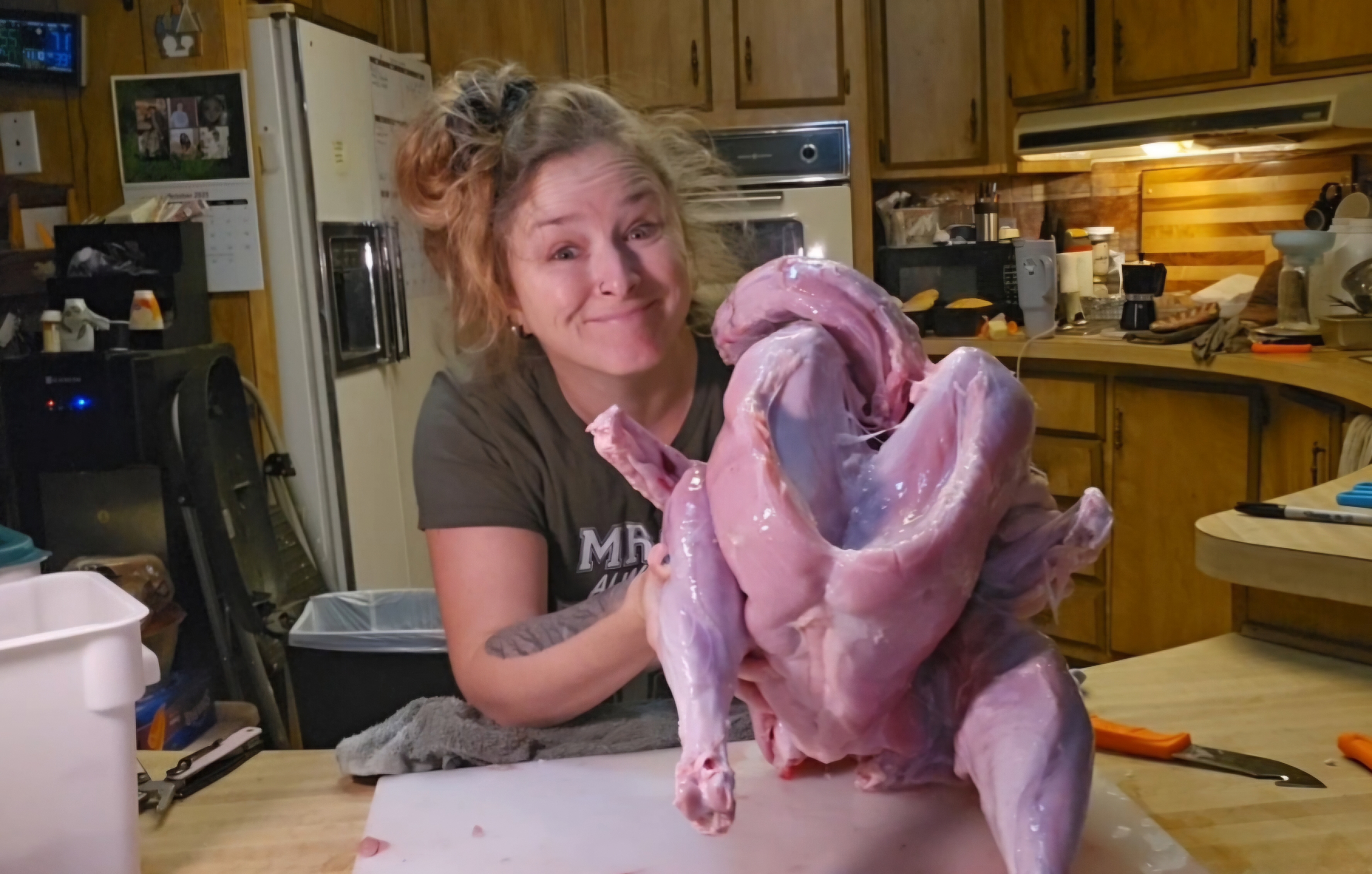
    It’s definitely a two-person job. My husband and I tackled the butchering together — I held, he chopped — quick and humane. I decided to skin them this time instead of plucking. For one, they don’t fit in my plucker. And two, even if they did, I physically couldn’t lift those heavy birds in and out of the scalding pot all day.

    And because timing is never perfect on a homestead, the weekend we processed six turkeys turned out to be a busy one — and rainy, of course. But it got done. Because that’s homesteading. Rain, mud, feathers, and all.

    From Rainy Day to Freezer Full

    After processing, we let the birds rest in coolers for 48 hours so rigor mortis could pass. Out of the six we butchered, I parted out five and kept one whole as a gift for a friend — the same friend who gave me a pair of mated Royal Palm turkeys this summer. I told her I had her Thanksgiving covered.

    If you’d like to see how I part out a turkey step-by-step, I filmed the process for YouTube — you can watch it here (it’s short, simple, and shows what works best for me).

    Preserving the Harvest

    I’ll be canning some of the turkey, turning some into homemade deli meat, and freezing the rest in meal-sized bags. That way, I can pull one out anytime for soups, crockpot meals, or a quick dinner. It took several days of hard work, but every time I open the freezer or see a row of jars cooling on the counter, I’m reminded it’s always worth it.

    Knowing exactly where our food comes from — how it was raised, butchered, and preserved — means so much to us. It’s strange to think I haven’t bought meat from a grocery store in who knows how long. It’s not always easy, but it’s real, rewarding work.

    And at the end of the day, I’m simply grateful — for the effort, for the lessons, and for the opportunity to live this life.

    Preserving the Harvest

    I’ll be canning some of the turkey, turning some into homemade deli meat, and freezing the rest in meal-sized bags. That way, I can pull one out anytime for soups, crockpot meals, or a quick dinner. It took several days of hard work, but every time I open the freezer or see a row of jars cooling on the counter, I’m reminded it’s always worth it.

    Knowing exactly where our food comes from — how it was raised, butchered, and preserved — means so much to us. It’s strange to think I haven’t bought meat from a grocery store in who knows how long. It’s not always easy, but it’s real, rewarding work.

    And at the end of the day, I’m simply grateful — for the effort, for the lessons, and for the opportunity to live this life.

    🦃 Watch the Video

    Want to see how I part out a turkey? Watch the video here:

  • “I Can’t Do It All” to “I’ll Do It My Way”: Finding Freedom in Everyday Homesteading

    Homesteading has a way of making us feel like we have to do everything all at once. You scroll through Pinterest or Instagram and see the perfect bread loaves, the spotless garden rows, the DIY farmhouse kitchen, and you think—“I can’t do it all.” And honestly? You’re right.

    But here’s the secret: you don’t have to.

    Homesteading isn’t about perfection or doing everything in one season. It’s about creating a lifestyle that works for you, in your space, on your budget, with your schedule. When you shift your mindset from “I can’t do it all” to “I’ll do it my way,” homesteading suddenly becomes doable, sustainable, and—most importantly—enjoyable.

    Perfection Isn’t the Goal—Progress Is

    There’s a lot of pressure in the homesteading world to make everything picture-perfect. But let’s be real: your goats are going to break a fence, your garden will get weedy, and that sourdough starter might flop. That doesn’t mean you’re failing—it means you’re learning.

    Progress happens in the small steps: planting one raised bed this year instead of an entire acre, raising two chickens before you invest in a full flock, or canning just a few jars instead of a pantry wall. These little wins build your skills and your confidence.

    Pinterest-Worthy vs. Real Life

    Pinterest and Instagram can be inspiring, but they can also be discouraging. Behind every “perfect” homestead photo is a mess you don’t see—the dishes piled up in the sink, the weeds just out of the camera frame, the failed projects tucked away in the shed.

    Real life homesteading is messy. It’s mud on the boots, crooked fences, and bread that doesn’t always rise. And that’s okay. What matters isn’t how it looks online—it’s how it feels to you.

    Doable and Workable Beats Perfect

    A homestead that works for your family doesn’t have to look like anyone else’s. Maybe your animals are in smaller pens than someone else’s. Maybe your garden is containers on the deck instead of rows in a field. Maybe your bread comes from a bread machine instead of a handmade sourdough.

    That doesn’t make it less valuable—it makes it workable. And a homestead that actually fits into your life will always beat one that leaves you burned out chasing perfection.

    Not Everything Works for Everyone—and That’s Perfectly Okay

    Some people thrive on dairy goats, others realize they hate milking and switch to chickens. Some people love pressure canning, others prefer freezing their harvest. What works beautifully for one homesteader might not fit your lifestyle at all.

    Instead of seeing that as failure, see it as freedom. You don’t have to copy anyone else’s version of homesteading. You get to create your own.

    Shifting the Mindset

    The most freeing mindset shift you can make is this:

    • From: “I can’t do it all.”
    • To: “I’ll do it my way.”

    That simple reframe takes the pressure off. It gives you permission to try, to fail, to adjust, and to find what actually works for your life. And that’s what true homesteading is about—building a lifestyle that sustains you, not one that drains you.

    Final Thoughts

    Your homestead doesn’t have to be perfect to be worth it. It doesn’t have to be Pinterest-worthy to be valuable. It just has to be yours—messy, doable, workable, and real.

    So, the next time you find yourself saying, “I can’t do it all,” remind yourself: you don’t have to. You only have to do it your way.

  • 5 Essential Homestead Tasks to Do Before Winter

    5 Essential Homestead Tasks to Do Before Winter

    As the days get shorter and the nights turn colder, it’s time to switch from harvest mode to prep mode. Winter can be tough on both you and your homestead, but a little preparation now will save you a lot of stress later.

    These are the five things I do every fall to get my homestead ready for freezing weather — so when that first snow hits, I can rest easy knowing everything (and everyone) is taken care of.

    1. Check and Insulate Your Water Lines

    Frozen water lines are no fun — and if you’ve ever tried to haul buckets through snow, you know exactly what I mean.

    • Check all your lines, both inside and out, for cracks or weak spots.
    • Wrap exposed pipes and faucets with insulation or heat tape if needed.
    • If your water source is outdoors, make sure you have a backup plan for thawing or hauling water when temperatures drop.

    Even a little insulation goes a long way in keeping things flowing smoothly through the coldest nights.

    2. Deep Clean Animal Coops and Pens

    Before winter sets in, I like to do a full deep clean of the chicken coop, goat pen, and any other livestock shelters.

    • Remove old bedding and replace it with fresh straw or shavings.
    • Check for drafts — block the cold winds, but leave ventilation up high so moisture doesn’t build up.
    • Stock up on bedding materials so you’re not scrambling mid-winter.

    A clean, dry space helps animals stay healthier and reduces ammonia smells that get worse when everything’s shut up tight.

    3. Organize and Protect Your Seeds & Tools

    Before you tuck your garden supplies away for the year, take an afternoon to clean and sharpen your tools. Dirt and rust shorten their lifespan — a quick scrub and a light oil coat will make them last for years.

    Then move on to your seeds:

    • Sort and label them by type or planting season.
    • Store them in a cool, dry, and temperature-controlled spot (inside the house is often best).
      Fluctuating temps can affect humidity, which lowers seed viability. Treat them like gold — because they are!

    4. Stock Up Before the First Snow

    It never fails — the first winter storm always seems to hit when you’re low on feed. Avoid the rush by stocking up early on:

    • Animal feed and minerals
    • Bedding materials
    • Fuel, propane, or firewood
    • Family essentials like flour, sugar, and coffee

    A full pantry and feed room mean fewer trips to town and more peace of mind when the roads get icy.

    5. Winterize Your Garden Beds and Cold Frames

    Don’t forget your garden! A little prep now makes spring planting so much easier.

    • Mulch raised beds with straw or leaves to protect the soil.
    • Clean and repair cold frames or mini greenhouses before you need them.
    • Compost spent plants and add manure or cover crops to feed next year’s soil.

    Even a small effort now helps preserve the health of your beds — and keeps your garden thriving year after year.

    Final Thoughts

    Winter prep can feel like extra work, but it’s really an investment in your peace of mind. When you’ve got insulated pipes, stocked feed, and clean coops, you can focus on cozy fires and planning next year’s garden instead of crisis management.

    A little preparation now means a smoother, safer, and happier homestead all winter long.

  • The Best 10-Minute Stress Relievers for Homesteaders

    The Best 10-Minute Stress Relievers for Homesteaders

    Homesteading is rewarding, but let’s be honest—it can also be stressful. Between animal chores, garden upkeep, food preservation, and everyday family responsibilities, it’s easy to feel stretched thin. The good news? You don’t need an hour-long yoga session or a weekend getaway to recharge. Sometimes, just ten minutes is all it takes to reset your mind and body so you can return to your homestead with fresh energy and focus.

    Here are my top ten 10-minute stress relievers for homesteaders—practical, simple, and doable right in the middle of your busiest days.

    1. Step Outside Barefoot

    Why it helps: Sometimes the quickest way to reset your mind is to simply step outside — barefoot. Feeling the earth directly beneath your feet connects you with nature in a deeply physical way, a practice known as grounding or earthing.

    Grounding is more than just a feel-good trend — studies suggest it can actually lower cortisol (your body’s main stress hormone), reduce inflammation, and help calm your nervous system. When you stand, walk, or sit with bare feet on natural surfaces like grass, soil, or sand, your body absorbs the earth’s subtle electrical energy, which helps bring your internal systems back into balance.

    You don’t have to make a ritual out of it — just stepping outside for a few minutes can do wonders. Even simple homestead chores like pulling weeds without gloves, digging in the garden, or tending the soil count as grounding. Every time your hands or feet make contact with the earth, you’re literally recharging your body while giving your mind a moment to breathe.

    So next time you feel your stress climbing, kick off your shoes and let the earth remind you to slow down.

    2. Do a Chore You Actually Enjoy

    Why it helps: Not all chores are created equal. While mucking out stalls or scrubbing buckets might drain you, collecting warm eggs, hand-milking your goat, or watering the garden can feel downright peaceful. When you focus on a task you enjoy, it stops feeling like work and starts feeling like therapy.

    These simple, enjoyable routines act like moving meditations — grounding you in the moment and reminding you why you chose this lifestyle in the first place. Taking a break from the unpleasant or mundane tasks that sap your energy and instead choosing something that fills your cup is a double win: you’re still being productive, but in a way that restores rather than depletes you.

    Afterward, when you return to the chore you’ve been avoiding, you’ll often find you have more energy, clarity, and motivation to tackle it. A few minutes of mindful, enjoyable work can completely shift your mindset for the rest of the day.

    3. Sip Something Warm (or Cold)

    Why it helps: Slowing down long enough to enjoy a hot cup of tea or coffee — or even a refreshing glass of lemon water — invites you to pause. It’s a small act of care that signals your body and mind to step out of “go mode.”

    Warm drinks in particular help relax your digestive system and activate the body’s parasympathetic nervous response — the part responsible for rest, digestion, and recovery. It’s why that first sip of morning coffee or evening herbal tea feels like a deep breath for your soul. The warmth naturally slows your breathing, unclenches tense muscles, and helps your body shift out of the “fight or flight” stress response.

    Cool drinks have their own kind of magic. After sweating through morning chores or tending the garden in the sun, a cold glass of water with lemon or mint instantly refreshes you. It’s like hitting a small reset button for your energy.

    But more than the temperature, it’s the ritual that matters — holding the cup, taking slow sips, maybe even stepping outside while you drink. Those few quiet minutes let your mind rest and help you reconnect with your senses before jumping back into the busyness of the day.

    4. Stretch It Out

    Why it helps: Homesteaders bend, lift, and squat constantly — from hauling feed buckets to turning compost or weeding garden rows. All that movement is great for staying active, but without a little stretching, it can leave your muscles tight and your body feeling worn down.

    Taking just a few minutes to stretch relieves tension, improves circulation, and helps prevent injury — especially in your back, shoulders, and legs. But beyond the physical benefits, stretching also slows your breathing and brings awareness back to your body. It’s like giving yourself permission to pause and check in after hours of constant motion.

    You might be surprised how much stress your body holds without you realizing it — in your jaw, your shoulders, even your hands. A gentle stretch releases that built-up tension and leaves you feeling lighter, calmer, and more centered in just a few minutes.

    Whether it’s a full stretch routine or simply reaching toward the sky between chores, that tiny act of care helps reset both body and mind.

    5. Pet Your Animals

    Why it helps: Interacting with animals isn’t just good for the soul — it’s backed by science. Studies show that spending time with animals can lower blood pressure, slow your heart rate, and reduce anxiety. When you stroke your dog’s fur, scratch your pig’s belly, or let a curious chicken perch on your arm, your brain releases oxytocin, often called the happy hormone. It’s the same chemical that builds connection and calm in humans.

    Your animals don’t care how much you got done today — they just want your presence. They live fully in the moment, responding to energy and care, not checklists or deadlines. That’s what makes them such powerful teachers.

    A few quiet minutes with your herd or flock can completely shift your mood, reminding you to breathe deeper, smile more, and slow down enough to actually enjoy this life you’re building.

    6. Step Away From the Chaos

    Why it helps:When your homestead feels overwhelming, sometimes the best medicine is a simple pause. Stepping away from the noise — whether it’s the barn, the kitchen, or the endless to-do list — gives your mind a chance to reset.

    Even ten minutes of quiet sitting can make a big difference. It reduces overstimulation, slows your thoughts, and helps you reconnect with your breath. You don’t need a perfect meditation setup or a silent house — just a moment of stillness where you can listen to the wind, the animals, or even your own heartbeat.

    Those few minutes of calm create space between you and the chaos, allowing your nervous system to settle. When you step back into your day, you’ll feel more centered, clear-headed, and ready to handle whatever comes next.

    7. Do a Quick Reset Walk

    Why it helps: Walking is one of the simplest ways to clear mental fog and lift your mood. It boosts circulation, releases endorphins, and helps shake off the tension that builds up after hours of chores or planning.

    The best part? You don’t need to go far. A slow stroll down the driveway, around the garden, or along the fence line is enough. The key is to move without an agenda—no hauling buckets, no chasing animals, no tools in hand.

    When you walk simply for the sake of moving, your body relaxes, your breathing deepens, and your mind begins to unwind. It’s a gentle, natural reset that reminds you to look around, take in the fresh air, and reconnect with the rhythm of your homestead instead of the rush of your thoughts.

    8. Write It Out

    Why it helps: Stress often piles up in our minds like a tangled ball of string. The more we try to keep track of everything, the tighter it feels. Taking a few minutes to write it all down helps untangle those thoughts and get them out of your head.

    Even if you don’t have all the answers or solutions, the simple act of writing gives your brain permission to stop juggling so many things at once. It’s like clearing digital clutter—but for your mind.

    You don’t need to write perfectly or even in complete sentences. Try a quick “brain dump” list: everything that’s weighing on you, from feed schedules to family obligations. Once it’s on paper, you can see what’s actually important and what can wait.

    In less than ten minutes, you’ll feel lighter, more organized, and ready to focus on what truly matters instead of what’s just spinning in your mind.

    9. Do One Thing That Feels “Finished”

    Why it helps: Homesteading is full of never-ending tasks — gardens that always need weeding, animals that always need feeding, and projects that never seem finished. That constant cycle can be mentally exhausting, leaving you feeling like you’re spinning your wheels.

    The antidote? Do one small task you can fully complete. Sweep the porch. Stack the boots by the door. Wash and put away the dishes. Simple, contained tasks bring instant order to the chaos and remind you that progress doesn’t have to be big to be meaningful.

    Finishing something — anything — gives your brain a quick hit of satisfaction and relief. It tells your mind, “See? I can finish things.” That small win resets your focus, reduces overwhelm, and often gives you the momentum to tackle what’s next with a clearer head.

    10. Breathe With Intention

    Why it helps: When your day feels heavy or your mind won’t stop racing, one of the quickest ways to reset your body is through deep, intentional breathing. It’s simple, free, and you can do it anywhere — in the barn, on the porch, or even while standing in the garden.

    A great technique to try is box breathing, named for its steady, four-part rhythm. Here’s how it works:

    • Inhale slowly for 4 seconds
    • Hold your breath for 4 seconds
    • Exhale gently for 4 seconds
    • Pause and hold again for 4 seconds

    Then repeat the cycle several times. This steady pattern helps slow your heart rate, reduce tension, and bring your nervous system back into balance.

    In just a few minutes, your body begins to relax, your thoughts quiet down, and you feel more centered — without needing anything but your breath. Box breathing is a small but powerful reminder that peace is always just one deep breath away.

    Final Thoughts

    You don’t need big chunks of time to take care of yourself — just intention. These 10-minute stress relievers are small but powerful ways to reset, refocus, and refill your cup right in the middle of a busy homestead day. You spend so much time nurturing your animals, your garden, and your family — don’t forget that you deserve that same care and attention.

    Whether it’s taking a barefoot walk through the grass, pausing to sip a warm drink, or sitting quietly with your animals, those few minutes are an act of preservation, not indulgence. They help you show up calmer, stronger, and more grounded for everything and everyone who depends on you.

    Next time you feel overwhelmed, give yourself permission to pause. Pick one of these quick resets, breathe deeply, and notice how much lighter, more centered, and more capable you feel. Sometimes, balance isn’t found in doing more — it’s found in stopping for just long enough to remember why you started.

  • Diy Homestead Projects to save money

    Diy Homestead Projects to save money

    When it comes to homesteading, one of the most rewarding and cost-effective strategies is taking a DIY approach to your daily needs. Whether it’s building structures, creating tools, or even crafting your own food storage solutions, DIY projects can save you a significant amount of money, reduce your reliance on commercial products, and give you a deeper sense of connection to your homestead.

    Here are some essential DIY projects that can help you save money, improve your homestead’s sustainability, and add to your self-sufficiency.

    1. Building Your Own Chicken Coop

    Raising chickens can provide fresh eggs, meat, and even fertilizer for your garden. However, purchasing a pre-built chicken coop can be expensive. Instead, building your own coop is a cost-effective and rewarding project.

    • Basic design ideas: A simple chicken coop can be constructed with basic materials like wood, nails, wire mesh, and corrugated metal. You’ll want to ensure the coop is secure to protect your chickens from predators and has adequate ventilation, nesting boxes, and roosting areas.
    • Upcycled materials: You don’t always need to buy new materials. Many homesteaders repurpose old pallets, fencing, or scrap wood to build their coops. This helps keep costs low while promoting sustainability.
    • Expand over time: If you’re just getting started, build a basic, small coop that can house a few chickens. As your flock grows, you can always add additional space or features to accommodate more birds.

    By building your own chicken coop, you’ll save hundreds of dollars compared to purchasing a pre-made one, and you can customize it to suit your needs perfectly.

    2. Making Your Own Compost Bin

    Composting is an essential part of homesteading. It allows you to recycle food scraps, yard waste, and other organic materials into nutrient-rich compost that can improve your garden soil. While compost bins can be bought at the store, making your own is a much cheaper and personalized alternative.

    • Easy DIY compost bin: You can build a simple compost bin with wood pallets, chicken wire, or even old barrels. One of the easiest methods is to create a three-bin system with wooden planks. Each bin can house different stages of compost, allowing for a continuous cycle of decomposition.
    • Repurposing materials: If you’re handy with tools, you can repurpose old pallets, wire mesh, or other scrap materials around your homestead. This will save you money and keep your composting system affordable.
    • Composting tips: Keep a good mix of “green” (nitrogen-rich) and “brown” (carbon-rich) materials in your compost. Green materials include things like grass clippings and vegetable scraps, while brown materials include leaves, straw, and wood chips. Turning the compost regularly will speed up the process, and you’ll soon have nutrient-rich soil for your garden.

    A DIY compost bin can help you reduce kitchen waste, improve your soil health, and keep your garden flourishing—without spending a lot of money.

    3. Constructing Raised Garden Beds

    Raised garden beds are an excellent way to grow vegetables, herbs, and flowers, particularly in areas where the soil quality isn’t great. While pre-made raised bed kits can be pricey, you can build your own for a fraction of the cost.

    • Affordable materials: You can build raised beds using untreated wood, bricks, cinder blocks, or even upcycled materials like pallets. The key is to choose materials that are durable and won’t leach harmful chemicals into the soil.
    • Simple design: Raised garden beds can be as simple as a wooden frame filled with rich soil and compost. You can create a basic rectangular shape or get creative with curved or tiered beds to maximize space.
    • Benefits: Raised beds allow for better drainage, improved soil quality, and less strain on your back when gardening. They also make it easier to manage weeds and pests. Plus, if you have limited space or poor soil conditions, raised beds can be a game-changer.

    Constructing your own raised beds can save you money on store-bought planters and provide you with a more controlled growing environment.

    4. Building a Solar Dehydrator

    Preserving the harvest is one of the most important aspects of homesteading, especially when it comes to preserving fruits, vegetables, and herbs. While electric food dehydrators are great, they can be expensive to purchase and run. A solar dehydrator is an eco-friendly, cost-effective alternative that uses the sun’s energy to dry your food.

    • Building a solar dehydrator: Creating a solar dehydrator can be done with inexpensive materials like plywood, wire racks, glass, and plastic. There are many free plans available online for DIY solar dehydrators that can dry fruits, vegetables, herbs, and even meats.
    • Advantages of solar drying: The beauty of using a solar dehydrator is that it doesn’t rely on electricity, reducing your energy costs. It’s also a sustainable and low-tech method that ties into your homesteading goals of self-sufficiency.
    • Preserve food naturally: Once your dehydrator is built, you can begin drying your produce. Dried fruits, vegetables, and herbs can be stored for months or even years, allowing you to enjoy your garden’s bounty year-round.

    By building a solar dehydrator, you’ll cut down on electricity costs while preserving your harvest naturally.

    5. DIY Rainwater Collection System

    Water is essential for your garden, livestock, and household needs, but it can be expensive if you rely on municipal water sources. One way to cut costs and become more self-sufficient is by collecting and using rainwater.

    • Simple rainwater collection setup: You can set up a rainwater collection system using a rain barrel, some basic piping, and a downspout diverter to funnel water into the barrel. For larger homesteads, you might want to create a more extensive system with multiple barrels or a storage tank.
    • Using rainwater in your garden: Rainwater is free, and it’s often better for plants than tap water because it doesn’t contain chemicals like chlorine or fluoride. Using rainwater for irrigation can reduce your water bill significantly, especially during the hotter months when your garden needs more water.
    • Extra benefits: In addition to watering your garden, you can also use collected rainwater for other tasks around your homestead, like washing your car, cleaning tools, or even providing water for livestock.

    A DIY rainwater collection system is an excellent investment that helps you conserve water, save money, and support your homesteading efforts in a sustainable way.

    6. DIY Animal Feed and Treats

    If you raise animals like chickens, goats, or pigs, buying animal feed can quickly become a significant expense. However, you can save money by making your own animal feed or treats, particularly if you’re growing some of the ingredients yourself.

    • Homemade chicken feed: You can mix your own chicken feed using grains like corn, oats, wheat, and barley. Adding crushed eggshells, bone meal, or kelp can also provide essential nutrients. By growing some of these grains on your homestead, you can reduce your feed costs even more.
    • Homemade animal treats: Many animals enjoy homemade treats that you can make with ingredients you already have. For example, you can make grain-based treats for chickens or goats with oats, molasses, and herbs. These treats are a great way to provide your animals with extra nutrients while saving money.

    By creating your own animal feed and treats, you can cut down on feed costs while providing your animals with wholesome, natural food.

    Conclusion

    DIY projects on the homestead are a great way to save money, reduce reliance on store-bought products, and improve your overall self-sufficiency. Whether you’re building a chicken coop, crafting a rainwater collection system, or preserving your harvest with a solar dehydrator, these projects are not only cost-effective but also incredibly rewarding. Not only do you save money, but you also get the satisfaction of knowing that you’ve built something with your own hands and contributed to a more sustainable lifestyle.

    If you’re ready to dive into DIY projects, start small, gather your materials, and enjoy the process. With time, you’ll find that creating solutions on your homestead not only saves money but also enriches your life and brings you closer to your homesteading goals

  • Modern Homesteading vs. the Past: What’s Changed and How to Start Today

    Modern Homesteading vs. the Past: What’s Changed and How to Start Today

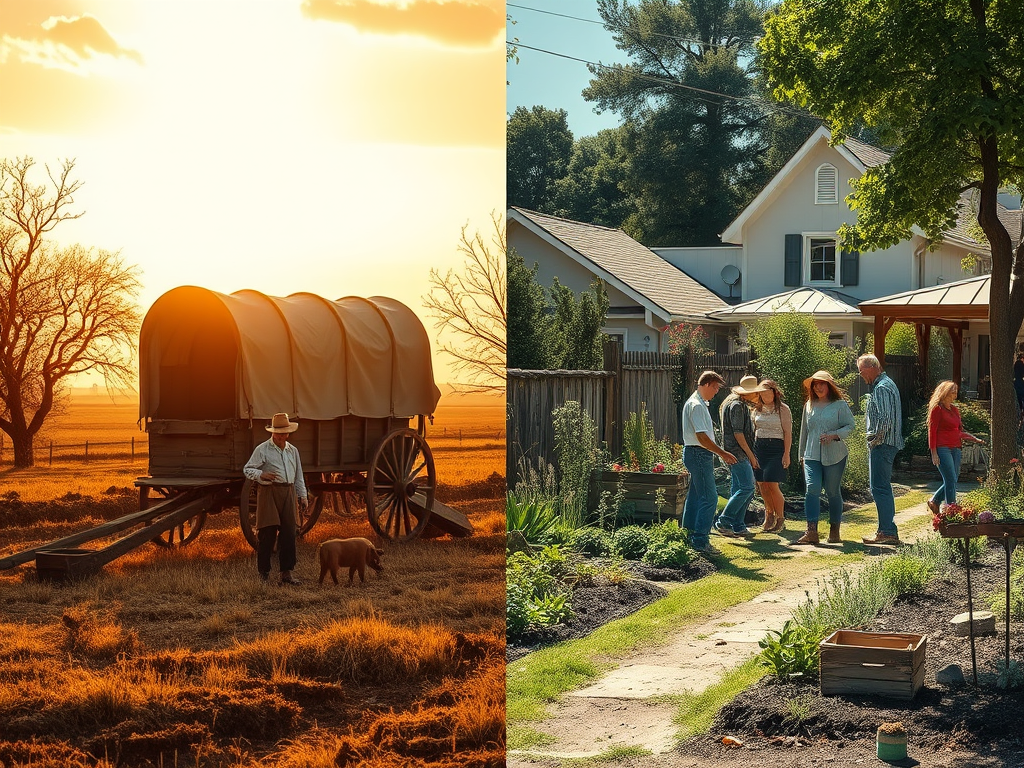
    When most people hear the word homesteading, they picture covered wagons, prairie houses, and families carving a life out of wild land. That picture isn’t wrong—it comes from the original Homestead Act of 1862, when families could claim 160 acres of land if they farmed it, built a home, and survived on it.

    Back then, homesteading wasn’t a lifestyle choice. It was survival. If you didn’t grow it, hunt it, or trade for it, you simply went without.

    Fast forward to today, and modern homesteading looks very different. It’s not about proving up a land claim anymore—it’s about weaving self-sufficiency into our everyday lives, no matter where we live. Whether you’re on a few acres, in the suburbs, or even in an apartment, you can practice homesteading skills and reap the rewards.

    Homesteading Then vs. Now

    Food & Survival

    Then: Families relied 100% on what they could grow, hunt, or trade. If the harvest failed, survival was at risk.

    Now: We can walk into a grocery store if the garden flops—but many of us still grow and preserve food because it gives us peace of mind, healthier options, and a sense of control.

    Daily Life

    Then: Families worked sunup to sundown just to put food on the table. Every task—hauling water, chopping wood, cooking—was done by hand.

    Now: Most of us balance homesteading with jobs, kids, and busy schedules. We aren’t being “paid” in land to do it—in fact, it usually costs us time and effort—but we do it because we value the lifestyle and what it gives back to our families.

    Tools & Technology

    Then: Canning was done over open fires, fences were built with hand tools, and communication with neighbors was rare.

    Now: We use stove tops for canning(easier temperature control), electric fencing to save hours of labor, and even online seed swaps to connect us with resources our great-grandparents couldn’t imagine.

    Community

    Then: Homesteaders were often isolated, relying only on family and a handful of neighbors.

    Now: We have farmers markets, co-ops, and online groups that remind us we’re not in this alone. Connection is a huge part of modern homesteading.

    Why People Are Turning Back to Homesteading

    So why are so many people embracing homesteading today?

    Food Costs & Quality: Rising grocery prices and concerns about food quality have made homegrown food more appealing.

    Lifestyle: Homesteading invites us to slow down, connect with nature, and enjoy hands-on skills like gardening, preserving, and caring for animals.

    Family Education: Kids get to learn responsibility, patience, and where their food actually comes from.

    Resilience: When supply chains are unpredictable or money gets tight, having skills and resources to provide for yourself is empowering.

    In short, modern homesteading isn’t about survival anymore—it’s about choice.

    How to Start (Even If You’re Busy)

    The idea of “homesteading” can feel overwhelming. But you don’t have to do everything at once—in fact, you shouldn’t!

    Here are a few ways to start small:

    Pick one skill or project at a time.

    Choose what excites you most (fresh eggs? a tomato plant? homemade bread?).

    Use the space you already have—balcony, backyard, or community garden.

    Learn as you go. Don’t wait for the “perfect setup.”

    Modern homesteading is about doing what fits your life and brings you joy—not checking off a list of chores.

    Final Thoughts

    Homesteading today looks very different from the past—but the heart behind it remains the same: building a life rooted in self-sufficiency, family, and resilience.

    You don’t need 160 acres to start. You don’t need to know it all. You just need to take one small step and begin.

    Don’t wait. Just start.